Band 6.0 IELTS Writing Task 1 Model Answer
Overall Band Score: 6.0 · IELTS Academic Practice Accelerator · 2026-11-11
IELTS Writing Task 1 question
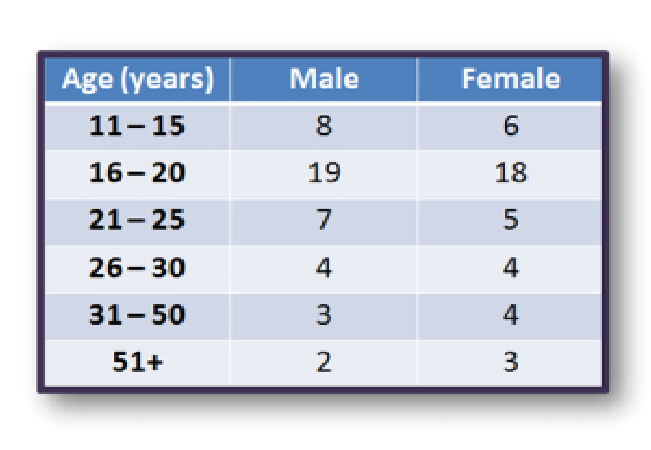
The table gives information about the average hours spent on the Internet by European people of different age groups.
Summarise the information by selecting and reporting the main features, and make comparisons where relevant.
Student answer (Band 6.0)
The table compares the mean hours spent on online by six different age groups of European citizens.
Overall, it is evident that men spent maximum hours on online compare to women. The age group from 16 to 20 years old spent the highest hour on online, while over 51 has the least hours.
Looking at the chart in more detail, it is clear that the highest number of hour spent on the internet by male, about 19 which is 1 hours more than females spending of same age group (18 hours). Regarding the age group from 11 to 15, 8 hours is spent by male and 6 hours by female. About 4 hours on internet spent by both men and women categories of 26.
Turning to the remaining categories, 21 to 25 years old european spent on online, at 7 hours by men and 5 hours by women.women took the lead on the age from 31 to more than 51 aged groups, which accounted for 4 hours by 31 to 50 years old and 3 hours for over 51 years old, while male has 3 hours and 2 hours for 31 to 50 and over 50 groups, respectively.
AI examiner evaluation
| Criterion | Band |
|---|---|
| Task Achievement / Task Response | 6.5 |
| Coherence and Cohesion | 6.5 |
| Lexical Resource | 5.5 |
| Grammatical Range and Accuracy | 5.5 |
| Overall | 6.0 |
Task Achievement / Task Response: Band 6.5
You identify the main pattern clearly: the 16–20 group records the highest figures for both sexes, while the 51+ group records the lowest, and you note that male figures are generally higher. Most reported values are accurate, including 19 versus 18 hours for ages 16–20 and the equal four-hour figures for ages 26–30. The comparison for ages 31–50 and 51+ also correctly recognises that women spend more time online in those groups. However, the overview overgeneralises by saying men spent the maximum compared with women, since women lead in the two oldest groups. Some details are also imprecise, such as “about 4 hours” for ages 26–30, where both values are exactly four. A more balanced overview and precise reporting would strengthen the response.
Coherence and Cohesion: Band 6.5
The response has a clear overall structure: an introduction, an overview, and two paragraphs presenting the figures. The progression from the highest-use age group to younger and then older groups is generally easy to follow, and phrases such as “Looking at the chart in more detail” and “Turning to the remaining categories” signal the stages of the report. However, some linking is mechanical, and the final paragraph becomes difficult to follow because the comparison is compressed into a long sentence. The repeated use of “Regarding” and “while” also makes relationships less smooth. Improve cohesion by grouping the age bands consistently and using shorter sentences to distinguish the female and male figures in the older groups.
Lexical Resource: Band 5.5
You use relevant vocabulary for describing data, including “mean,” “highest,” “accounted for,” and “took the lead,” so the reader can understand the main comparisons. However, several unnatural or inaccurate collocations limit precision: “hours spent on online,” “spent maximum hours on online,” and “highest number of hour spent” are not idiomatic. “Chart” is also used although the visual is a table, and “European citizens” is less precise than simply referring to European people. These choices are noticeable but the intended meaning is usually recoverable. Build a more accurate range of data-reporting phrases, such as “hours spent online,” “recorded the highest average,” and “the figure stood at,” and check singular and plural forms.
Grammatical Range and Accuracy: Band 5.5
You attempt a mix of simple statements and longer comparative sentences, and the overall meaning is generally understandable. However, errors in sentence structure and grammatical forms recur. For example, “men spent maximum hours on online compare to women” lacks an article and has an incorrect comparative construction; “8 hours is spent by male” uses an awkward passive form and mismatched number; and “women.women” shows a punctuation and sentence-boundary problem. The final sentence also combines several comparisons without clear grammatical control. Use straightforward active constructions, such as “Men spent 8 hours online, compared with 6 for women,” and check articles, agreement, verb forms, and punctuation when joining clauses.
See this exact question answered at other band scores. The same prompt compared across bands.
Browse more IELTS Writing model answers or get your own writing scored by the same AI examiner.