Band 6.0 IELTS Writing Task 1 Model Answer
Overall Band Score: 6.0 · IELTS Academic Practice Accelerator · 2026-11-11
IELTS Writing Task 1 question
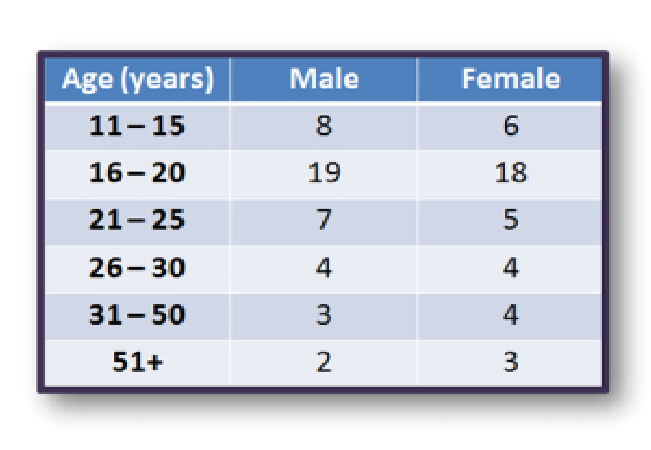
The table gives information about the average hours spent on the Internet by European people of different age groups.
Summarise the information by selecting and reporting the main features, and make comparisons where relevant.
Student answer (Band 6.0)
The table illustrates the information about the average hours spent time on the internet by European people of different age groups between male and female.
Overall, it is clear that younger generations of female spent the highest on the internet, whereas the elder generation of male spent the lowest on the internet.
The male and female spent the highest 19 and 18 hours between the age of 16 and 20 years among the different age group, where male and female between 11 and 15 years spend 8 and 6 hours respectively. In comparison, age group berween 21 and 25 spent 7 and 5 hours, which is followed by the age between 26-30 spent the same 4 hours each.
As the year increased, both the male and female spending time on the internet also significantly decreased, where the age group between 31-50 spend almost the same 3 and 4 hours for both male and female. The elder generations of age 51 above spend the lowest 2 and 3 hours for both male and female.
AI examiner evaluation
| Criterion | Band |
|---|---|
| Task Achievement / Task Response | 6.5 |
| Coherence and Cohesion | 6.0 |
| Lexical Resource | 5.5 |
| Grammatical Range and Accuracy | 5.5 |
| Overall | 6.0 |
Task Achievement / Task Response: Band 6.5
You identify the main pattern: internet use peaks among 16–20-year-olds and is lowest among people aged 51+, and you report the figures accurately. The overview also notes the broad decline with age, which gives the response a clear central message. However, it says younger females spent the most, although males recorded the highest figure in every age group except 26–30, where the values are equal. The comparison between the sexes could therefore be more precise, and the overview could highlight that male use is generally slightly higher. Your account covers the table, but some comparisons are less fully developed; a more exact overview and clearer emphasis on the key gender pattern would strengthen it further.
Coherence and Cohesion: Band 6.0
The response has a recognisable structure, with an introduction, an overview and two detail paragraphs. The figures are generally presented in a sensible age-group sequence, and phrases such as “In comparison” and “As the year increased” attempt to connect the information. However, the progression is not always smooth: the first detail paragraph moves from the peak group back to ages 11–15, then forward again, while the final paragraph repeats the older-age comparisons. Some linking is mechanical, and “where” is used repeatedly to join ideas without clearly expressing their relationship. Grouping the peak and subsequent decline in one paragraph, then summarising the gender differences in another, would make the organisation more purposeful and cohesive.
Lexical Resource: Band 5.5
You use relevant vocabulary for describing the table, including “average hours,” “age group,” “highest,” “lowest” and “decreased,” so the main information remains understandable. However, the range is limited and several word choices or collocations are unnatural, such as “spent time on the internet,” “spent the highest,” and “elder generation.” “As the year increased” is also imprecise because the table compares age groups, not years. There is a spelling error in “berween,” and “51 above” is not a natural way to express the oldest category. Aim for more precise reporting language and vary the repeated use of “spent” and “age group”; this would make the description clearer and more natural.
Grammatical Range and Accuracy: Band 5.5
You attempt both simple and more complex sentences, including a contrast with “whereas” and a clause beginning “As the year increased.” The overall meaning is usually recoverable, but some grammatical errors remain across the response. For example, “younger generations of female spent” has problems with number and agreement, while “male and female spent the highest 19 and 18 hours” lacks a grammatical construction for reporting the figures. Tense and agreement are also inconsistent: “spend” appears when describing the table, and “the age group … spend” does not agree with its singular subject. Work on accurate subject–verb agreement, articles and sentence patterns for comparing values. More controlled complex sentences would improve accuracy without sacrificing range.
See this exact question answered at other band scores. The same prompt compared across bands.
Browse more IELTS Writing model answers or get your own writing scored by the same AI examiner.