Band 5.5 IELTS Writing Task 1 Model Answer
Overall Band Score: 5.5 · IELTS Academic Practice Accelerator · 2026-11-11
IELTS Writing Task 1 question
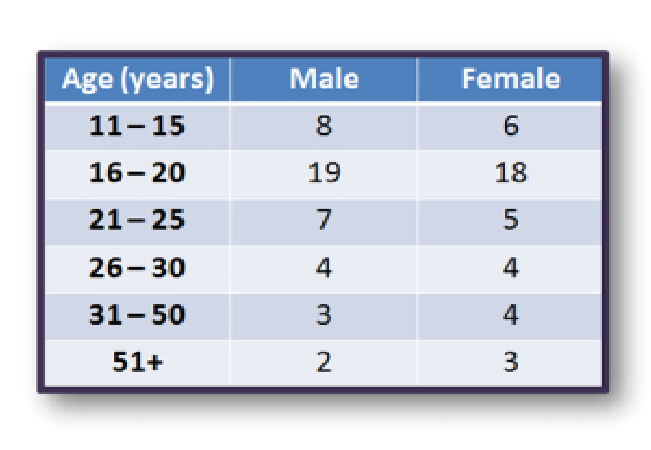
The table gives information about the average hours spent on the Internet by European people of different age groups.
Summarise the information by selecting and reporting the main features, and make comparisons where relevant.
Student answer (Band 5.5)
The table illustrates the approx spending time on the internet by male and female of different age groups in Europe.
Overall, it can be seen that younger generation between 16-18 uses internet the most.All of this ages, males outnumbered females mostly.
To begin with, In 11-15 year male and female use internet 8 and 6 hours, respectively.Almost, similar trend is seen in 21-25 year old people.Im the age of 16-20 people spend time on browsing internet is the highest , which is boy(19 hr) and girl(18 hr).
In contrast, 31-50 and 51+ aged women use interenet the most compares to the men which is 4hr and 3hr, respectively. The spending time for 26-30 age person are same, it is 4 hr.
AI examiner evaluation
| Criterion | Band |
|---|---|
| Task Achievement / Task Response | 5.5 |
| Coherence and Cohesion | 5.5 |
| Lexical Resource | 5.0 |
| Grammatical Range and Accuracy | 5.0 |
| Overall | 5.5 |
Task Achievement / Task Response: Band 5.5
You identify the main peak in the 16–20 group and note that women record higher figures than men in the two oldest groups, both relevant features. However, the overview says “16-18,” which does not match the table’s 16–20 category, and “males outnumbered females mostly” is too vague: men are higher in three groups, equal in one, and lower in two. Some figures are reported accurately, but the comparison for 31–50 and 51+ gives the values without clearly matching each one to its sex. The response is also 29 words below the required minimum, leaving the summary underdeveloped. Include a precise overview and explain the overall age pattern more fully.
Coherence and Cohesion: Band 5.5
The response has a recognisable structure: an introduction, an overview, and two paragraphs presenting details. Phrases such as “Overall,” “To begin with,” and “In contrast” help signal the stages of the summary. However, progression within the paragraphs is uneven: the 16–20 group is discussed after the 21–25 group, and the final paragraph combines two age groups with higher female figures and a separate equality comparison without a clear sequence. Some linking is mechanical or inaccurate, as in “Almost, similar trend,” while missing spaces after full stops make the text harder to follow. Group the figures in a consistent order and use clear comparisons to connect each sentence.
Lexical Resource: Band 5.0
You use relevant topic vocabulary, including “age groups,” “spend time,” “highest,” and “in contrast,” so the reader can generally understand the subject. However, the range is limited and several word choices or collocations are unnatural, such as “approx spending time,” “uses internet,” and “spending time for … age person.” “Boy” and “girl” are also too informal and imprecise for describing male and female data. Spelling errors such as “interenet” and “Im” further reduce accuracy. Aim for standard report language and precise terms for the figures, for example, “average time spent online” and “the male figure.”
Grammatical Range and Accuracy: Band 5.0
The response attempts a few different sentence forms, including a comparison with “whereas” implied by “In contrast” and a relative clause in “which is boy(19 hr) and girl(18 hr).” However, the range remains limited, and frequent errors affect sentence control. Examples include “younger generation … uses” (number agreement), “All of this ages,” and “people spend time … is the highest,” where the sentence structure is faulty. Articles and plurals are also inconsistent, as in “the internet” and “age person,” and punctuation is often missing or misplaced. Practise building clear subject–verb sentences and checking agreement, articles, and sentence boundaries before adding more complex structures.
See this exact question answered at other band scores. The same prompt compared across bands.
Browse more IELTS Writing model answers or get your own writing scored by the same AI examiner.