Band 5.5 IELTS Writing Task 1 Model Answer
Overall Band Score: 5.5 · IELTS Academic Practice Accelerator · 2026-11-12
IELTS Writing Task 1 question
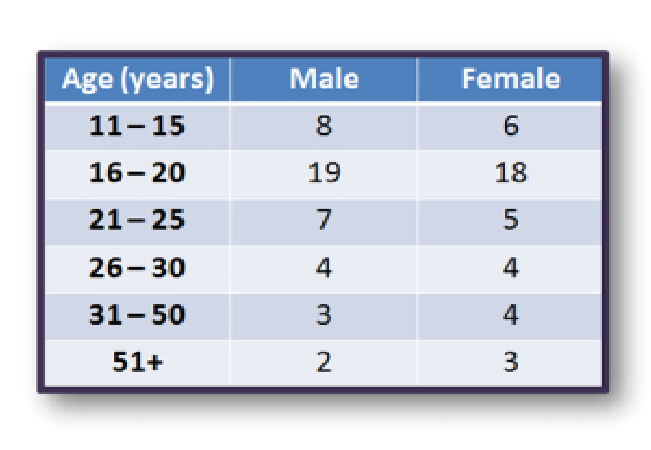
The table gives information about the average hours spent on the Internet by European people of different age groups.
Summarise the information by selecting and reporting the main features, and make comparisons where relevant.
Student answer (Band 5.5)
The table illustrates how the average hours spend on the internet by males and females of different age groups in Europe.
Overall, the 16-20 remained the most popular ages throughtout the age group, while above 51+ experinced a significant decline. In contrast, the 11-15 showed the remarkable growth, becoming the second most popular age in males.
Looking at the detalis, the 16-20 years had approximately 19 in male and female to 18, this figures show the addiction for internet. Similarly, the 11-15 years had the second hightest figures at 8 in males and 6 in females. Recently, among 21-25 age group shows highest number in males at 7, but females are the lowest at around 5.
Regarding the remaining years, other age groups have lowest amounts than the previous years. The 26-30 ages had same count in both male and female as 4; however the 31-50 years had the second smallest numbers at around 3 in males and 4 in females. Furthermore, above 51+ shows least amount at 2 in males and 3 in females, so older generation have least attarction to the internet than the youngers.
AI examiner evaluation
| Criterion | Band |
|---|---|
| Task Achievement / Task Response | 5.5 |
| Coherence and Cohesion | 6.0 |
| Lexical Resource | 5.5 |
| Grammatical Range and Accuracy | 5.5 |
| Overall | 5.5 |
Task Achievement / Task Response: Band 5.5
You identify the main peak correctly: the 16–20 group records the highest figures for both sexes, at 19 hours for males and 18 for females. You also include comparisons across the other age groups. However, the overview is not consistently accurate: the 11–15 group does not show growth over time, and the 51+ group is not a trend but the oldest category, with the lowest figures. Calling 21–25 the “highest number in males” is also misleading; it is lower than the 16–20 and 11–15 figures. The claim that 11–15 becomes the second most popular male age group is supported, but the overview should summarise the overall pattern more precisely and avoid unsupported interpretations such as “addiction.”
Coherence and Cohesion: Band 6.0
The response has a clear overall arrangement: an introduction and overview are followed by paragraphs describing the higher and lower age-group figures. This gives the reader a workable route through the information, and linking expressions such as “Similarly,” “Regarding,” and “Furthermore” help connect details. However, progression is sometimes weakened by unclear references and awkward transitions. For example, “Recently” does not fit a table comparing age groups, while “the remaining years” is an imprecise way to introduce the final categories. The overview also mixes comparisons with claims about change, making the organisation of the main features less clear. Grouping the peak, subsequent decline, and small sex differences more deliberately would improve cohesion.
Lexical Resource: Band 5.5
You use a reasonable range of task-related vocabulary, including “average hours,” “age group,” “figures,” and “second smallest,” so the data can generally be understood. There are also attempts at more descriptive language, such as “significant decline” and “remarkable growth,” but these are not appropriate because the table compares age categories rather than showing change over time. Several word-choice and spelling problems reduce precision, including “hightest,” “experinced,” “detalis,” and “attarction.” Phrases such as “popular ages” and “least amounts” are also unnatural for reporting Internet-use hours. Aim for accurate terms such as “highest average,” “lowest figure,” and “older age group,” and use neutral language rather than interpreting the figures as addiction or attraction.
Grammatical Range and Accuracy: Band 5.5
You attempt both simple and more complex sentence forms, including a contrast with “while” and a sentence joined by “however.” The main comparisons are usually understandable, but some grammatical errors make the relationships between ideas less clear. For example, “the 16-20 years had approximately 19 in male and female to 18” has an unclear structure, and “among 21-25 age group shows” lacks a clear grammatical subject. There are also problems with agreement and number, as in “this figures show” and “other age groups have lowest amounts.” Work on complete sentence structures, articles, plural forms, and consistent subject–verb agreement. More controlled comparisons such as “Males averaged 19 hours, compared with 18 for females” would improve accuracy.
See this exact question answered at other band scores. The same prompt compared across bands.
Browse more IELTS Writing model answers or get your own writing scored by the same AI examiner.