Band 5.0 IELTS Writing Task 1 Model Answer
Overall Band Score: 5.0 · IELTS Academic Practice Accelerator · 2026-11-12
IELTS Writing Task 1 question
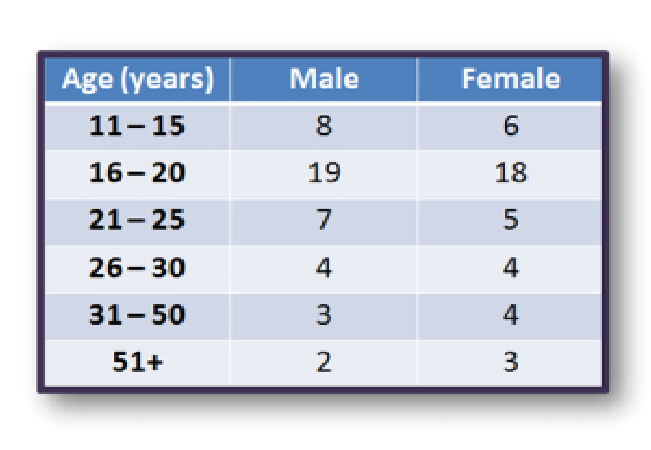
The table gives information about the average hours spent on the Internet by European people of different age groups.
Summarise the information by selecting and reporting the main features, and make comparisons where relevant.
Student answer (Band 5.0)
The given table illustrate the information abiut the average hours spent on the internet by european people of different age groups .
The young people spend the higher number of hours on internet
16-20 years people mostly spend their time on internet .Male of this age group spend around 19 hours a day and females around 18 hours . These watching hours are higher than any other age groups among both males and females .
11-15 years , Males spend around 8 hours and females around 6 hours on internet.
21-25 years males watch hours was around 7 hours and females spend 5 hours on internet.
After these age groups the older people averge time was to low and females averger time was higher than males watching hours of these age groups . 26 TO 30 age goups males and females spend 4 hours average on internet. 31-50 , males average screen time was 3 hours and females average watch time was 4 hours .
51+ adults spend the fewer hours on internet ,males spend 2 hours and females spend 3 hours a day on internet .
AI examiner evaluation
| Criterion | Band |
|---|---|
| Task Achievement / Task Response | 5.0 |
| Coherence and Cohesion | 5.0 |
| Lexical Resource | 5.0 |
| Grammatical Range and Accuracy | 5.0 |
| Overall | 5.0 |
Task Achievement / Task Response: Band 5.0
You identify the main pattern that the 16–20 group records the highest figures for both sexes, and you report the values for all six age groups accurately. You also note the shift in the older groups, where female figures are higher or equal. However, the response only partly fulfils the summarising task: it has no clear, developed overview, and the opening claim that “young people spend the higher number” is broad rather than a precise summary of the age pattern. The table gives average hours, but “a day” is added without support. Focus the overview on the peak at ages 16–20 and the general decline with age, then select the most important comparisons rather than mainly listing figures.
Coherence and Cohesion: Band 5.0
The response has some organisation: it begins with an introduction, discusses the two younger age groups, and then moves to the older groups. This makes the figures reasonably easy to locate. However, progression is limited because most of the body is a sequence of age-by-age statements, with little grouping or comparison across the data. The paragraph breaks are also inconsistent, and links such as “After these age groups” do not clearly explain the relationship between the figures. Group the peak and younger ages together, then contrast them with the lower figures among older people. Use a concise overview before the details and clearer comparison links, such as “By contrast” or “In the oldest groups.”
Lexical Resource: Band 5.0
You use relevant basic terms such as “age group,” “average,” and “spend,” and the reader can generally understand which figures you mean. However, the vocabulary is limited and repetitive: “spend,” “hours,” and “internet” recur frequently, while “watching hours,” “screen time,” and “average watch time” are used inconsistently for the same measure. Several word-choice and spelling errors, including “abiut,” “averge,” “goups,” and “fewer hours,” make the writing less clear and less precise. Use a consistent range of data-reporting language, for example “recorded,” “stood at,” and “figure,” and check spelling. Avoid describing internet use as watching unless the table specifically measures viewing.
Grammatical Range and Accuracy: Band 5.0
Most sentences use simple structures, and the basic comparisons are usually understandable. However, grammatical errors occur frequently and sometimes make the relationships between ideas difficult to follow. For example, “The given table illustrate” has subject–verb disagreement, while “Male of this age group spend” needs a plural or article adjustment. The sentence “After these age groups the older people averge time was to low” has an unclear structure, and several clauses lack appropriate punctuation. There is little variety in sentence forms, so practise accurate comparative sentences and clauses, such as “Although the figures are similar, males record slightly more hours in the youngest groups.” Check agreement, articles, and sentence boundaries when editing.
See this exact question answered at other band scores. The same prompt compared across bands.
Browse more IELTS Writing model answers or get your own writing scored by the same AI examiner.