Band 5.5 IELTS Writing Task 1 Model Answer
Overall Band Score: 5.5 · IELTS Academic Practice Accelerator · 2026-11-12
IELTS Writing Task 1 question
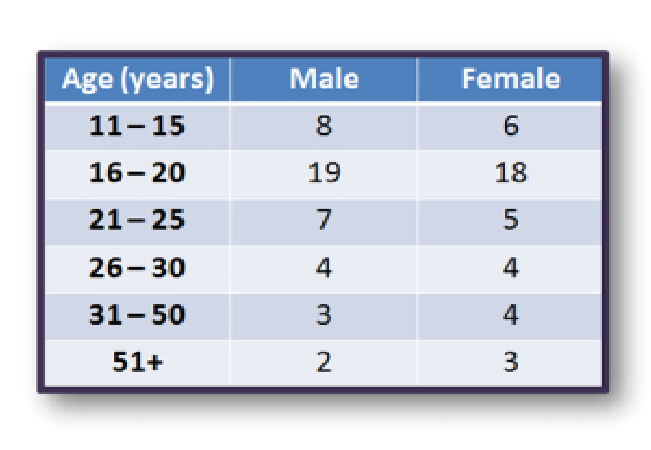
The table gives information about the average hours spent on the Internet by European people of different age groups.
Summarise the information by selecting and reporting the main features, and make comparisons where relevant.
Student answer (Band 5.5)
The table illustrate information of European people spent average hours on the internet of different age groups.
Looking from an overall perspective, it is crystal clear that, people between 16 to 20 years use more internet both men and women. And old people use less internet.
Reporting the data in detail, children from 11 to 15 age group, males spending 8 hours and female spending 6 hours.
Age 16 to 20, male spending 19 hours and female spending 18 hours these group use high internet. Adults mens use 7 hours and female use 5 hours.
Glancing at the remaining data, the age group between 26 to 30, men use 4 hours and women also use 4 hours. The people from 31 to 50, the men sending 3 hours on internet and women spending 4 hours. Last people above the 51 age they use less internet. Mens use only 2 hours and female use 3 hours.
AI examiner evaluation
| Criterion | Band |
|---|---|
| Task Achievement / Task Response | 6.0 |
| Coherence and Cohesion | 6.0 |
| Lexical Resource | 5.5 |
| Grammatical Range and Accuracy | 5.0 |
| Overall | 5.5 |
Task Achievement / Task Response: Band 6.0
You identify the main pattern accurately: the 16–20 group records the highest figures for both sexes, while the oldest group records the lowest. Most of the figures you report also match the table, including the equal values for ages 26–30 and the female advantage among ages 31–50. However, the overview is brief and the comparison that internet use generally declines with age after the 16–20 peak could be made clearer. The 21–25 figures are omitted, and “Adults mens use 7 hours and female use 5 hours” does not identify the 21–25 age group, making this detail unclear. Include that age label and explain the overall pattern more fully.
Coherence and Cohesion: Band 6.0
The response has a recognisable structure: an introduction, an overview, and two paragraphs presenting details. This helps the reader follow the broad movement from the youngest groups to the oldest. The sequence is generally logical, and phrases such as “Looking from an overall perspective” and “Glancing at the remaining data” signal changes in focus. However, the progression is sometimes mechanical, and some links between details are missing. For example, the sentence about adults using 7 and 5 hours does not specify the age range, so its place in the sequence is unclear. Grouping the figures into a clear rise to the 16–20 peak and a subsequent decline would strengthen the comparisons and flow.
Lexical Resource: Band 5.5
You use enough topic vocabulary to communicate the main information, including “average hours,” “age group,” and “use less internet.” There is also some variation in how you introduce details. However, several word choices and collocations are inaccurate or repetitive, which makes parts of the report sound unnatural. “The table illustrate information” and “use high internet” are not suitable expressions for describing data, while “sending 3 hours” appears to be an incorrect word choice. The repeated use of “use” and “people” also limits precision. Choose standard reporting language such as “spend,” “record,” and “figure,” and use “men” and “women” consistently rather than switching between “males,” “mens,” and “male.”
Grammatical Range and Accuracy: Band 5.0
You attempt both an overview sentence and several longer descriptions, but sentence structures are mostly simple, and some attempts are incomplete or inaccurately formed. For example, “The table illustrate information…” has subject–verb disagreement, while “children from 11 to 15 age group, males spending 8 hours” is a fragment rather than a complete sentence. The sentence beginning “Age 16 to 20” also lacks a clear grammatical subject and needs a main verb. Articles and prepositions are sometimes missing, as in “between 16 to 20 years.” These errors do not prevent the reader from understanding most figures, but they reduce accuracy. Practise complete sentences with a clear subject and verb, and check agreement and age-range constructions.
See this exact question answered at other band scores. The same prompt compared across bands.
Browse more IELTS Writing model answers or get your own writing scored by the same AI examiner.