Band 5.0 IELTS Writing Task 1 Model Answer
Overall Band Score: 5.0 · IELTS Academic Practice Accelerator · 2026-11-12
IELTS Writing Task 1 question
The table gives information about the average hours spent on the Internet by European people of different age groups.
Summarise the information by selecting and reporting the main features, and make comparisons where relevant.
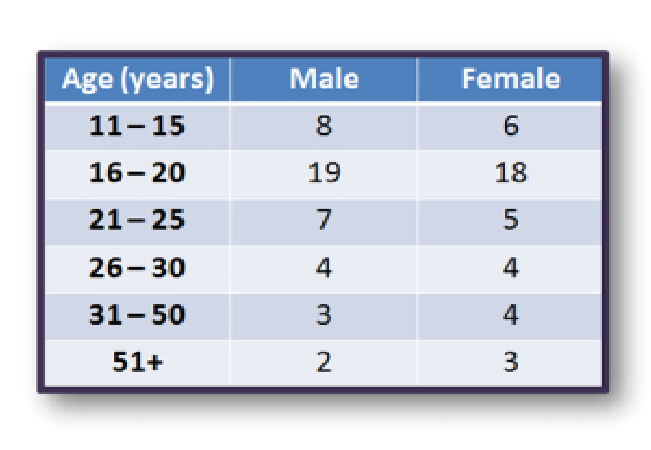
Student answer (Band 5.0)
The data provides the information regard the estimate hours spent on the internet by European residents of various age groups.
Overall, the table provides the data of people from 11 years to 51+ used the internet. The residents of Europe in between age 16 to 20 are more engaged with the Internet. The amount of male is significantly increased. The female are spending less time on the social media.
The children and teenager are utilizing their time more on the Internet as compare to Adults. The resident of Europe in between age 11 to 25 years are reportedly spending their time on the Internet. furthermore, The adults are spending less time on the Internet as per the data provided in the chart.
On making comparison, male are compartively spending more time than the female. The people of 26 to 30 year remain the same. Moreover, people who are 50 plus they are not spending much time on the internet, as per the given data.
AI examiner evaluation
| Criterion | Band |
|---|---|
| Task Achievement / Task Response | 5.0 |
| Coherence and Cohesion | 5.5 |
| Lexical Resource | 5.0 |
| Grammatical Range and Accuracy | 5.0 |
| Overall | 5.0 |
Task Achievement / Task Response: Band 5.0
You identify the broad pattern that the 16–20 group spends the most time online and that usage is generally lower among older groups. However, the response only partially reports the table: it gives no figures, and claims such as “children and teenager are utilizing their time more” are too broad, since the 11–15 group is below the 16–20 group and the 21–25 group. The statement that females spend less time on “social media” also changes the subject: the table concerns Internet use, not social media. Include the key values and describe the pattern more precisely—for example, both sexes peak at 19 and 18 hours for ages 16–20, then fall markedly.
Coherence and Cohesion: Band 5.5
The response has separate paragraphs for an introduction, overview and comparisons, so there is some organisation and the reader can follow the general topic. However, progression is limited because the same broad points—young people use the Internet more and older people less—are repeated across paragraphs rather than developed through a clear comparison of age groups. Connectors such as “Moreover” and “On making comparison” do not always introduce a distinct or well-supported point, and “furthermore” is incorrectly capitalised after a full stop. A clearer sequence would be to give an overview, then compare the younger groups, followed by the older groups and the male–female differences.
Lexical Resource: Band 5.0
You use relevant topic vocabulary, including “age groups,” “engaged,” and “comparison,” and the meaning is generally recoverable. However, the range is limited and several choices are inaccurate or awkward for describing a table. “Social media” is not equivalent to Internet use, while “amount of male” and “remain the same” are imprecise ways to describe hours. Repeated use of “spending time” also makes the account less precise. Use standard data-reporting collocations such as “spend an average of,” “record,” “peak at,” and “decline,” and refer consistently to “men,” “women,” or “male and female users.”
Grammatical Range and Accuracy: Band 5.0
The response mainly uses short, simple statements, with limited control of more complex structures. Errors occur frequently in sentence construction and agreement: “The data provides the information regard” lacks a grammatical link, “The female are spending” has incorrect agreement, and “The people of 26 to 30 year remain the same” has an incomplete comparison and incorrect number form. The sentence beginning “Moreover, people who are 50 plus they…” also uses an unnecessary repeated subject. These errors sometimes make relationships between ideas unclear. Practise accurate comparative sentences, such as “Men aged 26–30 and women in the same group spend equal amounts,” and check subject–verb agreement and sentence boundaries.
See this exact question answered at other band scores. The same prompt compared across bands.
Browse more IELTS Writing model answers or get your own writing scored by the same AI examiner.