Band 5.5 IELTS Writing Task 1 Model Answer
Overall Band Score: 5.5 · IELTS Academic Practice Accelerator · 2026-11-13
IELTS Writing Task 1 question
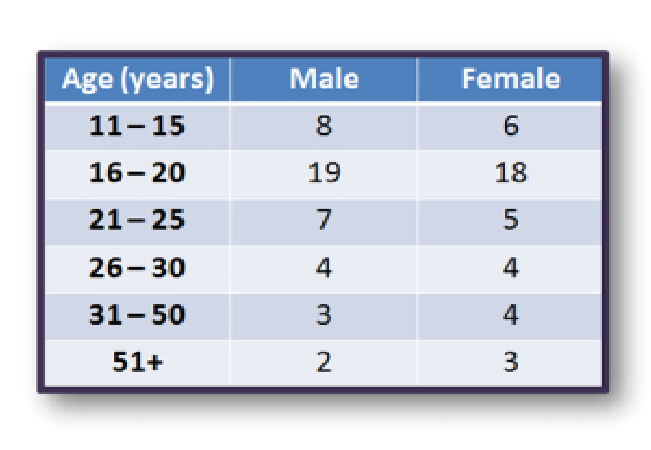
The table gives information about the average hours spent on the Internet by European people of different age groups.
Summarise the information by selecting and reporting the main features, and make comparisons where relevant.
Student answer (Band 5.5)
The table compares the average usage of the Internet by European people, dividing them to six age groups.
Overall, the group who spent most hours on the Internet for both genders was people between 16 and 20 years old. Conversely, the least amount of time spent on the Internet accounted for the oldest group, people whose age were above 51.
To begin with, there is a large gap between the group ages 16 to 20 and others. While, men and women in this group spent 19 and 18 hours respectively, this number for the elderly people whose age were between 31 and 50 was only 3 and 4 hours respectively. Similarly, the group of people whose ages were 51 and above spent only 2 and 3 hours.
The usage of the Internet among the youngest group was the second highest, with 8 hours for males and 6 hours for females.
AI examiner evaluation
| Criterion | Band |
|---|---|
| Task Achievement / Task Response | 5.5 |
| Coherence and Cohesion | 5.0 |
| Lexical Resource | 6.0 |
| Grammatical Range and Accuracy | 6.0 |
| Overall | 5.5 |
Task Achievement / Task Response: Band 5.5
You identify the main peak accurately: people aged 16–20 record the highest figures for both sexes, and those aged 51+ the lowest. You also report the youngest group’s figures correctly and compare the peak with the older groups. However, the summary is selective to the point of being incomplete: it omits the 21–25 and 26–30 groups, including the equal four-hour figures for men and women aged 26–30, and does not describe the overall decline after the 16–20 peak. The comparison of the 31–50 group with the 51+ group is useful, but the overview could better capture the full pattern across all ages. Include the omitted middle groups and make the trend clearer.
Coherence and Cohesion: Band 5.0
The response has a recognisable structure: an introduction, an overview, and two detail paragraphs. The overview gives the reader a useful starting point, and phrases such as “To begin with” and “Similarly” signal relationships between details. However, the progression is limited because the report moves from the peak to the oldest groups and then back to the youngest, while leaving the middle age groups unaddressed. “While” is also used awkwardly after a full stop (“While, men and women…”), which interrupts the connection between ideas. Organise the details in age order or group the peak, middle ages, and oldest groups systematically, and use linking expressions only where they clarify the relationship.
Lexical Resource: Band 6.0
You use an adequate range of task-related vocabulary, including “average usage,” “dividing,” “respectively,” and “second highest,” and the meaning is generally clear. There is some variation in how you refer to the groups, such as “youngest group” and “oldest group.” However, several expressions are imprecise or unnatural for describing table data: “the group who spent most hours … was people” and “the least amount of time … accounted for the oldest group.” “This number” is also vague when referring to hours. Choose more direct collocations such as “recorded the highest average” and “the figure for this group,” and use “age groups” rather than repeatedly describing people by their ages.
Grammatical Range and Accuracy: Band 6.0
You use a mix of simple and complex forms, including a relative clause (“people whose age were above 51”) and a contrast structure beginning with “While.” Most of the information remains understandable, and the figures are presented in clear subject–verb patterns. Some errors remain in agreement and sentence construction: “the group who … was people” mismatches singular and plural, while “people whose age were” should use a plural noun with a matching verb, or be recast as “people aged over 51.” The sentence beginning “While, men and women…” is incorrectly punctuated and leaves the subordinate clause awkwardly attached. Review agreement and ensure that clauses introduced by “while” are joined to a complete main clause.
See this exact question answered at other band scores. The same prompt compared across bands.
Browse more IELTS Writing model answers or get your own writing scored by the same AI examiner.