Band 5.5 IELTS Writing Task 1 Model Answer
Overall Band Score: 5.5 · IELTS Academic Practice Accelerator · 2026-11-13
IELTS Writing Task 1 question
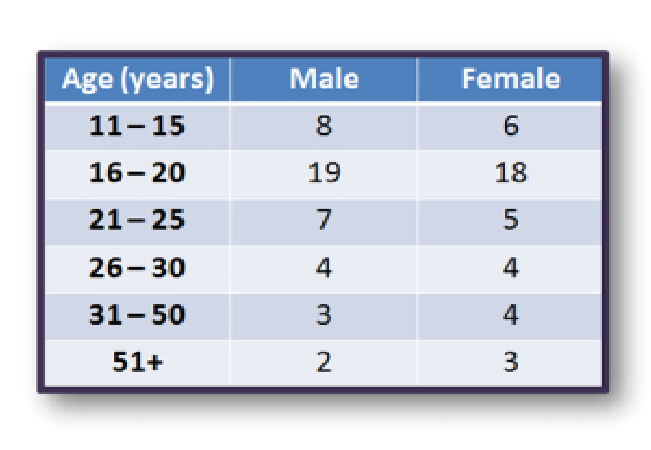
The table gives information about the average hours spent on the Internet by European people of different age groups.
Summarise the information by selecting and reporting the main features, and make comparisons where relevant.
Student answer (Band 5.5)
The table illustrates the number of hours different age groups of European people spent on the internet.
Overall, it is evidant that the late adolescence were the most popular internet users among the all age groups. However, older people seems the lowest in number spending time on the internet.
In 11-15 age groups, male users spent eight hours per day whereas female users spent six hours on the social media. However, the 2nd group which is 16-20 age people seems the highest users where the male users used 19 hours and female users used 18 hours each day. Adult users used moderate amout of time such as 7 (male) to 5 ( female) hours. While, mid 20s people both male and female spent same amout of time which is four hours on the internet. Above 30 to 50 years of groups used less time which is 3 to 4 for hours both male and female respectively. 51 plus groups were the most lowest users who spent 2-3 hours on the internet.
AI examiner evaluation
| Criterion | Band |
|---|---|
| Task Achievement / Task Response | 5.5 |
| Coherence and Cohesion | 5.5 |
| Lexical Resource | 5.5 |
| Grammatical Range and Accuracy | 5.0 |
| Overall | 5.5 |
Task Achievement / Task Response: Band 5.5
You identify the main pattern: the 16–20 group records the highest figures for both sexes, while the 51+ group records the lowest, and you include several accurate comparisons. However, the overview is not fully clear: “late adolescence” is imprecise, and “older people seems the lowest in number” confuses the number of users with hours spent. Some details are also unclear or misrepresented. The table gives hours, but you add “per day” and refer to “social media,” neither of which is specified. The 21–25 figures are reported as adult users without clearly identifying the age group, and the 31–50 comparison is difficult to follow. Select the key age-group trends and describe the figures consistently as hours spent online.
Coherence and Cohesion: Band 5.5
The response has a basic structure, with an introduction, an overview and a paragraph of supporting figures. This helps the reader recognise the broad purpose and the main high and low groups. However, progression within the final paragraph is uneven: the age groups are listed in sequence, but the comparisons are sometimes compressed into fragments, such as “Adult users used moderate amount of time” and “While, mid 20s people…”. Repeated use of “However” does not always show a genuine contrast, and “which is” is used repeatedly to introduce data. Make each age band a clear comparison, use linking words only where their meaning fits, and separate the overview from the detailed comparisons more cleanly.
Lexical Resource: Band 5.5
You use relevant vocabulary such as “age groups,” “spent,” “users” and “hours,” so the topic is generally understandable. There are also attempts to vary expression, including “late adolescence” and “moderate amount.” However, word choice and collocation are often inaccurate or repetitive: “the most popular internet users” does not clearly mean the group spending the most time online, and “the most lowest users” is not a natural expression. “Social media” is also too specific because the table concerns Internet use generally. Spelling errors such as “evidant” and “amout” further reduce control. Aim for precise, neutral report language, for example “recorded the highest average” and “spent fewer hours online.”
Grammatical Range and Accuracy: Band 5.0
You attempt some longer sentences and use comparison structures, including “whereas” and “who spent,” but control is inconsistent. Agreement errors appear in “older people seems” and “the late adolescence were,” while sentence construction is faulty in “While, mid 20s people both male and female spent same amount of time.” Articles and plurals are also often missing or misplaced, as in “in 11-15 age groups” and “51 plus groups.” The final sentence, “which is 3 to 4 for hours both male and female respectively,” is difficult to parse. Use straightforward complete sentences first, check subject–verb agreement, and place “respectively” directly after the paired figures or categories.
See this exact question answered at other band scores. The same prompt compared across bands.
Browse more IELTS Writing model answers or get your own writing scored by the same AI examiner.