Band 5.0 IELTS Writing Task 1 Model Answer
Overall Band Score: 5.0 · IELTS Academic Practice Accelerator · 2026-11-14
IELTS Writing Task 1 question
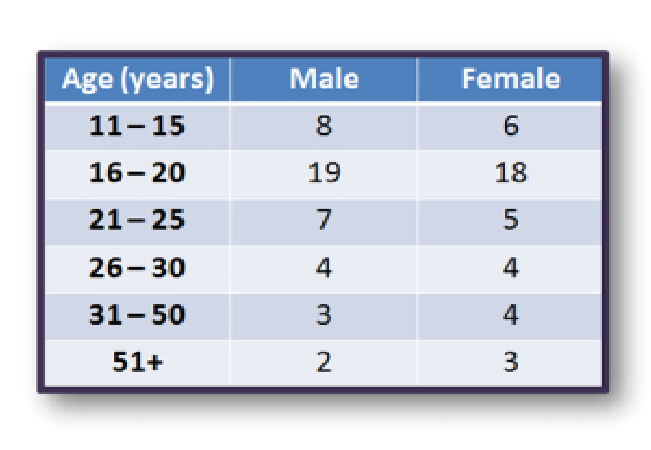
The table gives information about the average hours spent on the Internet by European people of different age groups.
Summarise the information by selecting and reporting the main features, and make comparisons where relevant.
Student answer (Band 5.0)
In twenty first centuary internet plays an significant role in our daily life. It ease our work and saves a lot time, but alslo on another hand we became depandent and wasting most of our time on internet.
Recently an research was carried arround the different countries of the europe to examine how much time is spent by an european male or female on internet, and the study was carried out through different age groups. the first groups was of teenagers between 11 to 15 years of age, it seems that females are spent 6 hours on daily basis but males are spending two hours more than female. Another group of candidates who's ages are between 16 to 20, there results are shocking that an male is spending 19 hours a day on internet and female's are slitly less with 18 hours a day. Next group of 21 to 25 years male particepants 7 hours and female particepants 5 hours a day. there were two more groups of age 26-30 and 31-50 these two groups spent an average time 4 hours a day. And the result of last group was very shocking they all are 50+ the male spending 2 hours and female are spending 3 hours a day.
AI examiner evaluation
| Criterion | Band |
|---|---|
| Task Achievement / Task Response | 4.5 |
| Coherence and Cohesion | 5.5 |
| Lexical Resource | 5.0 |
| Grammatical Range and Accuracy | 5.0 |
| Overall | 5.0 |
Task Achievement / Task Response: Band 4.5
You report several figures accurately, including the peak for 16–20-year-olds (19 hours for males and 18 for females), and the lower figures for the oldest group. However, the response does not provide a clear overview of the main pattern: usage peaks at ages 16–20 and then generally declines, while male figures are usually higher, with two exceptions. Some details are also inaccurate or incomplete. For ages 26–30, both sexes spend 4 hours, but for ages 31–50 the figures are 3 hours for males and 4 for females, not an average of 4 for both. The introduction about the Internet’s role is not relevant to summarising the table. Focus on the data and state the key trends before giving selected comparisons.
Coherence and Cohesion: Band 5.5
The response follows the age groups in a broadly understandable order, and phrases such as “Another group” and “Next group” help signal movement through the table. However, the information is presented as one long body paragraph after two introductory paragraphs, so the main features are not clearly separated from the details. The opening general comments also delay the relevant information, and the sequence becomes repetitive because each age group is introduced in a similar way. Some links between ideas are unclear, particularly in “there were two more groups… these two groups spent an average time 4 hours,” which combines distinct data. Use a short introduction, a separate overview, and one or two paragraphs grouping the figures into meaningful patterns.
Lexical Resource: Band 5.0
You use some task-related vocabulary, including “age groups,” “participants,” and “hours a day,” which makes the subject recognisable. However, the range is limited and several word choices or collocations are inaccurate, such as “an research,” “carried arround,” and “the first groups.” Spelling errors—including “centuary,” “alslo,” “dependant,” and “slightly”—are noticeable and sometimes slow the reader. The response also uses informal or evaluative wording such as “shocking” and “very shocking,” which is unsuitable for a neutral data summary. Build a more precise set of terms for describing figures and trends, and check spelling and word forms carefully. For example, use “survey” or “study” rather than “research” with an article, and “rose to a peak” or “declined” to describe patterns.
Grammatical Range and Accuracy: Band 5.0
You attempt some longer sentences and comparisons, for example, “males are spending two hours more than female,” but control is inconsistent. Errors in articles, agreement, and verb forms occur frequently: “an significant role,” “It ease our work,” and “females are spent 6 hours” are examples. Several sentences are fragments or lack a clear grammatical structure, including “Next group of 21 to 25 years male participants 7 hours…” and “the male spending 2 hours.” Punctuation and capitalisation are also uneven, with a lower-case “the” after a full stop and long sentences joined without clear boundaries. Practise accurate simple sentences first, then combine them using controlled clauses: “Males aged 11–15 spent eight hours, two more than females.”
See this exact question answered at other band scores. The same prompt compared across bands.
Browse more IELTS Writing model answers or get your own writing scored by the same AI examiner.