Band 5.0 IELTS Writing Task 1 Model Answer
Overall Band Score: 5.0 · IELTS Academic Practice Accelerator · 2026-11-15
IELTS Writing Task 1 question
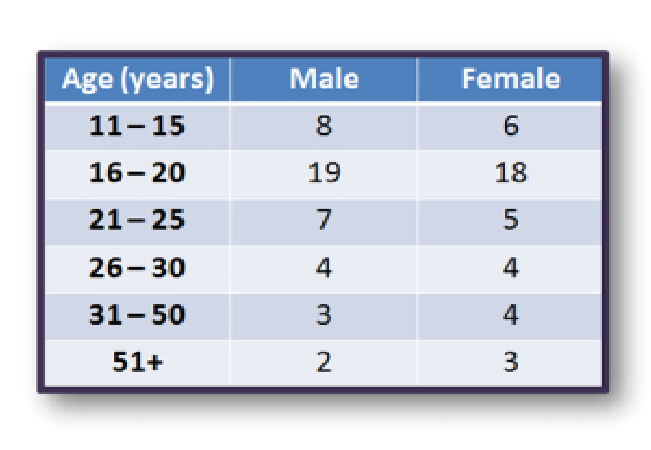
The table gives information about the average hours spent on the Internet by European people of different age groups.
Summarise the information by selecting and reporting the main features, and make comparisons where relevant.
Student answer (Band 5.0)
The given table compares the average hours spent on internet in an European country of six age groups of male and female.
Overall, people of both gender between the ages 16-20 spent the highest average hours on internet, whereas the lowest proportion of male over 51 consumed their time. However, all age groups of both gender consumed their time on internet, there was a decreasing trend as age numbers increased.
It is clear that the individuals between the age16-20, utilized the highest part of their time on internet, and average 19 and 18, but people over the age 51 especially males consumed lowest proportio of their tme on usning internet, at 2. In addition, the average of hours using internet almost the same among all age groups and gende. Furthermore, there was a decline in the time spent on internet as numbers of age increased. So, there was an end with an average hours 3 for male and 2 for females.
AI examiner evaluation
| Criterion | Band |
|---|---|
| Task Achievement / Task Response | 5.5 |
| Coherence and Cohesion | 5.0 |
| Lexical Resource | 5.0 |
| Grammatical Range and Accuracy | 5.0 |
| Overall | 5.0 |
Task Achievement / Task Response: Band 5.5
You identify the main peak correctly: the 16–20 group records the highest figures for both sexes, at 19 hours for males and 18 for females. You also recognise that usage generally falls among older groups. However, the overview is not fully accurate: the lowest figures are 2 hours for males aged 51+ and 3 for females, while your final sentence reverses these values. The claim that hours decrease as age increases is also too broad, since usage rises from ages 26–30 to 31–50 for females, and males and females are equal at 4 hours in the 26–30 group. Several comparisons are mentioned but not clearly reported, so the key patterns are only partly covered.
Coherence and Cohesion: Band 5.0
The response has an opening, an overview, and a further paragraph, and it uses linking expressions such as “Overall,” “However,” and “Furthermore.” These give the reader some sense of organisation. However, the progression is limited because the same points—the 16–20 peak and a general decline with age—are repeated several times rather than developed through a clear comparison of age groups. The final paragraph also moves between the peak, the oldest group, and a broad claim about all groups without a consistent sequence. Some connections are unclear, particularly “So, there was an end with an average hours 3 for male and 2 for females.” Grouping the figures into younger and older age ranges would make the progression easier to follow.
Lexical Resource: Band 5.0
You use some task-relevant vocabulary, including “average hours,” “age groups,” “highest,” and “decreasing trend,” so the topic is generally understandable. However, the range is limited and several expressions are repeated or do not fit the data-reporting context. “Consumed their time on internet” is an unnatural way to describe usage, while “highest part of their time” and “lowest proportion” are imprecise because the table reports hours, not proportions. There are also noticeable spelling and word-form errors, such as “proportio,” “tme,” and “usning,” which interrupt reading. Aim for precise, natural phrases such as “spent the most hours online” and “the figure fell to,” and avoid using several different but inaccurate expressions for the same trend.
Grammatical Range and Accuracy: Band 5.0
You attempt both simple and more complex sentences, including a contrast with “whereas” and a clause beginning “as age numbers increased.” However, errors are frequent, and some sentences are difficult to interpret. For example, “The given table compares … in an European country of six age groups of male and female” has problems with article use, prepositions, and sentence structure. In “people of both gender,” the noun should be plural, and “between the ages 16-20” needs a more complete grammatical construction. The sentence beginning “It is clear that” also lacks a clear structure around “and average 19 and 18.” Practise building accurate comparison sentences with a clear subject and verb, and check articles, agreement, and punctuation.
See this exact question answered at other band scores. The same prompt compared across bands.
Browse more IELTS Writing model answers or get your own writing scored by the same AI examiner.