Band 6.0 IELTS Writing Task 1 Model Answer
Overall Band Score: 6.0 · IELTS Academic Practice Accelerator · 2026-11-15
IELTS Writing Task 1 question
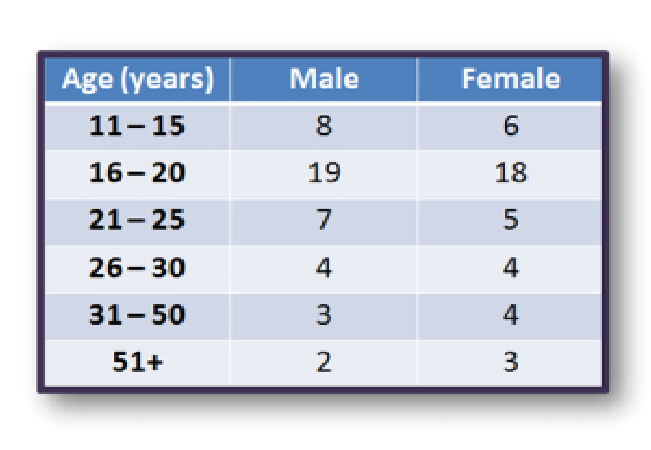
The table gives information about the average hours spent on the Internet by European people of different age groups.
Summarise the information by selecting and reporting the main features, and make comparisons where relevant.
Student answer (Band 6.0)
The table presents data about how European different gender ( male,female) used interent in usual hours,expressed with different age.
Overall,people with age 16-20 spent the largest time in the Interent for both gender,while people more than 51 had the smallest figures in both groups.In contrast people with 11-15, 21-25, and 31-50 and had almost the same hours, also group of age 26-30 had the same amount of Internet for male and female.
children's between 11 and 15 years , which male spent 8 hours and female 6 hours,meanwhile men and womens between 21-25 , showed 7 hours and 5 hours,respectivly, spent it in the internet, also the range of age 31-50 stood at 3 hours for male and 4 hours for female.
On the other hand, person with 16-20 had the highest value in both gender with 19 and 18 , for men and women,respectivly.However,eldest people spent a small time in the Internet with just 2 hour for male and 3 hours for female.
AI examiner evaluation
| Criterion | Band |
|---|---|
| Task Achievement / Task Response | 6.5 |
| Coherence and Cohesion | 6.0 |
| Lexical Resource | 5.5 |
| Grammatical Range and Accuracy | 5.0 |
| Overall | 6.0 |
Task Achievement / Task Response: Band 6.5
The response identifies the main pattern accurately: the 16–20 group records the highest figures for both sexes, while the 51+ group records the lowest. It also reports several relevant comparisons correctly, including 8 versus 6 hours for ages 11–15 and equal figures for ages 26–30. This gives the summary a clear overview and covers the table’s key age groups. However, the overview’s claim that the 11–15, 21–25 and 31–50 groups have “almost the same hours” is unclear and does not describe a meaningful overall pattern; the figures vary across these groups. The 26–30 figures are also omitted from the detailed comparisons. More precise selection and explanation of the middle-age patterns would make the report more fully developed.
Coherence and Cohesion: Band 6.0
The response has a recognisable structure, moving from an introduction and overview to comparisons of specific age groups. The contrast between the highest and lowest figures is easy to follow, and linking expressions such as “Overall,” “On the other hand” and “However” help signal relationships. However, some connections are mechanical or unclear. For example, “In contrast” does not clearly connect the groups that follow, and the sentence beginning “Overall” combines several patterns without a clear hierarchy. The final paragraph also repeats the highest and lowest points already stated in the overview. Organising the details into a clearer comparison of younger groups and older groups, while avoiding repetition, would improve progression and cohesion.
Lexical Resource: Band 5.5
The response uses enough topic vocabulary to communicate the main comparisons, including “largest,” “smallest figures,” “hours” and “highest value.” It also attempts some variation in describing the data. However, several word choices and collocations are inaccurate or unnatural, such as “used internet in usual hours,” “spent it in the internet” and “small time.” Spelling errors, including “interent” and “respecitvly,” are noticeable, and inconsistent forms such as “men and womens” reduce precision. These issues do not prevent the reader from understanding the figures, but they make the report less fluent and precise. Use standard expressions such as “spent time online” and check spelling and word forms carefully.
Grammatical Range and Accuracy: Band 5.0
The response attempts both simple and more complex sentences, including clauses introduced by “while” and “which,” and the main comparisons are generally understandable. However, control is uneven, with errors in sentence structure, agreement, articles and punctuation. For example, “The table presents data about how European different gender … used” has an awkwardly formed clause, while “people with age 16-20 spent” lacks a natural grammatical construction. The sentence “In contrast people with 11-15, 21-25, and 31-50 and had…” is also structurally faulty. Commas are frequently missing after introductory phrases, and spacing around punctuation is inconsistent. Build clearer sentence patterns first, then use subordinate clauses accurately and proofread punctuation.
See this exact question answered at other band scores. The same prompt compared across bands.
Browse more IELTS Writing model answers or get your own writing scored by the same AI examiner.