Band 5.0 IELTS Writing Task 1 Model Answer
Overall Band Score: 5.0 · IELTS Academic Practice Accelerator · 2026-11-16
IELTS Writing Task 1 question
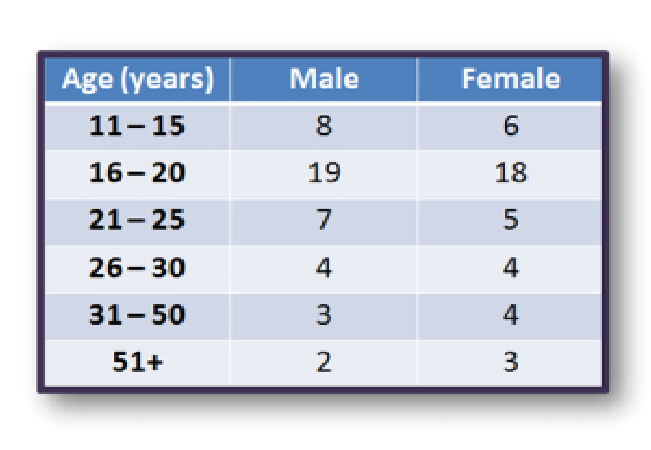
The table gives information about the average hours spent on the Internet by European people of different age groups.
Summarise the information by selecting and reporting the main features, and make comparisons where relevant.
Student answer (Band 5.0)
The table illustrates the information about averge hours on the internet spent by European people at different stages of life.
The male between age 11-15 spent 8 hours per day ,while 16-20 spending 19 hours which is too long from all. so male between 21-25 spending 7 hours while 26-30 spend 4 hours ,31-50 also spend 3 hours and 51 0r more spending 2 hours daily which is very less among all.
On the the other hand, female between age 11-15 spent 6 hours per day ,while 16-20 spending 18 hours which is too long from all. so female between 21-25 spending 5 hours while 26-30 spend 4 hours ,31-50 also spend 4 hours and 51 0r more spending 3 hours daily which is very less amomg all.
Overall, more time on internet as compared to female and both male and female spent is in age between 16-20
AI examiner evaluation
| Criterion | Band |
|---|---|
| Task Achievement / Task Response | 5.0 |
| Coherence and Cohesion | 5.5 |
| Lexical Resource | 5.0 |
| Grammatical Range and Accuracy | 5.0 |
| Overall | 5.0 |
Task Achievement / Task Response: Band 5.0
You report the figures for every age group and correctly identify the 16–20 group as having the highest Internet use for both sexes. However, the overview is unclear: “more time on internet as compared to female” does not specify that males generally spend more time, and it overlooks the exceptions in the 26–30 and 31–50 groups, where the figures are equal or higher for females. The response mainly lists values rather than selecting and comparing the key patterns, so the main features are only partly developed. Also, the response is 148 words, two words below the required minimum. Add a clearer overview and compare the overall decline after ages 16–20, while noting the small differences between males and females.
Coherence and Cohesion: Band 5.5
The response has a basic structure, with an opening, separate descriptions of male and female figures, and a concluding overview. This makes the information reasonably easy to locate. However, the two middle paragraphs repeat almost the same sequence, and the progression is largely a list of age groups rather than a comparison of patterns. Linking words such as “so” and “On the other hand” are used mechanically; the latter introduces a parallel set of figures rather than a clear contrast. The conclusion also does not connect smoothly to the detailed reporting. Grouping the sexes together by age range and using comparisons such as “whereas” or “by contrast” would create clearer progression and reduce repetition.
Lexical Resource: Band 5.0
You use relevant basic terms such as “average hours,” “age,” and “spent,” and the reader can generally understand the figures being described. However, the vocabulary is limited and repetitive, particularly the repeated use of “spending” and “too long from all.” Several expressions are unnatural or imprecise: “very less among all” and “more time on internet as compared to female” do not communicate comparisons clearly. There are also spelling errors, including “averge” and “amomg,” and “0r” appears in place of “or.” Use more precise language for trends and comparisons, such as “the highest figure,” “declined,” and “slightly higher,” and check spelling before submitting.
Grammatical Range and Accuracy: Band 5.0
The response attempts to report several figures in connected sentences, but its grammatical range is limited and errors occur frequently. Verb forms are often incomplete or inconsistent: “16-20 spending 19 hours” and “21-25 spending 7 hours” need a finite verb, such as “those aged 16–20 spent.” The opening phrase “The male between age 11-15” also has problems with number and article use; “males aged 11–15” is more accurate. Sentence boundaries and punctuation are unreliable, as shown by “from all. so male,” while spaces before commas are unnecessary. Practise complete subject–verb sentences and consistent past-tense reporting, then check articles, plurals, and punctuation.
See this exact question answered at other band scores. The same prompt compared across bands.
Browse more IELTS Writing model answers or get your own writing scored by the same AI examiner.