Band 5.5 IELTS Writing Task 1 Model Answer
Overall Band Score: 5.5 · IELTS Academic Practice Accelerator · 2026-11-16
IELTS Writing Task 1 question
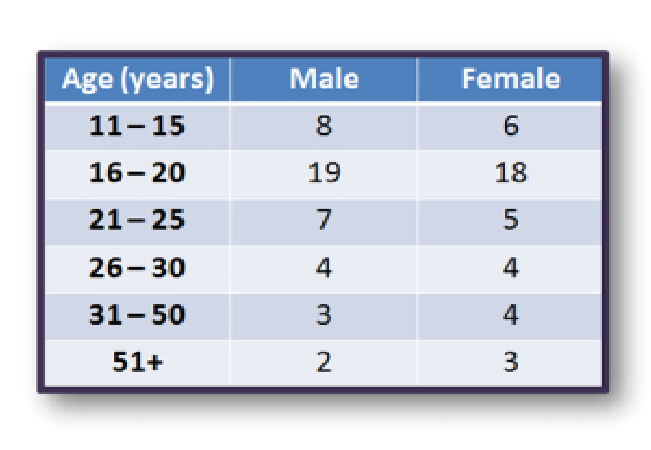
The table gives information about the average hours spent on the Internet by European people of different age groups.
Summarise the information by selecting and reporting the main features, and make comparisons where relevant.
Student answer (Band 5.5)
The table provide data of the average internet usage in hour grouped by different age european people. Overall the male user spend more time than female user while age group thirthy plus to fifty shows a slight difference.
The Most usage by the mature teenage group which is age 16 to 20, this group almost use the phone whole day, male and female shows similar result for this group where male use on average nineteen hour and female use one less hour on average. The age group below this placed second by usage which roughly use one third of higest usage group.
With incresing age group the usage reduce, like for the new adult age group it's rarely one third of the for the male user and for female it almost one fifth of a day. For rest of the age group usage reduce as the age increase and almost for all of the age group usage by male are higer except the mid age group where female spend one more hour on the internet.
AI examiner evaluation
| Criterion | Band |
|---|---|
| Task Achievement / Task Response | 6.0 |
| Coherence and Cohesion | 6.0 |
| Lexical Resource | 5.5 |
| Grammatical Range and Accuracy | 5.0 |
| Overall | 5.5 |
Task Achievement / Task Response: Band 6.0
You identify the main pattern: usage peaks among 16–20-year-olds and generally declines in older groups. The key figures for the peak are accurate, and you note the female advantage in the 31–50 group. However, some comparisons are unclear or imprecise. For example, the 11–15 group is described as using “roughly one third” of the peak, although its figures are 8 and 6 compared with 19 and 18; this is closer to two-fifths. The overview also says males spend more time overall, but the table shows females exceed males in two groups and tie in one. Develop the overview with the overall age trend and the small gender differences, then report the figures consistently.
Coherence and Cohesion: Band 6.0
The response has a clear overall arrangement: an introduction and overview are followed by comparisons of the younger and older groups. This gives the reader a basic progression through the data. Linking phrases such as “Overall,” “With increasing age,” and “For rest of the age group” help connect the points, although some transitions are awkward or repetitive. The second paragraph’s opening, “The Most usage by the mature teenage group,” does not clearly connect to the previous overview, and “this group” is repeated without always making the reference precise. Improve cohesion by using clear topic sentences and grouping the figures into a peak group, a younger group, and the older groups. This would make the comparisons easier to follow.
Lexical Resource: Band 5.5
You use relevant vocabulary for describing data, including “average,” “usage,” “age group,” “similar,” and “reduce,” so the main comparisons are generally understandable. There are also attempts at more specific phrasing, such as “mature teenage group,” but this is not a natural description of the 16–20 age range. Several spelling errors—“thirthy,” “incresing,” “higest,” and “higer”—and imprecise expressions such as “whole day” and “new adult” reduce accuracy and polish. Some word choices are also repetitive, particularly “usage” and “group.” Build a more precise range with terms such as “time spent online,” “peak,” “decline,” and “young adults,” and check spelling carefully.
Grammatical Range and Accuracy: Band 5.0
You attempt a mixture of simple and longer sentences, and the overall meaning can usually be understood. However, errors in sentence structure and agreement occur in several places. For example, “The table provide data” needs subject–verb agreement, while “the male user spend” and “male and female shows” also require plural or singular forms to match their subjects. The sentence beginning “The Most usage by…” is incomplete, and “it's rarely one third of the for the male user” has a faulty structure that makes the comparison difficult to interpret. Articles and number forms are also inconsistent. Practise building complete sentences with a clear subject and verb, then check agreement and article use, especially in longer comparisons.
See this exact question answered at other band scores. The same prompt compared across bands.
Browse more IELTS Writing model answers or get your own writing scored by the same AI examiner.