Band 5.5 IELTS Writing Task 1 Model Answer
Overall Band Score: 5.5 · IELTS Academic Practice Accelerator · 2026-11-16
IELTS Writing Task 1 question
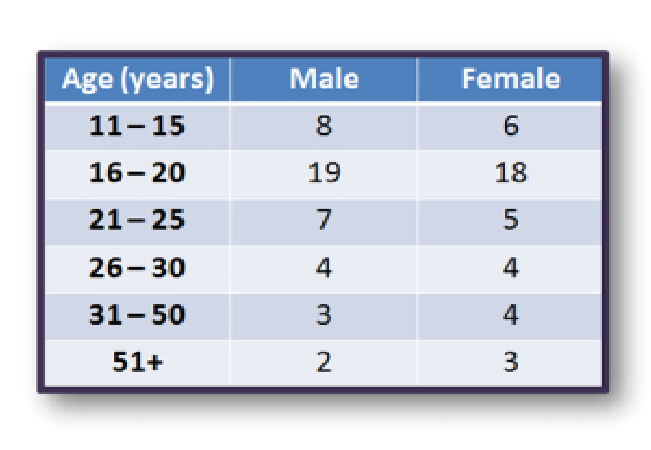
The table gives information about the average hours spent on the Internet by European people of different age groups.
Summarise the information by selecting and reporting the main features, and make comparisons where relevant.
Student answer (Band 5.5)
The given table illustrates the internet hours spent by the different age goups of people of europe.the maximum time spent on the interent is by the age group of young people and minimum hours are wasted by the older people.
if i talk about the persons of age categories between eleven to fifteen a few of devote time to internet usage.there are eight males and six females.the majority range is of the young individuals ranging from sixteen to tewenty.there are 19 men and women.
After this generation number of internet users are decreasing rather than increasing.now there is the age brackets of adult members of society ranging from 21 to 25.there are 7 adult men and 5 adult women who waste their time on internet.this age catogery is mostly of struggling individuals,thats why they have not much time to use internet.now there is the age ranges 26 to 30.same in this case there are few of adult men and women only 4 men and 4 women.this age group is mostly of married people.
There is a age group of uncle and aunties as it is 31 to 50.this group is almost of public that is becoming old and there are 3 uncles and 4 aunties.
At last,there is the minimum category of internet users that are of older people of 51 plus and there are 2 men and 3 women and this is the age of retirement.
AI examiner evaluation
| Criterion | Band |
|---|---|
| Task Achievement / Task Response | 5.5 |
| Coherence and Cohesion | 6.0 |
| Lexical Resource | 5.0 |
| Grammatical Range and Accuracy | 5.0 |
| Overall | 5.5 |
Task Achievement / Task Response: Band 5.5
You identify the main pattern: internet use peaks among 16–20-year-olds and is lowest among those aged 51+, and you report most of the table’s figures accurately. However, the overview is brief, and the response does not consistently present the data neutrally. For example, calling internet use “wasted” time is an unsupported judgement, while claims that 21–25-year-olds are “struggling individuals” and that 26–30-year-olds are mostly married are not shown in the table. The comparison between males and females could also be made more clearly: males record higher figures in the younger groups, the sexes are equal at 26–30, and females are slightly higher in the older groups. Focus on describing the evidence and developing these key comparisons.
Coherence and Cohesion: Band 6.0
The response follows the age groups in table order, so the reader can generally follow its progression from the youngest to the oldest people. You also use basic linking phrases such as “After this generation” and “At last.” However, the organisation is largely a sequence of separate descriptions rather than a clear overview followed by grouped comparisons. Repeated openings such as “there is the age group” make the progression mechanical, and some references, including “this group,” are not always precise. The paragraphing could better distinguish the overall pattern from the supporting figures. Begin with a concise overview, then group the age bands with similar trends and use comparisons to connect them.
Lexical Resource: Band 5.0
You use enough basic vocabulary to communicate the age groups and figures, including “maximum,” “minimum,” “decreasing,” and “ranging from.” However, the range is limited and several choices are inaccurate or unsuitable for an objective report. “Wasted” and “uncle and aunties” are informal or judgemental, while “a few of devote time” does not express the intended meaning clearly. Spelling errors such as “goups,” “interent,” “tewenty,” and “catogery” are noticeable and reduce precision. Aim for neutral terms such as “hours spent online,” “participants,” and “age group,” and use accurate collocations. Proofreading spelling and avoiding unsupported descriptions will make your account clearer and more appropriate to the task.
Grammatical Range and Accuracy: Band 5.0
You attempt both simple statements and longer sentences, and the reader can usually identify the figures being reported. However, grammatical control is inconsistent, particularly in sentence boundaries, articles, agreement, and sentence construction. For example, “The given table illustrates … europe.the maximum time” joins sentences without appropriate capitalisation or punctuation, and “there are 19 men and women” does not clearly state the separate male and female figures. Phrases such as “a few of devote time” and “There is a age group” also show problems with grammatical structure and articles. Use complete, clearly punctuated sentences and check agreement and article use. More accurate control of these basic forms would make your comparisons easier to understand.
See this exact question answered at other band scores. The same prompt compared across bands.
Browse more IELTS Writing model answers or get your own writing scored by the same AI examiner.