Band 6.0 IELTS Writing Task 1 Model Answer
Overall Band Score: 6.0 · IELTS Academic Practice Accelerator · 2026-11-16
IELTS Writing Task 1 question
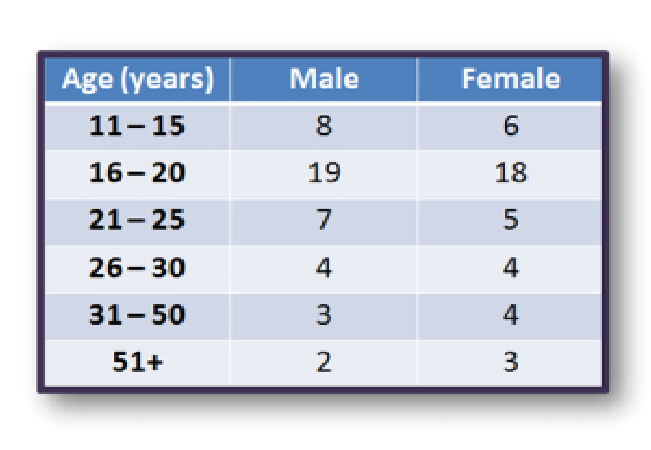
The table gives information about the average hours spent on the Internet by European people of different age groups.
Summarise the information by selecting and reporting the main features, and make comparisons where relevant.
Student answer (Band 6.0)
The table demonstrates categories of different age groups in Europe who spend average time on the internet.
Overall, the most number of people who spent time on the internet in Europe are people between the ages of 16 and 20. Males average around 19 hours and females average 18 hours.
There is a sharp decline in the usage of internet after people turn 21. In people between the ages of 21--25, males who previously spent 19 hours fell to 9 hours. That is a difference of 12 hours whereas the usage of females declined to 5 hours, a reduction of 13 hours on average.
A steady decrease can be seen in ages 26 to 30 for males and females where they spend 4 hours on average. In people aged 31 to 50, males average around 3 hours and females 4 hours. After people turn 51, the average is 2 hours of males and 3 hours for females.
AI examiner evaluation
| Criterion | Band |
|---|---|
| Task Achievement / Task Response | 6.0 |
| Coherence and Cohesion | 6.5 |
| Lexical Resource | 5.5 |
| Grammatical Range and Accuracy | 6.0 |
| Overall | 6.0 |
Task Achievement / Task Response: Band 6.0
You identify the main pattern: internet use peaks among 16–20-year-olds and is much lower in the older groups, with figures for both sexes. However, some reporting is inaccurate: for ages 21–25, male use is 7 hours, not 9, so the fall from 19 hours is 12 hours; the response then incorrectly calls this a 12-hour difference while also stating a 13-hour female reduction, although the female figure falls from 18 to 5, a 13-hour drop. The overview also says “most number of people,” which confuses the number of people with hours spent online. The response covers the age groups, but the overview and comparisons need clearer, more precise interpretation of the table.
Coherence and Cohesion: Band 6.5
The response is organised into a brief introduction, an overview, and paragraphs describing the age-group figures. This gives the reader a generally clear route through the information, and phrases such as “Overall,” “There is a sharp decline,” and “After people turn 51” help signal progression. The age bands are presented in a sensible order. To make the organisation more effective, group related comparisons and avoid repeating the same pattern of “In people…” at the start of sentences. The transition into the 21–25 figures is clear, but the incorrect male figure and the confusing “difference” sentence interrupt the flow of the comparison. More precise links between the peak, the subsequent decline, and the low figures in older groups would strengthen cohesion.
Lexical Resource: Band 5.5
You use relevant vocabulary for describing data, including “average,” “sharp decline,” “usage,” and “reduction,” so the topic is generally clear. However, some word choices and collocations are awkward or imprecise. “The most number of people” does not describe the table accurately, which reports hours rather than numbers of people; “the highest average number of hours” would be more suitable. “Spend average time” and “usage of internet” are also unnatural formulations. Repetition of “people” and “hours” limits the range, while “turn 21” is less formal than “reach the age of 21.” Aim for precise data-reporting phrases and vary how you refer to internet use and age groups.
Grammatical Range and Accuracy: Band 6.0
The response includes a mix of simple sentences and more developed structures, such as “There is a sharp decline… after people turn 21” and the clause beginning “where they spend 4 hours on average.” Most meanings remain understandable, but some grammatical choices are inaccurate or awkward. For example, “the most number of people… are people” has an unclear construction, and “A steady decrease can be seen in ages 26 to 30… where they spend 4 hours” uses an unclear relative clause. The sentence beginning “That is a difference…” also makes the comparison difficult to follow. Use clearer subjects, such as “average usage,” and check that clauses refer unambiguously to the age group or figures being described.
See this exact question answered at other band scores. The same prompt compared across bands.
Browse more IELTS Writing model answers or get your own writing scored by the same AI examiner.