Band 6.0 IELTS Writing Task 1 Model Answer
Overall Band Score: 6.0 · IELTS Academic Practice Accelerator · 2026-11-17
IELTS Writing Task 1 question
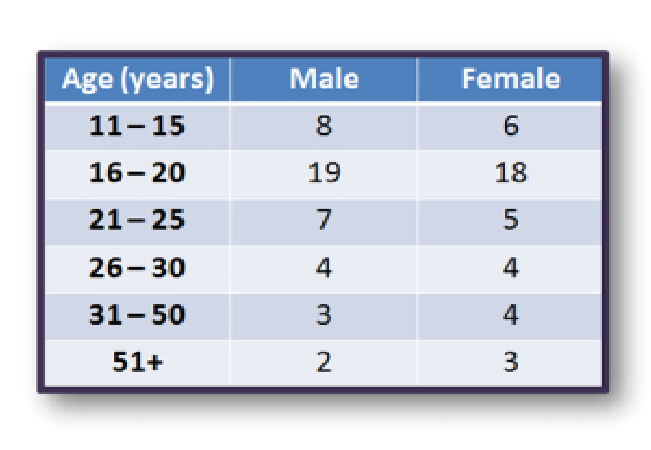
The table gives information about the average hours spent on the Internet by European people of different age groups.
Summarise the information by selecting and reporting the main features, and make comparisons where relevant.
Student answer (Band 6.0)
The table illustrates and compares the average hours spent on the internet by distinct European age brackets.
Overall, it's immediately apparent that the younger female and male age groups are the most dominant for using internet compared to older ones. With teenagers having the highest figures for both genders and males figures having higher figures compared to females.
The hours spent on the internet, were dominated by the younger age groups and with male section numbers being higher than female: 16-20 age group recorded the biggest hour number with male 19 hours and female 18, followed closely by 11-to-15-years-old with 8 hours for male and 6 for female and finally 21 to 25 years old which ranked thirf with constant more hours for male compared to women with 7 and 5 hours respectively.
For older age brackets, the hours spent were much lower than the younger group, with the 26-to-30-years-old having the same hours for females and males, 4 hours each. And the number keeps getting lower as the age keeps getting older. The remaining older groups 31 to 50 years old and over 51 age brackets hovering around 2 to 4 hours of internet.
AI examiner evaluation
| Criterion | Band |
|---|---|
| Task Achievement / Task Response | 6.0 |
| Coherence and Cohesion | 6.0 |
| Lexical Resource | 5.5 |
| Grammatical Range and Accuracy | 5.5 |
| Overall | 6.0 |
Task Achievement / Task Response: Band 6.0
You identify the main pattern accurately: the 16–20 group records the highest figures for both sexes, and internet use is generally lower among older people. The key figures for the three youngest groups and the equal 26–30 figures are also reported correctly. However, the overview that males have higher figures than females is too broad: women are higher in both older groups, 31–50 and 51+. The final description of these groups as “hovering around 2 to 4 hours” is also imprecise, since the table gives exact values of 3 and 4 hours, then 2 and 3. A more complete overview would highlight this exception and describe the overall rise to a peak followed by a decline.
Coherence and Cohesion: Band 6.0
The response has a clear overall arrangement: an introduction, an overview, and separate paragraphs for younger and older age groups. This makes the main comparison easy to follow. Linking expressions such as “Overall,” “followed closely by,” and “For older age brackets” help signal the progression. However, some connections are awkward or repetitive, particularly “dominated by the younger age groups and with male section numbers being higher than female,” which repeats the overview rather than developing the comparison. The final sentence groups the older figures together without clearly matching each value to its age group. Use more precise referencing and organise the data in a consistent sequence to make cohesion smoother.
Lexical Resource: Band 5.5
You use a reasonable range of task-related vocabulary, including “age brackets,” “recorded,” “ranked,” and “figures,” and the meaning is generally clear. However, several choices are unnatural or imprecise for describing a table. “The most dominant for using internet” and “biggest hour number” do not express the comparisons naturally, while “male figures having higher figures” is repetitive. “Thirf” is a spelling error, and “hovering around” is vague when exact values are available. Aim for precise reporting language and check spelling: for example, describe a group as having the “highest average usage” and say that figures “declined” in older age groups.
Grammatical Range and Accuracy: Band 5.5
There is a mix of simple and more extended sentence forms, and the reader can understand the main comparisons. Some grammatical errors remain, especially in longer sentences. For example, “With teenagers having the highest figures” is a sentence fragment, and “males figures having higher figures” lacks a clear grammatical structure. The sentence beginning “The hours spent on the internet, were dominated…” has an unnecessary comma and an awkward construction. In “the 26-to-30-years-old having the same hours,” the clause needs a finite verb, such as “those aged 26–30 had.” Work on complete sentence structures, possessives, and punctuation; these corrections would make the data descriptions more controlled.
See this exact question answered at other band scores. The same prompt compared across bands.
Browse more IELTS Writing model answers or get your own writing scored by the same AI examiner.