Band 5.0 IELTS Writing Task 1 Model Answer
Overall Band Score: 5.0 · IELTS Academic Practice Accelerator · 2026-11-17
IELTS Writing Task 1 question
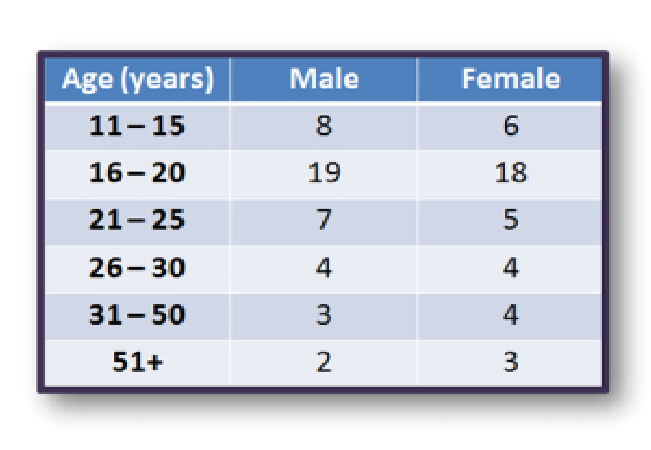
The table gives information about the average hours spent on the Internet by European people of different age groups.
Summarise the information by selecting and reporting the main features, and make comparisons where relevant.
Student answer (Band 5.0)
The table illustrates the comparison between differant ages of groups. It shows that there is six groups of generations analyses the average hours spending on the Internet by European people.
Overall, It shows that the usage rose sharply among 16-20 to the highest average of hours using the Internet and usage peaks dramatically in it. The males and females after aged 16-20 began spend less hours respectively even the gap widened more and more when we began to the people aged over 50.
Among the age 11-15 and people who over 50 the usage declined steadily for both sexes, the ages for males and females between 21-25 the males usage the Internet marginally than females, It's the same in the younger group among 11-15 brackets, and the oppesite in the people aged 31-50 that is males are slightly declined than females, In the group aged 26-30 brackets, the results is the same equal between men and women, and the last one as we mentioned males in the less usage of Internet
AI examiner evaluation
| Criterion | Band |
|---|---|
| Task Achievement / Task Response | 5.5 |
| Coherence and Cohesion | 4.5 |
| Lexical Resource | 5.0 |
| Grammatical Range and Accuracy | 5.0 |
| Overall | 5.0 |
Task Achievement / Task Response: Band 5.5
You identify the main pattern that internet use peaks among 16–20-year-olds and then falls in older groups, and you compare male and female figures across several age bands. These are relevant features of the table. However, the overview is not fully clear, and some comparisons are inaccurate: for ages 11–15, males average 8 hours and females 6, while at 21–25 the figures are 7 and 5, so the male advantage is not merely marginal. The claim that the gap widens steadily after age 16–20 is also not supported: the differences are 1, 2, 0, 1 and 1 hours across the later groups. Include the key figures and summarise the overall pattern more precisely.
Coherence and Cohesion: Band 4.5
The response has an opening, an overview and a paragraph of comparisons, so there is some attempt to organise the information. However, progression is difficult to follow because several ideas are crowded into long, loosely connected sentences. The final paragraph moves between age groups without a clear sequence, and the ending repeats the point about lower male usage rather than providing a concise summary. Linking expressions such as “Overall,” “Among” and “In the group” are used, but some connections are unclear or inaccurate; for example, “Among the age 11-15 and people who over 50” does not clearly introduce a comparison. Group the figures into a logical sequence and use shorter sentences with clear references.
Lexical Resource: Band 5.0
You use some task-relevant vocabulary, including “average,” “usage,” “gap,” “highest” and “declined,” which helps communicate the topic. However, the range is limited and several word choices or combinations are unnatural, sometimes making the meaning difficult to interpret. For example, “six groups of generations analyses” and “average hours spending” do not express the intended ideas clearly, while “usage peaks dramatically in it” is awkward and repetitive. There are also spelling errors such as “differant” and “oppesite.” Choose precise terms for the data, such as “age groups,” “hours spent online” and “reached a peak,” and check spelling and collocations carefully.
Grammatical Range and Accuracy: Band 5.0
You attempt both simple and more complex sentences, including a contrast between male and female patterns, but complex constructions are often faulty and errors frequently make the relationships between ideas hard to follow. Examples include “there is six groups,” “the males and females … began spend less hours,” and “the males usage the Internet marginally than females.” These show problems with subject–verb agreement, verb forms and sentence construction. Several sentences also run together, with commas joining complete ideas, as in the long final paragraph. Build accuracy with clear subject–verb patterns and complete sentences—for example, “Men spent fewer hours online after the 16–20 age group”—then add comparisons using correctly formed clauses.
See this exact question answered at other band scores. The same prompt compared across bands.
Browse more IELTS Writing model answers or get your own writing scored by the same AI examiner.