Band 5.0 IELTS Writing Task 1 Model Answer
Overall Band Score: 5.0 · IELTS Academic Practice Accelerator · 2026-11-18
IELTS Writing Task 1 question
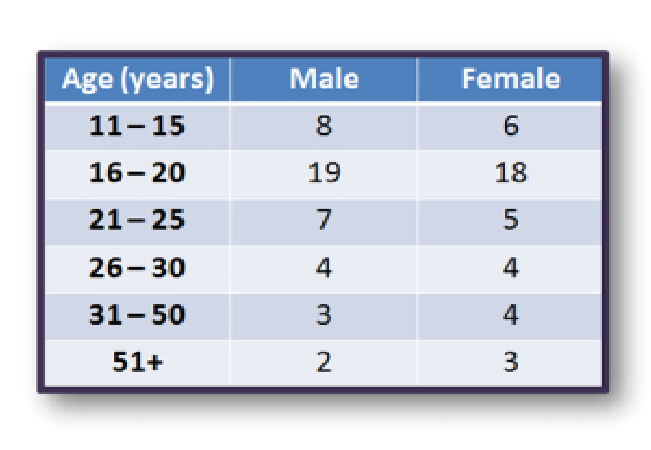
The table gives information about the average hours spent on the Internet by European people of different age groups.
Summarise the information by selecting and reporting the main features, and make comparisons where relevant.
Student answer (Band 5.0)
As the table informed us about the average hours spent on the internet by European people of different age groups from that we can confirm that the age group from 11 to 15 years are using around 14 hours from that male using around 8 hours and female around 6 hours then the age group between 16 to 20 using around 26 hours from that 19 and 18 hours used by male and female respectively then the age between 26 to 30 using around 8 hours , 4 hours both male and female each 21 to 25 age people using around 12 hours that is 7 hours male and 5 hours by female then the age group 31 to 50 using around 7 hours from which 3 by male and 4 by female and the 50+ people are using around 5 hours in which 2 by male and 3 by female . From all this infomercial we can conclude that the most hours used on the internet are the people between the age group 16 to 20 and the least hours used by the people of age 51+.
AI examiner evaluation
| Criterion | Band |
|---|---|
| Task Achievement / Task Response | 5.5 |
| Coherence and Cohesion | 5.0 |
| Lexical Resource | 5.0 |
| Grammatical Range and Accuracy | 4.5 |
| Overall | 5.0 |
Task Achievement / Task Response: Band 5.5
You report the figures for all six age groups and identify the main pattern: internet use peaks among 16–20-year-olds and is lowest among people aged 51 and over. Most figures are accurately represented, including the male–female values. However, the response does not clearly distinguish the table’s reported hours for each sex from the combined totals you calculate, such as “around 26 hours” for ages 16–20. The overview is also brief and does not highlight other useful comparisons, such as the general decline after the 16–20 group or the equal figures for men and women aged 26–30. A clearer summary of these key features, followed by selected details, would make the task coverage more complete.
Coherence and Cohesion: Band 5.0
The response follows the age groups and includes a concluding statement about the highest and lowest figures, so the reader can identify the general subject and main result. However, nearly all the information is placed in one long sentence, with repeated sequencing through “then” and “from that.” This creates a list-like progression rather than a clearly organised report, and the order shifts between age groups when the 26–30 group is presented before 21–25. Separate paragraphs for an overview and supporting details, plus clearer links between comparisons, would improve progression. Use punctuation to divide the figures into manageable units and avoid relying on the same connector repeatedly.
Lexical Resource: Band 5.0
You use relevant basic terms such as “age group,” “average hours,” “male,” and “female,” and the reader can generally understand the comparisons. However, the vocabulary is limited and repetitive, especially the repeated use of “using” and “hours used.” Some choices are inaccurate or unsuitable for an academic report: “the table informed us” is awkward, and “infomercial” does not mean a summary or conclusion. Phrases such as “from that” also make relationships between figures unclear. Use more precise reporting language, for example “spent,” “recorded,” “respectively,” and “overall,” and vary the verbs and comparison phrases. Check spelling and word choice carefully so that errors do not distract from the data.
Grammatical Range and Accuracy: Band 4.5
The response attempts to connect several comparisons in a complex sentence, but the sentence structure is often faulty and makes the figures difficult to follow. For example, “the age group from 11 to 15 years are using” has a subject–verb agreement problem, while “then the age group between 16 to 20 using” lacks a finite verb. The repeated clauses joined by “from that” are not formed as complete, clear sentences. Punctuation is also insufficient: commas cannot adequately separate this many clauses and figures. Use shorter sentences with a clear subject and verb, and check agreement, articles, and sentence boundaries. More accurate control of basic structures is needed before adding long linked sentences.
See this exact question answered at other band scores. The same prompt compared across bands.
Browse more IELTS Writing model answers or get your own writing scored by the same AI examiner.