Band 5.0 IELTS Writing Task 1 Model Answer
Overall Band Score: 5.0 · IELTS Academic Practice Accelerator · 2026-11-18
IELTS Writing Task 1 question
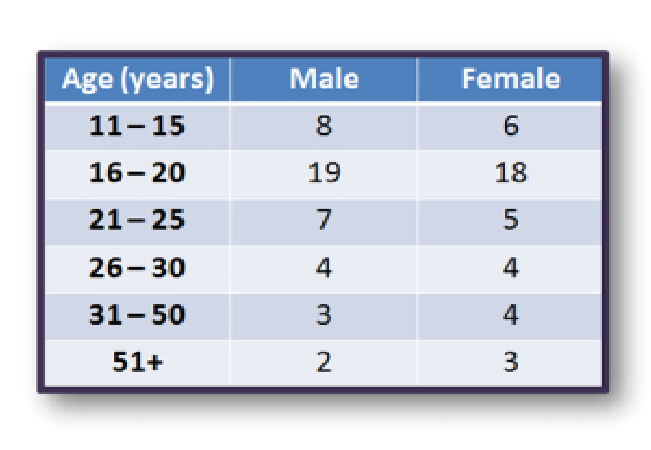
The table gives information about the average hours spent on the Internet by European people of different age groups.
Summarise the information by selecting and reporting the main features, and make comparisons where relevant.
Student answer (Band 5.0)
The table splits useful information about the average time consumed on the internet by european individual of several age groups.
Overall, the age groups about 16-20 is increasing very rapidly by just splitting the 19 to male and 18 hours to female. The people who are above 50 do not use internet more because of the age groups.
To begin with, firstly the teen ager 11-15 uses internet but mostly boys use more than girls and the next years from 16-20 is the highest using of internet because everyone at this age use internet. The years 21-25 is usually moderate age to use internet and get benefitted through it.
On the other hand, the age group from 26-30 uses less internet because in foriegn people prefer physical activities rather than using this technology. The years 31-50 increases the chances to use internet less than other people by just having three to four hours. The people who are above 50 consumed internet by just 2-3 hours
AI examiner evaluation
| Criterion | Band |
|---|---|
| Task Achievement / Task Response | 5.0 |
| Coherence and Cohesion | 5.5 |
| Lexical Resource | 5.0 |
| Grammatical Range and Accuracy | 5.0 |
| Overall | 5.0 |
Task Achievement / Task Response: Band 5.0
You identify the main pattern that internet use is highest among 16–20-year-olds and lowest among people aged 51+, and you mention several age groups. However, the overview is unclear: “is increasing very rapidly” suggests a trend over time, whereas the table compares age groups. Some comparisons are also inaccurate or insufficiently precise. For example, the 31–50 group records 3 hours for males and 4 for females, while the 26–30 group records 4 for both; your description of the former as “increases the chances to use internet less” does not clearly report this. Focus on the figures and comparisons, and avoid unsupported explanations such as foreign people preferring physical activities. A concise overview of the peak, the low point, and the general pattern would make the response more complete.
Coherence and Cohesion: Band 5.5
The response has an opening, an overview, and two body paragraphs, so there is some organisation. It also attempts to guide the reader with phrases such as “To begin with” and “On the other hand.” However, the progression is not consistently clear: the first body paragraph moves from teenagers to 16–20 and then 21–25, while the second describes older groups without a clear comparison linking them. Some linking phrases are awkward or do not express the relationship intended, and “firstly” repeats the function of “To begin with.” Group the figures in a clear sequence, such as highest-use groups followed by lower-use groups, and use simple comparisons to connect them. This would make the organisation easier to follow.
Lexical Resource: Band 5.0
You use some relevant vocabulary, including “average time,” “age groups,” and “hours,” and the reader can generally understand the topic. However, the range is limited and several word choices or collocations are inaccurate, which sometimes makes the meaning unclear. For instance, “time consumed on the internet” is unnatural for describing usage, and “the highest using of internet” does not express the comparison clearly. “The age groups … is increasing” also reflects an unsuitable choice of wording for a table comparing categories. Spelling errors such as “european,” “teen ager,” and “foriegn” further reduce accuracy. Use precise reporting language such as “spent online,” “recorded,” and “the highest figure,” and check spelling and word forms.
Grammatical Range and Accuracy: Band 5.0
You attempt both simple and longer sentence forms, including a sentence beginning “because,” but control is inconsistent and errors often make the relationships between ideas difficult to follow. Examples include “the age groups about 16-20 is increasing,” where the subject and verb do not agree, and “everyone at this age use internet,” which also has an agreement error. The sentence “The people who are above 50 do not use internet more because of the age groups” has an unclear grammatical relationship between its clauses. Articles and plural forms are also often missing, as in “use internet” and “the teen ager.” Practise building accurate comparison sentences with clear subjects and verbs, then check agreement, articles, and punctuation.
See this exact question answered at other band scores. The same prompt compared across bands.
Browse more IELTS Writing model answers or get your own writing scored by the same AI examiner.