Band 5.0 IELTS Writing Task 1 Model Answer
Overall Band Score: 5.0 · IELTS Academic Practice Accelerator · 2026-11-18
IELTS Writing Task 1 question
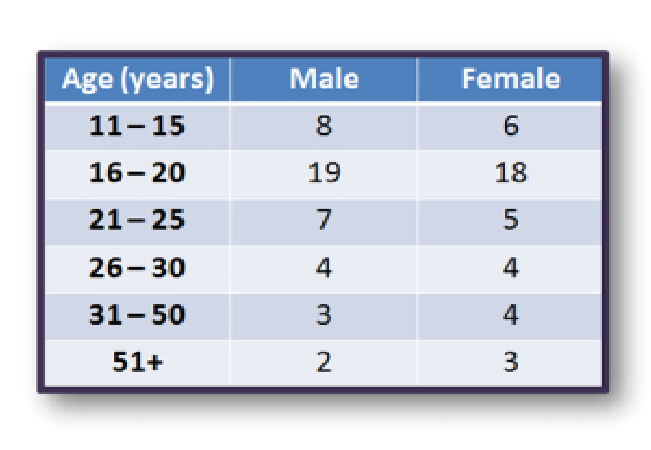
The table gives information about the average hours spent on the Internet by European people of different age groups.
Summarise the information by selecting and reporting the main features, and make comparisons where relevant.
Student answer (Band 5.0)
the chart illustrate detail about the exact hours spent on the internet by european individuals of various age groups.
Overall,it is evident from the table that,the highest hours spent by the teangers,and the lowest is spend by elder people.
In detail,the table demonstrate that,in Europe the maximum time spent on the internet in the age of 16 to 20.These persons give a lot of hours to social media apps as compare to another ages.However,In this ages have twice number of individuals which one is male and other female.the male average is approximatly 8 and it is the higher as compare to female.Moreover,the female exact ratio is 6.
On the other hand,the elder persons give least time to internet,and his ages is above fifty plus.they have contain only five public which display lack of interest on social platforms.they often thought about life,so thats why they are appropriate for wasting of time.they have male spent two hours and feminine three hours.their ratio is very lack in overall chart.The second ages is 11 to 15 which are interest persons in social apps.
AI examiner evaluation
| Criterion | Band |
|---|---|
| Task Achievement / Task Response | 5.0 |
| Coherence and Cohesion | 5.0 |
| Lexical Resource | 4.5 |
| Grammatical Range and Accuracy | 5.0 |
| Overall | 5.0 |
Task Achievement / Task Response: Band 5.0
You identify the broad pattern that internet use peaks among younger adults and is lowest among people aged 51+, and you include some figures for the oldest group. However, the central peak is misreported: ages 16–20 record 19 hours for males and 18 for females, not approximately 8 and 6; those figures belong to ages 11–15. The claim that this group has “twice number of individuals” is also unsupported, as the table reports hours, not numbers of people. Several other age groups and comparisons are omitted, and explanations about social-media use or older people’s attitudes are not shown by the table. Focus on accurately summarising the data and selecting its main comparisons.
Coherence and Cohesion: Band 5.0
The response has a basic overall shape, with an opening, an overview, and two detail paragraphs. Linking expressions such as “Overall,” “In detail,” and “On the other hand” show an attempt to guide the reader. However, progression is difficult to follow because the age groups are not presented in a consistent order, and the discussion shifts abruptly from the peak group to the oldest group and then back to ages 11–15. Some connectors do not express a clear relationship, while repeated “the table” references and unclear pronouns such as “they” weaken cohesion. Organise the details from highest to lowest or move through the age bands in sequence, and use comparisons to connect related figures.
Lexical Resource: Band 4.5
You use some task-related vocabulary, including “hours spent,” “age groups,” “maximum,” and “least,” so the topic is generally recognisable. However, the range is limited and several word choices or collocations are inaccurate, such as “give a lot of hours,” “exact ratio,” and “five public.” These expressions make parts of the data difficult to interpret. There are also repeated basic terms such as “persons” and “ages,” alongside spelling and word-form problems including “teangers” and “approximatly.” Aim for precise language used in data reports, such as “spent,” “figure,” “average,” and “age group,” and avoid adding unsupported descriptions.
Grammatical Range and Accuracy: Band 5.0
You attempt both simple and longer sentences, and the response includes some recognisable sentence patterns. However, errors are frequent and sometimes make relationships unclear. For example, “the highest hours spent by the teangers” lacks a complete, well-formed clause, while “the maximum time spent … in the age of 16 to 20” has an incomplete construction. Subject–verb agreement and articles are also inconsistent, as in “the table demonstrate” and “the highest hours … and the lowest is spend.” Punctuation is often missing or misplaced, particularly around introductory phrases. Practise accurate sentence frames such as “The table shows that…” and “Males aged 16–20 spent 19 hours on average,” then check agreement, verb forms, and sentence boundaries.
See this exact question answered at other band scores. The same prompt compared across bands.
Browse more IELTS Writing model answers or get your own writing scored by the same AI examiner.