Band 5.0 IELTS Writing Task 1 Model Answer
Overall Band Score: 5.0 · IELTS Academic Practice Accelerator · 2026-11-18
IELTS Writing Task 1 question
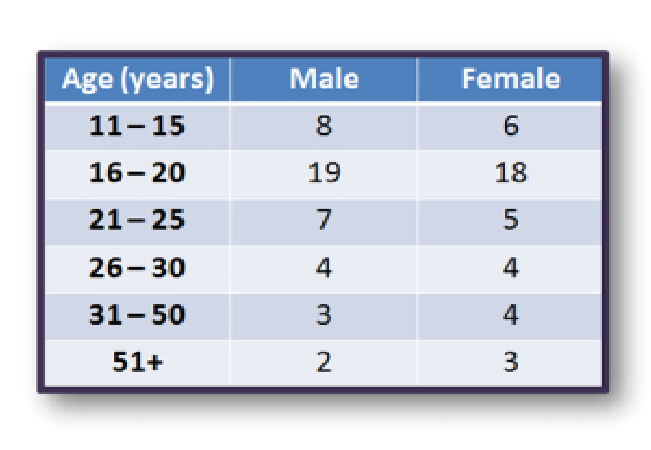
The table gives information about the average hours spent on the Internet by European people of different age groups.
Summarise the information by selecting and reporting the main features, and make comparisons where relevant.
Student answer (Band 5.0)
The table illustrates the time spent by distinct ages of peoples live in europe on social media.
Overall, in the given table there are two different categories male and female. The young people at the age of 11 to 15 spent more time on media morever, the lowest time spent on internet by older people, above 51.
Initially, In between 11 to 15 the males use more social media as compare to females after that, the people who is slightly younger use more media in this catagory the figure of males and females is aproximately same furthermore, the people who are in between 21 to 25 are less socialized in this age males use internet 20% more than females.
The peoples who are quiet young is less socialized in this phase the males and females both use same internet, whereas the middle aged adult us more less internet in these peoples females is quiet more socalized than males finally, the older peoples use very less social media like out of 5, 2 is males and 3 are females the ratio of females is slightly greater than males.
AI examiner evaluation
| Criterion | Band |
|---|---|
| Task Achievement / Task Response | 5.0 |
| Coherence and Cohesion | 5.0 |
| Lexical Resource | 5.0 |
| Grammatical Range and Accuracy | 5.0 |
| Overall | 5.0 |
Task Achievement / Task Response: Band 5.0
You identify the broad pattern that internet use is highest among people aged 16–20 and lowest among those over 51, and you compare male and female figures in several age groups. However, the overview is partly inaccurate: the 11–15 group is not the highest; the 16–20 group records the peak for both sexes. Some details are also misreported or unclear. For example, males aged 21–25 use the internet for 7 hours versus 5 for females, not “20% more,” and the table gives hours rather than percentages. The response also repeatedly describes internet use as “social media” or socialising, which the table does not specify. Select the key figures accurately and summarise the main trend more clearly.
Coherence and Cohesion: Band 5.0
The response has an identifiable introduction, overview and body paragraphs, and it generally moves through the age groups in order. This gives it some organisation. However, progression is difficult to follow because several long sentences combine multiple comparisons without clear boundaries, as in “the people who are in between 21 to 25 are less socialized in this age males use internet 20% more than females.” Linking words such as “furthermore,” “whereas” and “finally” are attempted, but some are used mechanically or do not clarify the relationship between ideas. References such as “this phase” and “these peoples” are also vague. Use shorter sentences, group related age bands, and make each comparison explicit.
Lexical Resource: Band 5.0
You use some relevant vocabulary, including “average,” “figure,” “ratio” and “middle aged,” and you attempt to vary your wording. However, the range is limited and several choices are inaccurate or repetitive. “Social media,” “socialized” and “media” do not accurately describe the table, which reports hours spent on the internet. Phrases such as “distinct ages of peoples” and “quiet young” are unclear, while spelling errors including “catagory,” “aproximately” and “socalized” make the writing less precise. Aim for accurate data-reporting language and use terms such as “internet use,” “hours,” “age group,” “higher” and “lower” consistently. This would make comparisons easier to understand.
Grammatical Range and Accuracy: Band 5.0
You attempt some complex sentences and use comparison structures, but control is inconsistent, and errors frequently make relationships between ideas difficult to follow. Examples include “distinct ages of peoples live in europe,” “the people who is slightly younger,” and “the males use more social media as compare to females.” There are recurring problems with subject–verb agreement, articles, plurals and sentence boundaries. Capitalisation and punctuation are also unreliable, particularly where a new sentence begins after a comma or linking phrase. Practise writing one clear comparison per sentence, checking that subjects and verbs agree, and using full stops to separate complete ideas. More accurate simple sentences would improve clarity before adding complexity.
See this exact question answered at other band scores. The same prompt compared across bands.
Browse more IELTS Writing model answers or get your own writing scored by the same AI examiner.