Band 5.5 IELTS Writing Task 1 Model Answer
Overall Band Score: 5.5 · IELTS Academic Practice Accelerator · 2026-11-19
IELTS Writing Task 1 question
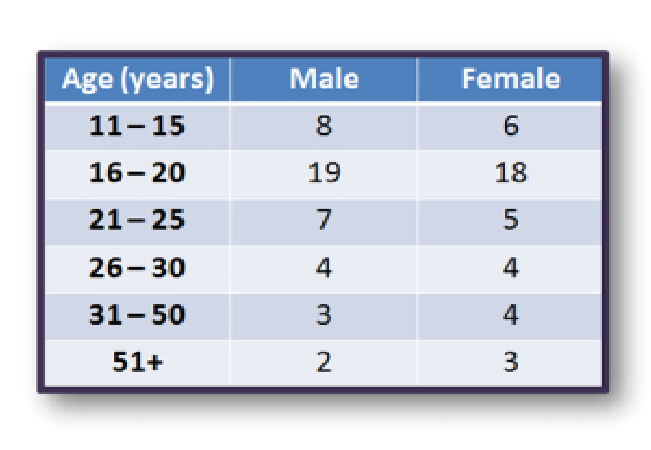
The table gives information about the average hours spent on the Internet by European people of different age groups.
Summarise the information by selecting and reporting the main features, and make comparisons where relevant.
Student answer (Band 5.5)
The table illustrates the average number of hours spend using internet by European males and females across siz different age groups
Overall, people in the 16 to 20 age group spend most of time on internet, regardless of gender.It is also noticeable that internet usage genarally decrases with age, while the difference between males and females remain relatively small.
Looking first at the younger age groups, males aged between 11 to 15 spend an average of 8 hours on internet copared to 6 hours for female .This difference becomes slightly narrower amoung those aged 16-20, with males recording 19 hours and females 18 hour representing highest feagures in the table. Amoung the 21-15 age group, Internet usage drops considerably to 7 hours for males and 5 hours for females.
A simillar downward trend can be bserved for older individuals. In the 26-30 age group, both gendersspend an equal amount of time online
AI examiner evaluation
| Criterion | Band |
|---|---|
| Task Achievement / Task Response | 5.5 |
| Coherence and Cohesion | 5.5 |
| Lexical Resource | 5.5 |
| Grammatical Range and Accuracy | 5.5 |
| Overall | 5.5 |
Task Achievement / Task Response: Band 5.5
You identify the main pattern accurately: the 16–20 group records the highest figures for both genders, and usage generally falls in older groups. Several comparisons are also correct, including 8 versus 6 hours for ages 11–15 and 19 versus 18 for ages 16–20. However, coverage is incomplete: the response ends while discussing ages 26–30 and does not report the figures for ages 31–50 or 51+, so the older-age pattern is not fully summarised. There is also a factual error in “21-15 age group”; the table shows 21–25. To strengthen the response, complete the final comparisons and ensure every age band is identified accurately, while retaining the useful overview of the overall trend and small gender differences.
Coherence and Cohesion: Band 5.5
The response has a recognisable structure, with an introduction, an overview, and paragraphs that move from younger to older age groups. Phrases such as “Looking first” and “A similar downward trend” help signal the organisation. However, progression is incomplete because the final paragraph stops after the 26–30 group, leaving the remaining data unconnected to the discussion. Some linking is also mechanical, and punctuation spacing is inconsistent, as in “gender.It” and “female .” The comparison within the younger groups is generally easy to follow, but the reader needs a complete final paragraph and clearer transitions between age bands. Grouping the figures into younger, middle, and older cohorts would make the progression more coherent.
Lexical Resource: Band 5.5
You use relevant vocabulary for describing a table, including “average,” “age group,” “difference,” “recording,” and “downward trend.” These choices communicate the main comparisons, and “drops considerably” is an appropriate way to describe the fall after ages 16–20. However, the range is limited and several spelling and word-choice errors are noticeable, including “siz,” “genarally,” “decrases,” “copared,” “amoung,” and “simillar.” Some expressions are also unnatural, such as “spend most of time on internet” and “highest feagures.” Aim for accurate collocations such as “spend the most time online” and “the highest figures,” and proofread spelling carefully. More precise variation in describing increases, decreases, and equal values would improve flexibility.
Grammatical Range and Accuracy: Band 5.5
You attempt a mix of simple statements and more complex comparisons, for example, “It is also noticeable that internet usage generally decreases with age, while the difference between males and females remain relatively small.” The overall meaning is usually understandable, but errors in agreement and sentence construction recur. In that example, “difference” requires “remains”; “males aged between 11 to 15” also uses an incorrect range pattern, and “females 18 hour representing” needs clearer sentence structure and plural agreement. The final sentence is incomplete, ending after “online,” and punctuation spacing is inconsistent. Use complete sentences, check singular/plural agreement, and practise accurate comparative structures such as “between 11 and 15” and “compared with.”
See this exact question answered at other band scores. The same prompt compared across bands.
Browse more IELTS Writing model answers or get your own writing scored by the same AI examiner.