Band 5.5 IELTS Writing Task 1 Model Answer
Overall Band Score: 5.5 · IELTS Academic Practice Accelerator · 2026-11-19
IELTS Writing Task 1 question
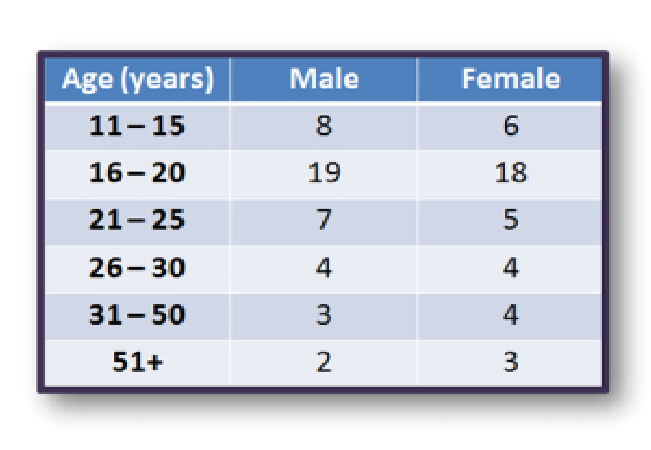
The table gives information about the average hours spent on the Internet by European people of different age groups.
Summarise the information by selecting and reporting the main features, and make comparisons where relevant.
Student answer (Band 5.5)
The table displays information about the average hours spent on the Internet by European people of different age group.
Overall, adult male and female recorded the highest hours using on the Internet. However, older adults had the lowest figure on the Internet.
In the teenagers male(11-15) spend higher hours as compared with teenagers female(11-15), the figure were from 8 and 6 respectively. In the adult male (16-20) this figure were at peak 19 hours. Furthermore, in adult female(16-20) the figure were also peak at 18 hours spend on the Internet.
In the age group of 21-25, the hours spent on the Internet fell sharply from 19 to 7 in male and 18 to 5 in female. In the age group of 26-30 both male and female was similar ratio at 4 hours. The age group of 31 fo 50, in male this figure slightly fell from 4 to 3 hours, while in female it remained same. In contrast, the older adults whose age group was 51+ in male they spent 2 hours on Internet but female spent one extra hours on Internet by European people.
AI examiner evaluation
| Criterion | Band |
|---|---|
| Task Achievement / Task Response | 6.0 |
| Coherence and Cohesion | 6.0 |
| Lexical Resource | 5.5 |
| Grammatical Range and Accuracy | 5.0 |
| Overall | 5.5 |
Task Achievement / Task Response: Band 6.0
You cover the main pattern and report the figures accurately: usage peaks for both sexes among 16–20-year-olds (19 and 18 hours), then declines across the older groups, reaching 2 hours for men and 3 for women aged 51+. The overview also identifies the youngest and oldest groups as contrasting points, although “adult male and female” is imprecise because the peak group is aged 16–20. The comparisons for ages 21–50 add relevant detail, but the description of the 31–50 figures is unclear: women rise from 4 hours at 26–30 to 4 at 31–50, rather than remaining unchanged from the preceding group after a fall. A more precise overview and clearer explanation of this comparison would strengthen the response.
Coherence and Cohesion: Band 6.0
The response has a clear overall arrangement: an introduction and overview are followed by details for successive age groups. This makes the broad progression from the peak at 16–20 to lower figures among older people easy to follow. You also use linking expressions such as “Overall,” “Furthermore,” and “In contrast.” However, some connections are mechanical or unclear. For example, “the hours spent … fell sharply from 19 to 7 in male and 18 to 5 in female” compresses two comparisons into one sentence, while “the age group of 31 fo 50” does not clearly signal how its figures relate to the previous group. Organising the details into clearer male/female comparisons and using more precise references would improve progression.
Lexical Resource: Band 5.5
You use relevant vocabulary for describing the table, including “highest,” “lowest,” “fell sharply,” and “similar,” so the main comparisons are generally understandable. There is some variety in how you describe changes, but several phrases are inaccurate or repetitive, which limits precision. “Adult male and female” is not a natural way to refer to the 16–20 age group, and “spend higher hours” and “similar ratio” do not collocate appropriately with hours. The repeated phrase “the figure” also makes the account less flexible. Aim to use standard data-reporting expressions and distinguish clearly between hours, figures, and age groups.
Grammatical Range and Accuracy: Band 5.0
You attempt both simple and more complex sentences, including comparisons introduced by “while” and “In contrast,” and the reader can usually understand the intended trends. However, errors in agreement, verb forms, articles, and sentence construction occur across the response. Examples include “the figure were,” “both male and female was,” and “female spent one extra hours.” The sentence beginning “In contrast, the older adults…” is especially difficult to follow because its clauses are not joined clearly. Practise forming complete comparison sentences, checking singular and plural agreement, and using consistent past-tense forms. More accurate control of these patterns would make your data descriptions clearer.
See this exact question answered at other band scores. The same prompt compared across bands.
Browse more IELTS Writing model answers or get your own writing scored by the same AI examiner.