Band 6.0 IELTS Writing Task 1 Model Answer
Overall Band Score: 6.0 · IELTS Academic Practice Accelerator · 2026-11-19
IELTS Writing Task 1 question
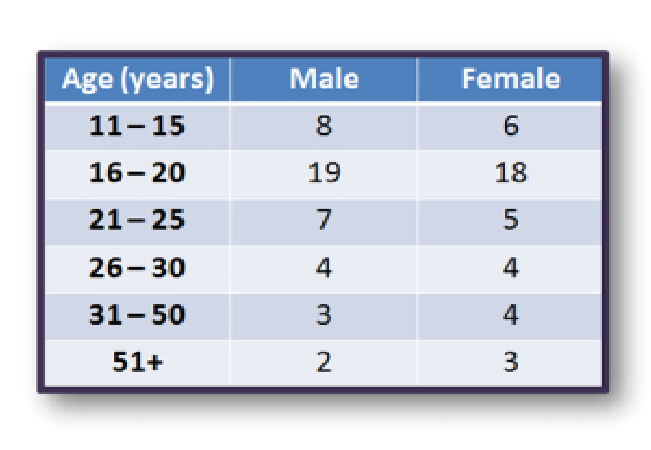
The table gives information about the average hours spent on the Internet by European people of different age groups.
Summarise the information by selecting and reporting the main features, and make comparisons where relevant.
Student answer (Band 6.0)
The table compares european of different age groups on basis of avarage hourly internet usage .
Overall, Internet usage remain high among younger genaration, which drops significantly after the age of tweenty six across both sex .
Turning to the details,male children at the age of 11-15 spent 8 hours on internet, which is 2 hours more than their female counterpart.This gap narrowed down to only 1 hour, as male and female accounted for 19 and 18 hours respectively.At the age of 21-25, female share was 2 hours less than male internet usage, which was 7 hours.
By contrast,time spent on internet are consideribly low for people over the age of 26. People between the age of 26 and 30, used 4 hours on internet, which is identical for both gender. In the age group of 31-50, male accounted for 3 hours a hour less than female. Male beyond the age of 51 used internet for 2 hours,whereas female recorded 3 hours of internet usage.
AI examiner evaluation
| Criterion | Band |
|---|---|
| Task Achievement / Task Response | 6.0 |
| Coherence and Cohesion | 6.0 |
| Lexical Resource | 5.5 |
| Grammatical Range and Accuracy | 5.5 |
| Overall | 6.0 |
Task Achievement / Task Response: Band 6.0
You identify the main pattern: usage peaks among 16–20-year-olds and is much lower in the older groups, and you compare male and female figures across the age bands. Most reported values are accurate, including the 8-versus-6-hour difference at ages 11–15 and the equal figures of 4 hours at ages 26–30. However, the overview says usage “drops significantly after the age of twenty six,” although the decline begins after the 16–20 peak; the 21–25 figures are already much lower. Also, the sentence about ages 21–25 gives the female figure as two hours less but does not state the male figure clearly. A more precise overview and clearer reporting of this comparison would make the key features more fully developed.
Coherence and Cohesion: Band 6.0
The response has a coherent overall arrangement: an introduction and overview are followed by details for younger and older age groups. The transition “By contrast” helps signal the shift to lower usage among older people, and the figures are generally presented in a sensible sequence. Some connections are less clear or mechanical, however. “This gap narrowed down to only 1 hour” refers to the 16–20 group, but the preceding comparison could be linked more smoothly, while “At the age of 21–25” shifts from a plural age group to a singular age. The detail paragraph also moves through several comparisons without consistently identifying both sexes and values. Use clearer age-group framing and more precise referencing to strengthen progression.
Lexical Resource: Band 5.5
You use a relevant range of vocabulary for describing the table, including “usage,” “counterpart,” “narrowed,” and “identical.” These choices help communicate comparisons, and the meaning is generally understandable. However, several spelling errors and imprecise or unnatural collocations limit the accuracy of the vocabulary: “european,” “avarage,” “genaration,” “tweenty,” and “consideribly” are misspelled, while “female share” is not a natural way to describe hours of use. Phrases such as “on internet” and “internet usage” are repeated, and “accounted for” is less suitable than a direct reporting verb for these figures. Aim for accurate spelling and more natural expressions such as “spent online” or “recorded.”
Grammatical Range and Accuracy: Band 5.5
You attempt a mix of simple and complex sentences, including relative clauses such as “which is 2 hours more” and contrastive structures such as “whereas female recorded 3 hours.” The comparisons are usually understandable, but some grammatical errors remain. For example, “Internet usage remain high” has subject–verb disagreement, and “time spent on internet are” has both agreement and article problems. “People between the age of 26 and 30, used” includes an unnecessary comma, while “male accounted for 3 hours a hour less than female” has an unclear grammatical construction. Check agreement, articles, and sentence boundaries, and make sure each comparison has a clear subject and verb.
See this exact question answered at other band scores. The same prompt compared across bands.
Browse more IELTS Writing model answers or get your own writing scored by the same AI examiner.