Band 5.5 IELTS Writing Task 1 Model Answer
Overall Band Score: 5.5 · IELTS Academic Practice Accelerator · 2026-11-19
IELTS Writing Task 1 question
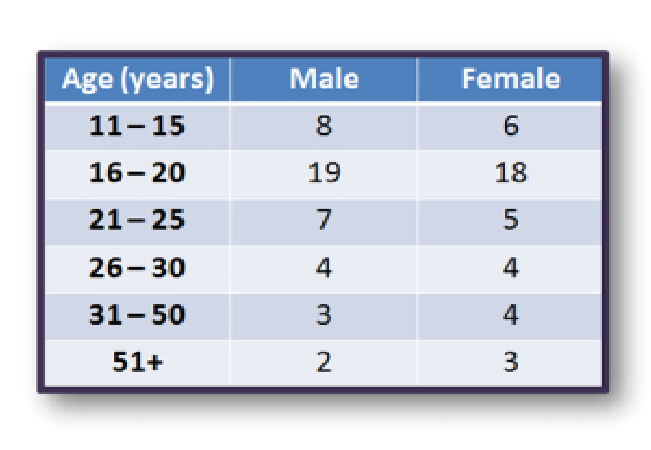
The table gives information about the average hours spent on the Internet by European people of different age groups.
Summarise the information by selecting and reporting the main features, and make comparisons where relevant.
Student answer (Band 5.5)
The table above represents average hours spent on the Internet by European people of different age groups from 11 to plus 51 years old , devided by age groups , we can observe that teenagers (16->20) are using a more than half a day on the internet because those years are the stage of exploring things and playiong games or connecting with people online even though the younger group is showing that kids are also exploring internet, the change begins at the yound adulthood since male or female hits the age of 21 years old they decrease their time on the screens maybe because of how life gets a little bit serious at that period of age and that proofs why the adults (31->50) got a little bit of time to use on internet ,
for the elderly people (+51) most of them dont even know how to use internet or what is it about so it is so understandable that they spend 2 or 3 hours of their day on the internet.
AI examiner evaluation
| Criterion | Band |
|---|---|
| Task Achievement / Task Response | 5.5 |
| Coherence and Cohesion | 5.5 |
| Lexical Resource | 5.0 |
| Grammatical Range and Accuracy | 5.0 |
| Overall | 5.5 |
Task Achievement / Task Response: Band 5.5
You identify the broad pattern that Internet use is highest among people aged 16–20 and falls in older groups, and you mention the 51+ figures. However, the response only partially reports the table: it gives no clear, systematic comparison of male and female hours across the age groups, and several figures are omitted. The claim that 16–20-year-olds spend “more than half a day” online is inaccurate: the table shows 19 hours for males and 18 for females, not more than 12 hours per day. The explanation that older people do not know how to use the Internet is unsupported by the data. A concise overview followed by accurate key figures and gender comparisons would make the report more complete and data-focused.
Coherence and Cohesion: Band 5.5
There is a recognisable sequence from the youngest groups to the oldest, and phrases such as “since male or female hits the age of 21” signal a change in the trend. However, the response is presented as one long paragraph, with several ideas joined by commas and “because,” so the progression is difficult to follow. The opening combines the table description with an overview, while the final point about older people is not clearly separated from the preceding comparison. Organise the report into a brief introduction, an overview of the main pattern, and one or two paragraphs comparing age groups and sexes. Use clear links such as “By contrast” or “In the 26–30 group” rather than relying on extended sentence chains.
Lexical Resource: Band 5.0
The response uses some relevant topic vocabulary, including “age groups,” “teenagers,” “young adulthood,” and “on the Internet,” so the general subject is understandable. However, the range is limited and several choices are inaccurate or informal for a data report, such as “a little bit serious,” “got a little bit of time,” and “most of them don’t even know.” There are also noticeable spelling errors, including “devided,” “playiong,” and “yound,” which reduce clarity and control. Aim for precise terms that describe the figures rather than speculate about people’s lives: for example, “hours spent online,” “declines,” and “the oldest age group.” Check spelling and use neutral, formal wording throughout.
Grammatical Range and Accuracy: Band 5.0
You attempt to express relationships between ideas using clauses with “because,” “even though,” and “since,” but these longer structures are often faulty or difficult to follow. The opening is a run-on sentence, and the phrase “teenagers … are using a more than half a day” has an incorrect article and sentence construction. Other examples include “the change begins at the young adulthood” and “that proofs why the adults … got,” where article use and verb forms are not controlled. Punctuation is also weak: commas are used where full stops are needed, and the response contains a long chain of clauses. Build shorter, complete sentences first, then add a few accurately formed complex sentences to compare the groups.
See this exact question answered at other band scores. The same prompt compared across bands.
Browse more IELTS Writing model answers or get your own writing scored by the same AI examiner.