Band 5.5 IELTS Writing Task 1 Model Answer
Overall Band Score: 5.5 · IELTS Academic Practice Accelerator · 2026-11-21
IELTS Writing Task 1 question
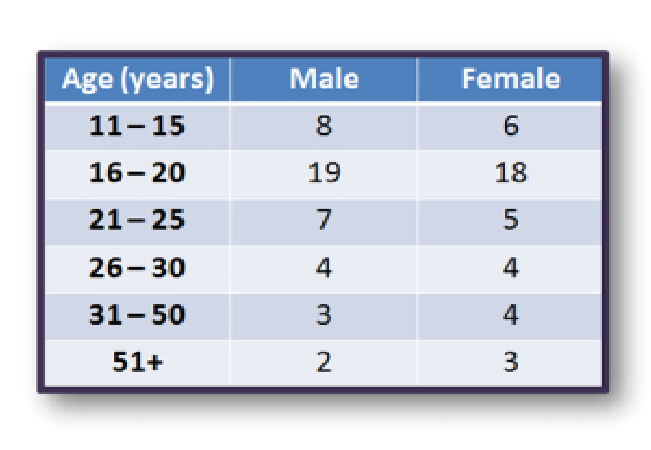
The table gives information about the average hours spent on the Internet by European people of different age groups.
Summarise the information by selecting and reporting the main features, and make comparisons where relevant.
Student answer (Band 5.5)
The table illustrates the average number of hours spent on the internet by european males and females in different age groups.
Overall, it is clear that the age between 16-20 years has spent average hours on the internet by european people includes both male and females. Whereas, the aged 50 and above has spent least hours on the internet. Males spend more time online than females.
looking at the details males aged 11-15 spend an average of 8 hours on the internet, compared with 6 hours for female. And moreover 16-20 has increased the spent hours rapidly both the men and women. which is highest in the table.
Coming to the ages 21-25 the male spend 7 hours on the internet,compared with 5 hours for females. And in the ages 26-30 both the male and females are similar they spent on the internet.
Finally the ages between 31-50 the female spent 4 hours according to the males. And Whereas, coming to the age between 50 and above the males spent average with 2 hours and female with 3 hours.In addition, it is the least one in the given table .
AI examiner evaluation
| Criterion | Band |
|---|---|
| Task Achievement / Task Response | 6.0 |
| Coherence and Cohesion | 6.0 |
| Lexical Resource | 5.0 |
| Grammatical Range and Accuracy | 5.0 |
| Overall | 5.5 |
Task Achievement / Task Response: Band 6.0
You identify the main pattern: internet use peaks among 16–20-year-olds and is lowest among people aged 51 and over. Most figures are reported accurately, including the 11–15 and 21–25 comparisons, and you note the equal figures for ages 26–30. However, the overview is unclear in places: “the age between 16-20 years has spent average hours” does not clearly state that this group records the highest use. The claim that males spend more time online than females is too broad, since females record more hours in the 31–50 and 51+ groups. Make the overview more precise and compare the overall pattern without implying that one sex leads in every age group.
Coherence and Cohesion: Band 6.0
The response has a recognisable structure, moving from an introduction and overview to details for successive age groups. This makes the information generally easy to follow. However, progression is sometimes weakened by mechanical or unclear linking, such as “And moreover,” “Coming to,” and “And Whereas.” Some sentences also combine ideas awkwardly, particularly the overview sentence beginning “Overall, it is clear…” and the fragment “which is highest in the table.” Use a clear overview, then group the age bands logically, and connect comparisons directly—for example, “In the 31–50 group, women averaged one hour more than men.” This would make cohesion more natural and references easier to follow.
Lexical Resource: Band 5.0
You use relevant vocabulary for describing the table, including “average,” “compared with,” “similar,” and “highest.” These choices communicate the basic comparisons, but the range is limited and several phrases are unnatural or repetitive. For example, “has spent average hours” and “increased the spent hours rapidly” do not express the data clearly; the table gives averages by age group rather than changes over time. Repeated use of “spent” and “coming to” also makes the description less precise. Choose concise reporting language such as “recorded,” “averaged,” “rose to,” or “was the highest,” and use “internet use” or “time online” to avoid repetition.
Grammatical Range and Accuracy: Band 5.0
You attempt both simple sentences and longer comparisons, and the reader can usually understand the figures. However, some sentence structures and verb forms are inaccurate, including “the age between 16-20 years has spent” and “16-20 has increased the spent hours.” These groups should be the grammatical subject, with a form such as “people aged 16–20 spent…” The sentence “which is highest in the table” is also incomplete, and inconsistent capitalisation and punctuation—such as starting “looking” with a lowercase letter and missing spaces after commas—reduce accuracy. Practise complete sentences with clear subjects and verbs, and check agreement, articles, and punctuation when editing.
See this exact question answered at other band scores. The same prompt compared across bands.
Browse more IELTS Writing model answers or get your own writing scored by the same AI examiner.