Band 6.0 IELTS Writing Task 1 Model Answer
Overall Band Score: 6.0 · IELTS Academic Practice Accelerator · 2026-11-22
IELTS Writing Task 1 question
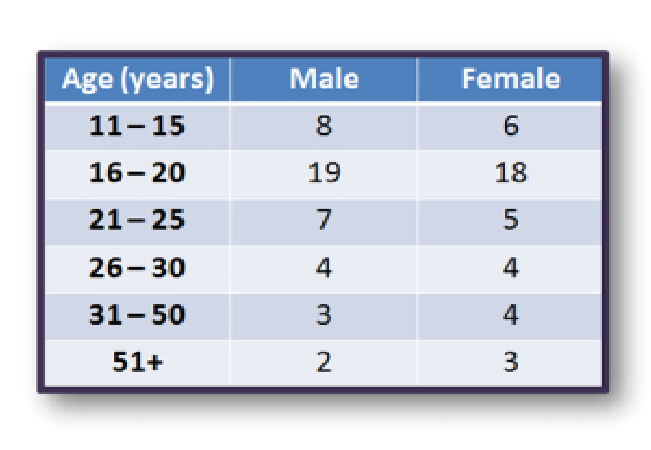
The table gives information about the average hours spent on the Internet by European people of different age groups.
Summarise the information by selecting and reporting the main features, and make comparisons where relevant.
Student answer (Band 6.0)
The table illustrates the time being given to different online activities in European countries by the people belonging to different ages.
Overall, it is seen that young children of both the genders spent more hours on internet while older people give less time to the online activities. Working people and children including both genders below age 16 shows moderate hours .
Children belonging to the age group (16-20) spend 18 - 19 hours on internet in case of both male and female. Older people of both genders with age 50 and above give 2- 3 hours on internet. Individuals of age (21-25) both male and female spend 5 to 7 hours while similar time is seen for both genders belonging to age group (26-30)years, of around 4 hours. Around 3-4 hours are commonly seen for the age (31- 50), including both genders, while children age (11-15) spend 6-8 hours socialising on internet.
AI examiner evaluation
| Criterion | Band |
|---|---|
| Task Achievement / Task Response | 5.5 |
| Coherence and Cohesion | 6.0 |
| Lexical Resource | 6.0 |
| Grammatical Range and Accuracy | 6.0 |
| Overall | 6.0 |
Task Achievement / Task Response: Band 5.5
You identify the broad pattern that internet use is highest among younger people and lower among older groups, and you report most age-group figures accurately. However, the overview is not fully precise: the peak is specifically the 16–20 group, not simply “young children,” and the 11–15 group is described as having “moderate hours” without clarifying its position relative to the peak and the 21–25 group. The phrase “children age (11-15) spend 6-8 hours socialising” also adds an activity that the table does not show; it reports total time online, not socialising. To make the summary more complete and clear, state the peak and overall decline explicitly, and compare male and female figures, including the small differences and the equal values for ages 26–30.
Coherence and Cohesion: Band 6.0
The response has a recognisable structure: an introduction, an overall statement, and a paragraph of supporting figures. This gives the reader a coherent route through the information, and the age groups are generally presented in a sensible sequence. However, the overview’s reference to “Working people and children including both genders below age 16” is unclear and does not connect smoothly to the detailed comparisons that follow. Several figures are packed into one long final paragraph, while repeated phrases such as “both genders” and “age group” make the progression somewhat mechanical. Grouping the peak and younger ages together, then describing the steady decline among older groups, would make the organisation clearer. Use concise comparisons to link the figures rather than repeating the same framing.
Lexical Resource: Band 6.0
You use an adequate range of task-related vocabulary, including “age group,” “older people,” “spend,” and “hours,” and the meaning is generally understandable. There are also attempts to vary expression, such as “give less time” and “time is seen.” However, some choices are imprecise or unnatural for describing a table: “time being given to” suggests time is allocated, while “socialising on internet” invents a specific online activity. “Working people” is also not supported by the age categories, and “children” is an inaccurate label for the 16–20 group. Prefer precise reporting language such as “spent online,” “recorded,” and “the 16–20 age group.” More accurate collocations and labels would make the description clearer and more appropriately formal.
Grammatical Range and Accuracy: Band 6.0
You use a mix of simple statements and more developed sentence forms, and most of the numerical comparisons remain understandable. Some grammatical errors are present, however. In “young children … spent more hours … while older people give less time,” the tense shifts from past to present; keep the reporting tense consistent. “Working people and children … shows” has a subject–verb agreement problem, and “the people belonging to different ages” is an awkwardly formed noun phrase. Articles and prepositions also need attention in phrases such as “on internet” and “for the age (31-50).” The final paragraph contains several comparisons joined into long sentences, so punctuation and sentence boundaries could be clearer. Check agreement, tense consistency, and article use when editing.
See this exact question answered at other band scores. The same prompt compared across bands.
Browse more IELTS Writing model answers or get your own writing scored by the same AI examiner.