Band 5.0 IELTS Writing Task 1 Model Answer
Overall Band Score: 5.0 · IELTS Academic Practice Accelerator · 2026-11-22
IELTS Writing Task 1 question
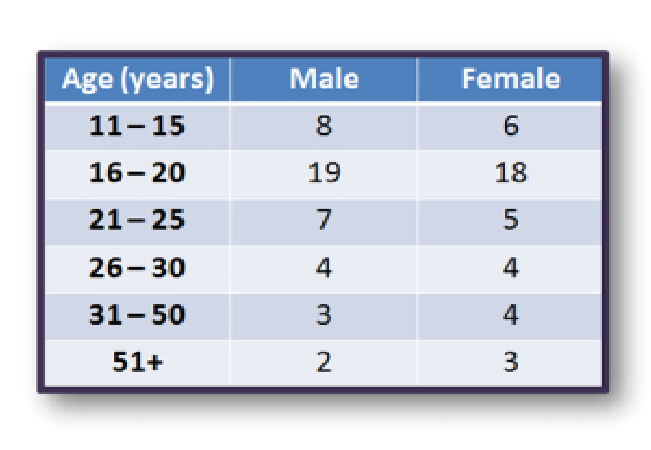
The table gives information about the average hours spent on the Internet by European people of different age groups.
Summarise the information by selecting and reporting the main features, and make comparisons where relevant.
Student answer (Band 5.0)
The chat show the time spend on the internet by Europian citizens of different age groups
Overall, male and female spend most time on the internet is from 16 to 20 years .Spend 19 hour buy male and 18 hour by female . Secondly from 11 to 15 years children spend mostly 6 to 8 hours a single day
Mostly male spend the most time on the internet , age from 11 to 25 years old spend the most time.People age from 16 to 20 spend the 18 to 19 a day by both infact it only 1 hour difference however from 11 to 15 years old people spend average 8 to 6 hours by male and female.
It decrease slightly when people grow older they spend less time on the internet , from 21 to 25 it decrease little by average 7 to 5 and at 26 to 30 it decreased half of it from male it reduced 3 and from female it reduced 1 but in age 51 it decrease mose then expected
AI examiner evaluation
| Criterion | Band |
|---|---|
| Task Achievement / Task Response | 5.5 |
| Coherence and Cohesion | 5.0 |
| Lexical Resource | 5.0 |
| Grammatical Range and Accuracy | 5.0 |
| Overall | 5.0 |
Task Achievement / Task Response: Band 5.5
You identify the main peak accurately: both sexes spend the most time online at ages 16–20, with 19 hours for males and 18 for females. You also note the general decline among older groups and include several relevant comparisons. However, some figures are misreported: at ages 26–30, the table shows 4 hours for both sexes, not a male reduction to 3; at 31–50, the figures are 3 and 4, and at 51+ they are 2 and 3. The claim that ages 11–25 spend the most time is too broad, since the peak is specifically 16–20. A clearer overview and more accurate reporting of the later age groups would make the summary more complete and reliable.
Coherence and Cohesion: Band 5.0
The response has a basic overall shape: an opening, an overview, and discussion of age-group figures. Comparisons such as the one-hour difference at ages 16–20 help connect related information. However, progression is not consistently clear. The overview repeats the peak figures, and the next paragraph returns to the same comparisons before moving to older groups. Linking phrases such as “Secondly” and “however” do not always show the relationship between ideas accurately, while the final sentence ends without a clear concluding comparison. Organise the details in a more deliberate sequence—for example, peak and younger groups first, followed by the steady decline—and use references such as “this figure” only when their meaning is clear.
Lexical Resource: Band 5.0
You use relevant topic vocabulary, including “age groups,” “average,” “difference,” and “decrease,” so the reader can generally understand the subject. However, the range is limited and several word choices or collocations are inaccurate or repetitive. Phrases such as “spend most time,” “decrease half of it,” and “decrease mose then expected” do not express the comparisons precisely. There are also spelling errors, including “Europian,” “buy” for “by,” and “mose.” Aim for accurate, natural expressions for describing data, such as “spend the most time online,” “fall by,” and “a further decline.” Varying verbs like “fall,” “drop,” and “decline” would also make the account less repetitive.
Grammatical Range and Accuracy: Band 5.0
You attempt both short statements and longer comparisons, including “however from 11 to 15 years old people spend average 8 to 6 hours.” This shows an effort to connect information, but the range remains limited and complex sentences are often difficult to follow. Frequent problems with verb forms and sentence construction appear in “The chat show,” “male and female spend,” and “It decrease slightly.” Articles, prepositions, and punctuation are also often missing or misplaced, as in “from 16 to 20 years” and the run-on sequence beginning “It decrease slightly when people grow older.” Use complete, controlled sentences and check subject–verb agreement and past-tense forms. For example: “Internet use was highest among 16–20-year-olds, at 19 hours for males and 18 for females.”
See this exact question answered at other band scores. The same prompt compared across bands.
Browse more IELTS Writing model answers or get your own writing scored by the same AI examiner.