Band 6.0 IELTS Writing Task 1 Model Answer
Overall Band Score: 6.0 · IELTS Academic Practice Accelerator · 2026-11-22
IELTS Writing Task 1 question
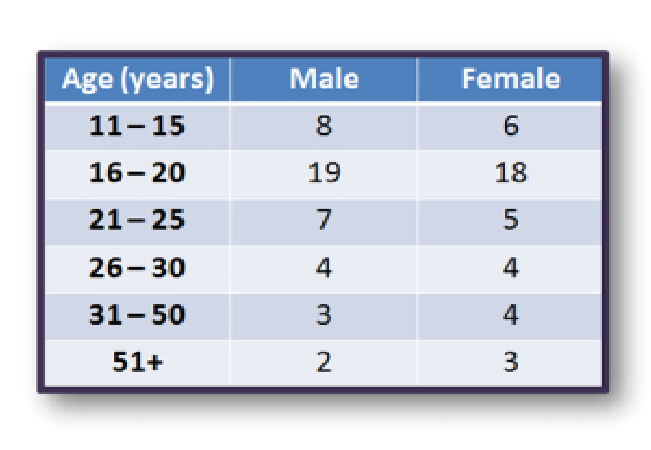
The table gives information about the average hours spent on the Internet by European people of different age groups.
Summarise the information by selecting and reporting the main features, and make comparisons where relevant.
Student answer (Band 6.0)
The table provides the data of the European people in different age groups spending their time on internet
overall, the highest proposition of users consuming internet were the teenagers, whereas on the other hand the lowest users were the ones over the age of 51 years. These variations might seem obvious but the difference after the teenage groups were not huge.
The number of males and females aged 11 to 15 using the internet was 8% and 6%, respectively. Next to them were the teenagers aged 16 to 20 are the majority consumers in whole Europe, with a maximum users of 19% male and 18% women online. After that there is a sharp decline in the users with a rate of 7% men and 5% women over the next 5 years.
This difference in internet consumption between the two genders became equal during the age category of 26 to 30 years old, This stayed for the following 5 years group also with a slight decline in 1% male users. Finally the people over 51+ were the least in internet consumption with an average rate of 2% to 3% men and women respectively
AI examiner evaluation
| Criterion | Band |
|---|---|
| Task Achievement / Task Response | 6.0 |
| Coherence and Cohesion | 6.0 |
| Lexical Resource | 5.5 |
| Grammatical Range and Accuracy | 5.5 |
| Overall | 6.0 |
Task Achievement / Task Response: Band 6.0
You identify the main pattern: internet use peaks among 16–20-year-olds and is lowest among people aged 51+, and you report the figures for each age group. The gender comparisons are also mostly accurate, including the equal figures for ages 26–30 and the small female lead among older groups. However, the overview is not fully precise: “the difference after the teenage groups were not huge” is vague and does not clearly summarise the overall decline after the peak. Also, the table gives hours, not percentages, so describing values as “8%” or “19%” misrepresents the units. A clearer overview and consistent reporting of hours would make the key features more complete and accurate.
Coherence and Cohesion: Band 6.0
The response has a recognisable structure, moving from an introduction and overview to comparisons across the age groups. Sequencing expressions such as “Next to them,” “After that,” and “Finally” help the reader follow the data. However, some links are mechanical or unclear: “Next to them were the teenagers aged 16 to 20” does not clearly explain the comparison, and “This stayed for the following 5 years group also” makes the progression difficult to follow. The overview is separated into a paragraph, but its ideas could be organised more clearly around the peak, subsequent decline, and gender pattern. Use more precise comparisons and clearer references to maintain progression between sentences.
Lexical Resource: Band 5.5
You use a reasonable range of vocabulary for describing comparisons, including “highest,” “lowest,” “sharp decline,” and “slight decline.” These choices help communicate the broad trends. However, several word choices and collocations are inaccurate or unnatural, such as “highest proposition of users,” “consuming internet,” and “maximum users.” “Rate” and percentage language are also unsuitable because the table reports hours. Some repetition of “users” and “internet consumption” limits flexibility. Choose standard data-reporting expressions and use the table’s units consistently; for example, describe the figures as average hours spent online rather than percentages or rates.
Grammatical Range and Accuracy: Band 5.5
You attempt a mix of simple and more complex sentence forms, and most of the comparisons remain understandable. Some grammatical errors, however, reduce accuracy. In “the teenagers aged 16 to 20 are the majority consumers,” the tense and sentence construction are awkward; “the 16–20 age group recorded the highest figures” would be clearer. The sentence beginning “This difference … became equal” is followed by a comma splice and an unclear reference. There are also punctuation and capitalisation slips, including the lowercase “overall” after the opening sentence and the capital “This” after a comma. Review sentence boundaries, verb forms, and article use, while keeping longer comparisons grammatically controlled.
See this exact question answered at other band scores. The same prompt compared across bands.
Browse more IELTS Writing model answers or get your own writing scored by the same AI examiner.