Band 5.5 IELTS Writing Task 1 Model Answer
Overall Band Score: 5.5 · IELTS Academic Practice Accelerator · 2026-11-22
IELTS Writing Task 1 question
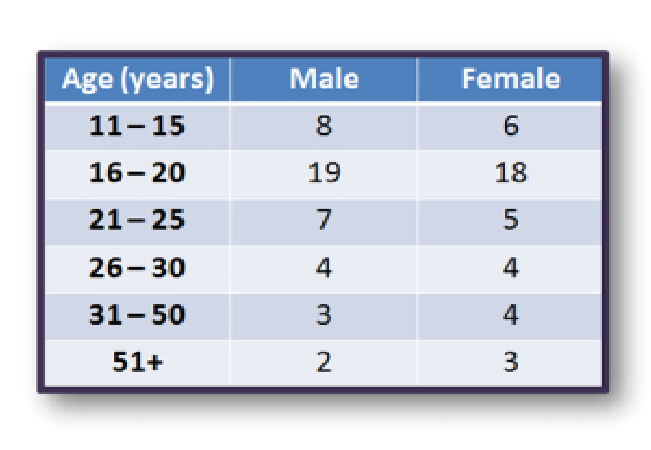
The table gives information about the average hours spent on the Internet by European people of different age groups.
Summarise the information by selecting and reporting the main features, and make comparisons where relevant.
Student answer (Band 5.5)
The given table illustrates the information about the average house spent on the internet by european people of different age group.
Overall, it shows the late teenager group of both gender spend maximum time on the internet. While fifty above age group of male and female spent less time on internet as compare any other age group.
To begin, early teenager group, age between 11 and 15 spent 8 hours by male and 6 hourse by female. After that late teenager group between 16 and 20 spend 19 hours by male and 18 hours by female. It is maximum time which is spent on the internet by any age group. Further, 21 to 25 age group, the male spent average 7 hours and female spend 5 hours on the internet.
Next, 26 to 30 age group spent similar 4 hours on the internet by male and female. Furthermore, the 31 to 50 age group people have spent almost similar time with minor fluctuation, the mal spent 3 hours and female spent 4 hours on the internet. Finally, above 51 age group male spent 2 hours on internet, while average 3 hours spend by the female.
AI examiner evaluation
| Criterion | Band |
|---|---|
| Task Achievement / Task Response | 6.0 |
| Coherence and Cohesion | 6.0 |
| Lexical Resource | 5.0 |
| Grammatical Range and Accuracy | 5.0 |
| Overall | 5.5 |
Task Achievement / Task Response: Band 6.0
You cover the table’s main pattern and report the figures accurately: the 16–20 group has the highest averages (19 hours for males and 18 for females), while the 51+ group has the lowest (2 and 3). The overview also identifies the peak and low point, and the body includes comparisons across all age groups. This makes the response relevant and complete overall. Some features could be developed more clearly: for example, you could highlight that males report more time in the first three age groups, the figures are equal at 26–30, and females are higher in the two oldest groups. This would make the comparisons more analytical rather than mainly listing each pair of values.
Coherence and Cohesion: Band 6.0
The response has a clear overall arrangement: an introduction and overview are followed by two paragraphs describing the age groups in sequence. Linking expressions such as “To begin,” “After that,” “Furthermore,” and “Finally” help the reader follow the progression through the table. However, the sequence of connectors can feel mechanical, and some references are not fully clear. For instance, “It is maximum time” does not specify whether “it” refers to the male figure or the age group’s overall result. Grouping the comparisons by pattern—such as the younger groups, the peak, and the decline among older people—would create a more purposeful progression and reduce reliance on repeated transitions.
Lexical Resource: Band 5.0
You use enough topic vocabulary to describe the table, including “average,” “age group,” “maximum,” and “minor fluctuation.” However, the range is limited and several word-choice or collocation errors are noticeable. “Average house spent” appears to be an inaccurate choice where you mean “average hours spent,” while “late teenager group” is less natural than “older teenage group.” Phrases such as “spent 8 hours by male” and “as compare any other age group” are also awkward and make the description less fluent. There are spelling errors, including “hourse” and “mal.” Aim for precise, natural reporting phrases such as “males spent an average of” and “compared with the other age groups.”
Grammatical Range and Accuracy: Band 5.0
You attempt both simple sentences and longer structures, including the contrast beginning “While fifty above age group…” and the sentence comparing the 31–50 group. The main information is generally understandable, but some grammatical errors recur. For example, “both gender spend” needs plural agreement and a past-tense verb, while “the male spent 8 hours” does not fit the plural group being described. The opening sentence also has an unclear structure, and “female spend 5 hours” shifts tense. Use consistent past tense for the table and check articles, agreement, and sentence boundaries. More accurate control of these patterns would make your comparisons clearer while retaining the range of sentence forms you already attempt.
See this exact question answered at other band scores. The same prompt compared across bands.
Browse more IELTS Writing model answers or get your own writing scored by the same AI examiner.