Band 6.0 IELTS Writing Task 1 Model Answer
Overall Band Score: 6.0 · IELTS Academic Practice Accelerator · 2026-11-23
IELTS Writing Task 1 question
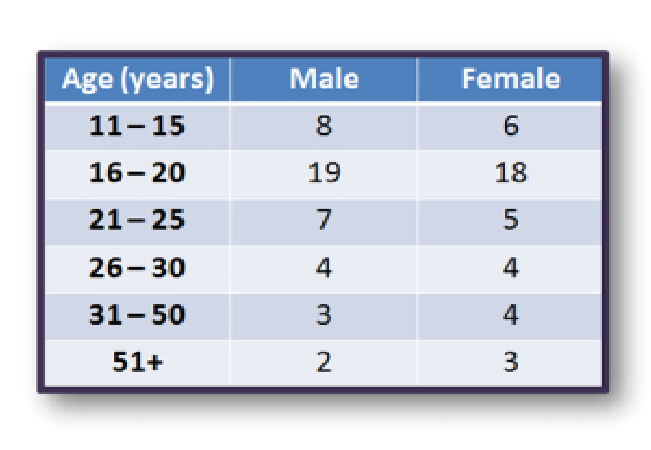
The table gives information about the average hours spent on the Internet by European people of different age groups.
Summarise the information by selecting and reporting the main features, and make comparisons where relevant.
Student answer (Band 6.0)
The table demonstrates the information of european people of different age groups about the average hours they spent on the internet.
Overall, the age group of 16 to 20 years old people spent the highest hours of time on the internet. Whereas, the people from 50 years old age group or onward spent the lowest time.
The age group of 11 to 15 years old male spent 8 hours on the internet and female spent 6 hours. The male and female of 16 to 20 years old spent the 19 hours on the internet which is the highest number. However, the number of hours spent by age group of 21 to 25 years old male is 7 hours and female spent 5 hours which is decreased.
While, the males of 25 to 50 years old spent approximately same time on the internet, Whereas, the females of this age groups also spent the similar time of 4 hours. On the other hand, the male and female of 51 years old age group spent the least number of time on the internet which is 2 or 3 hours.
AI examiner evaluation
| Criterion | Band |
|---|---|
| Task Achievement / Task Response | 6.5 |
| Coherence and Cohesion | 6.0 |
| Lexical Resource | 5.0 |
| Grammatical Range and Accuracy | 5.5 |
| Overall | 6.0 |
Task Achievement / Task Response: Band 6.5
You identify the main pattern accurately: the 16–20 group records the highest figures, while people aged 51 and over have the lowest. You also report several key values correctly, including 8 and 6 hours for ages 11–15 and 19 and 18 for ages 16–20. This gives the response a clear overview and covers the table’s main comparisons. However, some details are unclear or inaccurate: “males of 25 to 50 years old” combines the 26–30 and 31–50 categories, and the claim that both sexes aged 16–20 spent 19 hours misreports the female figure of 18. The overview could also highlight the general decline after the peak more precisely.
Coherence and Cohesion: Band 6.0
The response has a recognisable structure, with an introduction, an overview and paragraphs reporting figures. The information generally moves from younger groups to older ones, so the reader can follow the broad pattern. However, connections between ideas are sometimes mechanical or unclear. For example, “Whereas” begins a sentence fragment after the overview, and “While” and “On the other hand” do not always express the relationships between the figures accurately. The final paragraph also groups two distinct age bands together, which weakens the progression of the data. Organise the body by age bands and use linking words only when they show a clear contrast or continuation.
Lexical Resource: Band 5.0
You use enough topic vocabulary to communicate the subject, including “age group,” “spent,” “highest” and “lowest.” However, the range is limited and several phrases are unnatural or repetitive, such as “spent the highest hours of time” and “spent the least number of time.” “Demonstrates the information” is also an imprecise way to introduce a table, while repeated use of “spent” makes the description less varied. These choices are understandable but reduce precision and naturalness. Use concise reporting language and accurate collocations, such as “recorded the highest average” or “the figure fell to,” while keeping the wording appropriate for describing data.
Grammatical Range and Accuracy: Band 5.5
You attempt both simple and more complex sentence forms, and the main comparisons are usually understandable. Some grammatical errors remain, particularly in noun phrases and sentence construction. For instance, “the age group of 16 to 20 years old people” has an awkward structure, and “the male and female … spent the 19 hours” has problems with number agreement and article use. The sentence beginning “Whereas” is incomplete, and the clause beginning “While” is not properly connected to the rest of its sentence. These issues do not generally prevent understanding, but they make the writing less controlled. Practise complete comparison sentences and check articles, plurals and clause links.
See this exact question answered at other band scores. The same prompt compared across bands.
Browse more IELTS Writing model answers or get your own writing scored by the same AI examiner.