Band 5.0 IELTS Writing Task 1 Model Answer
Overall Band Score: 5.0 · IELTS Academic Practice Accelerator · 2026-11-24
IELTS Writing Task 1 question
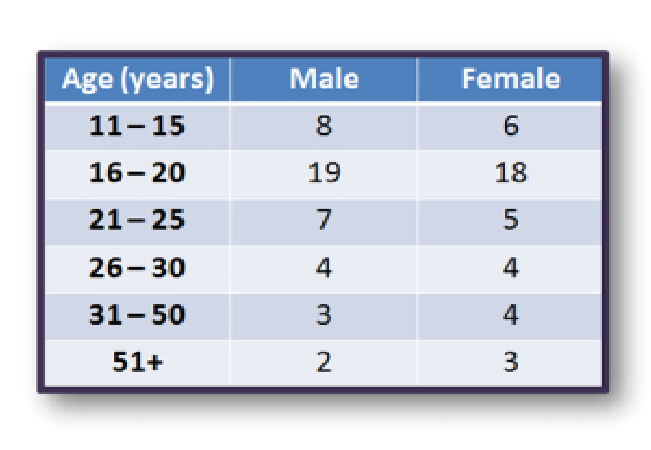
The table gives information about the average hours spent on the Internet by European people of different age groups.
Summarise the information by selecting and reporting the main features, and make comparisons where relevant.
Student answer (Band 5.0)
This table graph illustrates the number of different people who spent several hours on the internet.Overall, 16 to 20 years old people use more internet.
Getting back to the details, male users are more in the first age group from 11 to 15 whose spend 8 hour and female users are less then it that are 6. Next group, males increase their number of hour at 19 and female aproximately equal to male group.
Interestingly, when we saw at younger age group they are little interest in online app. Males watch 7 hour mobile and females are less then it that is 5. 26 to 30 age group, male and females are remain stable their time spend on online things that is 4.
Obviously, second last group, male are slightly less then previous at 3 and female remain constant as previous. In the last age group who are 51+ age oldies, male spend only 2 hour while, female spend 3 hour on internet.
AI examiner evaluation
| Criterion | Band |
|---|---|
| Task Achievement / Task Response | 5.0 |
| Coherence and Cohesion | 5.0 |
| Lexical Resource | 5.0 |
| Grammatical Range and Accuracy | 5.0 |
| Overall | 5.0 |
Task Achievement / Task Response: Band 5.0
You identify the main peak correctly: people aged 16–20 spend the most time online, at 19 hours for males and 18 for females. You also report several other figures accurately, including the 11–15 and 51+ groups. However, the overview is very limited and does not summarise the broader pattern that usage generally falls after the 16–20 peak, reaching its lowest level among people aged 51 and over. Some comparisons are unclear or inaccurate: for example, “female approximately equal to male group” does not state the female figure, and the claim that younger people have “little interest” is not supported by the relatively high figures for ages 11–15. Focus on describing the data rather than inferring users’ interest, and give a clearer overview of the age trend and gender differences.
Coherence and Cohesion: Band 5.0
The response has a basic structure, with an opening, an overview, and a sequence of details by age group. This makes the table’s categories reasonably easy to follow. However, progression is mostly a list of figures rather than a clearly organised comparison, and some linking phrases are awkward or do not show the relationship between points. “Getting back to the details” and “Interestingly, when we saw” sound conversational, while “Next group” does not clearly connect the figures to the previous age group. The overview is also separated from the details but does not guide the reader through the main pattern. Group the age bands into meaningful trends, use straightforward transitions, and make references such as “this group” unambiguous.
Lexical Resource: Band 5.0
You use enough topic vocabulary to communicate the general subject, including “age group,” “male users,” and “spend … hour.” However, the range is limited, and several word choices or collocations are inaccurate or informal, which sometimes makes the meaning difficult to follow. For example, “table graph” is not an appropriate description of the visual, “watch 7 hour mobile” does not express the table’s information, and “oldies” is too informal for an IELTS report. “Remain stable their time spend” is also an awkward way to describe unchanged figures. Use precise reporting language such as “the table compares,” “spent online,” and “the figures were equal,” and avoid unsupported descriptions of users’ interests.
Grammatical Range and Accuracy: Band 5.0
The response attempts some longer sentence forms, but most sentences rely on simple patterns, and errors are frequent enough to make parts of the report difficult to read. Examples include “16 to 20 years old people use more internet,” “whose spend 8 hour,” and “male and females are remain stable.” These show problems with word order, relative clauses, agreement, and verb forms. Articles and plurals are also inconsistent, as in “spend 8 hour” and “the last age group who are 51+ age oldies.” Punctuation and spacing need attention too, including the missing space after the opening sentence and the comma in “while, female.” Practise accurate past-tense reporting and simple comparison structures before adding more complex clauses.
See this exact question answered at other band scores. The same prompt compared across bands.
Browse more IELTS Writing model answers or get your own writing scored by the same AI examiner.