Band 6.0 IELTS Writing Task 1 Model Answer
Overall Band Score: 6.0 · IELTS Academic Practice Accelerator · 2026-11-24
IELTS Writing Task 1 question
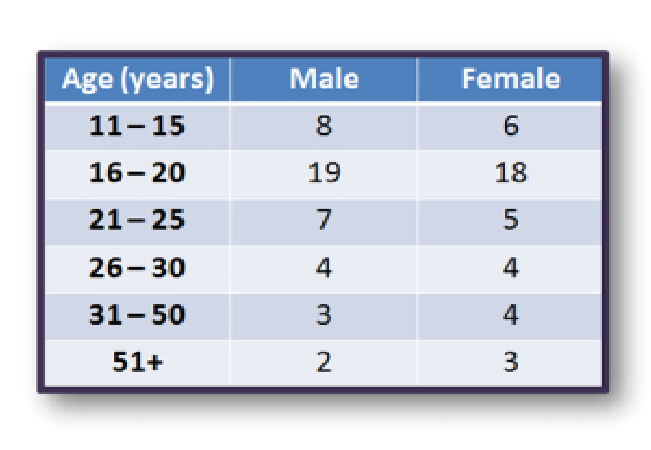
The table gives information about the average hours spent on the Internet by European people of different age groups.
Summarise the information by selecting and reporting the main features, and make comparisons where relevant.
Student answer (Band 6.0)
The table lists data about the overall hours spent on the internet by individuals of distinct age groups living in europe.
Overall, people in the age bracket of 16-20 years spend the highest amount of time on the internet, followed by 11-15 years old teenagers. Apart from these two age groups, europeans spend lesser amount of time on the internet as they get older.
Teenagers and those who are 20 years old use the internet alot more than any other age group. For children in the age bracket of 11-15 years old, boys spend an average of 8 hours on the internet, while girls spend 6 hours. For europeans who are 16-20 years old, male's spend about 19 hours on average on the internet, while fermale's use the internet for about 18 hours.
From the age's of 21 to 51+, the average usage of internet by european citizens keeps declining as they get older. In 21-25 year old's, men spend about 7 hours on the internet while women spend only 5 hours, whereas 26-30 years old spend an equal amount of 6 hours for both men and women. Moving towards older age bracket shows that women use internet more then men, where in the age bracket of 51+ years old, male's use the internet for 2 hours while female spend 3 hours on the internet.
AI examiner evaluation
| Criterion | Band |
|---|---|
| Task Achievement / Task Response | 6.0 |
| Coherence and Cohesion | 6.0 |
| Lexical Resource | 5.5 |
| Grammatical Range and Accuracy | 5.5 |
| Overall | 6.0 |
Task Achievement / Task Response: Band 6.0
You identify the main pattern accurately: the 16–20 group has the highest figures, and usage generally falls among older groups. You also compare male and female values for several age bands. However, one important figure is misreported: for ages 26–30, both sexes record 4 hours, not 6. The overview that usage declines with age is broadly useful, but “Apart from these two age groups” is unclear because the table shows a continuing decline after the peak rather than a separate exception. Some details are also less fully handled: the 31–50 figures (3 hours for men and 4 for women) are not reported. More precise coverage of the middle age groups and a clearer overview would strengthen the response.
Coherence and Cohesion: Band 6.0
The response has a clear overall arrangement: an introduction and overview are followed by paragraphs covering younger and older age groups. This makes the main comparisons reasonably easy to follow. Linking expressions such as “Overall,” “whereas,” and “Moving towards” help connect information, although some transitions are mechanical or imprecise. For example, “From the age’s of 21 to 51+” introduces a broad range, but the paragraph then skips the 31–50 figures before moving to 51+. The phrase “Apart from these two age groups” also makes the overview’s relationship between the age groups unclear. Grouping the figures more systematically and using clearer references would make progression smoother.
Lexical Resource: Band 5.5
You use enough topic vocabulary to describe the table, including “age bracket,” “average,” “declining,” and “usage.” There is also some variation in how you refer to the people and figures. However, several choices are repetitive or unnatural, such as “spend lesser amount of time,” “use the internet alot more,” and “keeps declining as they get older.” Spelling and form errors, including “europe,” “fermale’s,” and “alot,” also reduce accuracy. The repeated use of “on the internet” could be varied with more precise expressions such as “internet use” or “time online.” Aim for natural collocations and check spelling and apostrophes carefully; this would make the vocabulary more controlled and appropriate for an academic summary.
Grammatical Range and Accuracy: Band 5.5
You attempt a mix of simple and complex sentences, including comparisons with “while” and “whereas” and a clause beginning “as they get older.” Most of the meaning remains clear, but some grammatical errors recur. Examples include “For europeans who are 16-20 years old, male’s spend,” where the possessive form is incorrectly used, and “In 21-25 year old’s,” where the age phrase is not formed correctly. The sentence “26-30 years old spend an equal amount of 6 hours for both men and women” also has an unclear subject and comparison. There are some problems with articles, plurals, and punctuation around age ranges. Use consistent forms such as “men aged 21–25” and “both men and women spend four hours” to improve control.
See this exact question answered at other band scores. The same prompt compared across bands.
Browse more IELTS Writing model answers or get your own writing scored by the same AI examiner.