Band 5.5 IELTS Writing Task 1 Model Answer
Overall Band Score: 5.5 · IELTS Academic Practice Accelerator · 2026-11-24
IELTS Writing Task 1 question
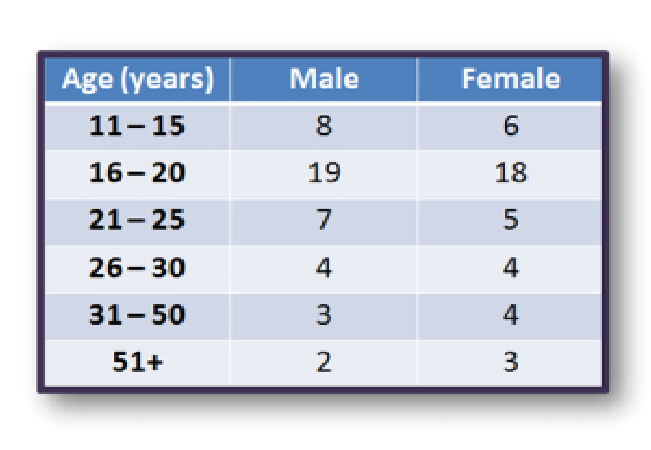
The table gives information about the average hours spent on the Internet by European people of different age groups.
Summarise the information by selecting and reporting the main features, and make comparisons where relevant.
Student answer (Band 5.5)
The table illustrates information about the average hours spent on the Internet by European people of different age groups.
Overall, it's evident that men are more likely to spent much time in the Internet compared to the women. Also it's noticeable that the last age groups of people recorded the lowest figures.
Looking first at women, 11-15 and 21-25 age group represented an over similar average accounted for 5 to 6 hours while 26-30 and 31-50 represent the same figure which is 4 hours. Among women who aged 16-20 recorded the highest amount of time spent online estimated 18 hours while the 51+ age group of women spent only 3 hours in the Internet.
Regarding men, 11-15 and 21-25 age group accounted for 7 to 8 hours spent online while men who aged 26-30 and 31-50 estimated to spend 3 to 4 hours in the Internet. Similarly for the 51+ group, remained to have the smallest figure accounted for only 2 hours. Meanwhile, the 16-20 age group recorded the highest average with 19 hours.
AI examiner evaluation
| Criterion | Band |
|---|---|
| Task Achievement / Task Response | 6.0 |
| Coherence and Cohesion | 6.0 |
| Lexical Resource | 5.5 |
| Grammatical Range and Accuracy | 5.0 |
| Overall | 5.5 |
Task Achievement / Task Response: Band 6.0
You identify the main pattern: the 16–20 group records the highest figures for both sexes, while the oldest group records the lowest, and you include relevant comparisons across the age bands. Most figures are reported accurately, including 19 and 18 hours for men and women aged 16–20. However, the overview says men generally spend more time online, which is not true for every group: women exceed men in the 31–50 and 51+ categories, and the 26–30 figures are equal. The comparison for women aged 11–15 and 21–25 is also imprecise, since these are separate values of 6 and 5 hours. Make the overview more qualified and distinguish these figures clearly.
Coherence and Cohesion: Band 6.0
The response has a clear overall arrangement: an introduction and overview are followed by separate paragraphs about women and men. This makes the information easy to locate, and signposts such as “Looking first at women” and “Regarding men” help guide the reader. However, the progression within the paragraphs is sometimes awkward, and some links do not clearly express the relationship between ideas. For example, “Similarly for the 51+ group, remained to have the smallest figure” has no clear subject, while “Meanwhile” introduces the final male comparison without a strong contrast. Grouping the age bands in a consistent order and using clearer links between comparisons would make the cohesion less mechanical and the progression smoother.
Lexical Resource: Band 5.5
You use a relevant range of vocabulary for describing the table, including “highest amount,” “lowest figures,” “accounted for,” and “average.” The meaning is generally understandable, but several word choices and collocations are inaccurate or repetitive. For instance, “spent in the Internet” is not idiomatic, and “represented an over similar average” does not clearly describe the figures. “Estimated to spend” is also an unsuitable choice when the table gives recorded averages. Use more precise expressions such as “spent online,” “recorded,” and “was approximately the same.” Repeating “age group” and “figure” can also be reduced by varying the phrasing while keeping the comparisons precise.
Grammatical Range and Accuracy: Band 5.0
You attempt both simple and more complex sentence forms, and the overall meaning can usually be followed. However, some errors in verb forms, agreement, and sentence construction remain. In the overview, “men are more likely to spent” should use the infinitive “spend”; “the last age groups … recorded” has a mismatch between the plural subject and the singular idea of the oldest group. The sentence “Among women who aged 16–20 recorded…” is not grammatically complete, and “Similarly for the 51+ group, remained…” lacks a subject. Articles and prepositions also need attention in phrases such as “in the Internet.” Check that each sentence has a clear subject and finite verb, and review verb patterns after expressions such as “likely to.”
See this exact question answered at other band scores. The same prompt compared across bands.
Browse more IELTS Writing model answers or get your own writing scored by the same AI examiner.