Band 5.5 IELTS Writing Task 1 Model Answer
Overall Band Score: 5.5 · IELTS Academic Practice Accelerator · 2026-11-24
IELTS Writing Task 1 question
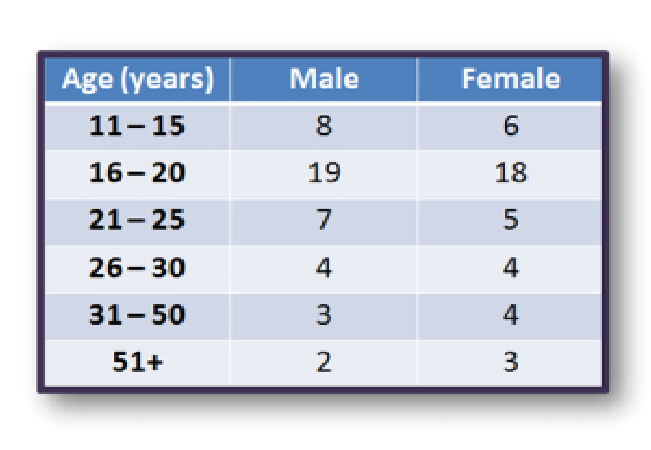
The table gives information about the average hours spent on the Internet by European people of different age groups.
Summarise the information by selecting and reporting the main features, and make comparisons where relevant.
Student answer (Band 5.5)
Given table illustrate the data realated to time that most of the people spent in europe of different ages.
Overall, youngsters among 16 to 20 tend to allocate most of the their time on internet, whereas people over 51 spend least time on social media.
Commencing with the first point, individuals between 16 to 20 devote their time on internet including male 19 and and one less female. Moreover older people over 51 dedicate far less time on internet having 2 male and 3 female.
On the other hand, adults beetween 26 to 30 spend an average amount of time on internet with same number of male and female, In addition folks between 31 to 50 also devote an average number of three male and four female
Furthermore, children between 11 to 15 and aged between 21 to 25 spend a bit similar amount of hours of 8 and 7 male and 6 and 5 female.
AI examiner evaluation
| Criterion | Band |
|---|---|
| Task Achievement / Task Response | 5.5 |
| Coherence and Cohesion | 5.5 |
| Lexical Resource | 5.0 |
| Grammatical Range and Accuracy | 5.0 |
| Overall | 5.5 |
Task Achievement / Task Response: Band 5.5
You identify the main pattern: the 16–20 group records the highest figures, while people aged 51+ record the lowest, and you include comparisons between males and females across the age groups. Most reported figures match the table. However, the overview says people over 51 spend least time on “social media,” whereas the table measures Internet use; this changes the subject of the data. The description also calls the 26–30 and 31–50 groups “an average amount,” which is vague and does not clearly distinguish their relatively low figures from the peak. To strengthen the report, describe the measure accurately and make the key contrasts more precise, including the general decline after ages 16–20.
Coherence and Cohesion: Band 5.5
The response has a recognisable structure, with an opening, an overview, and paragraphs that group age ranges. Connectors such as “Overall,” “On the other hand,” and “Furthermore” help signal relationships. However, the progression is not consistently clear: “Commencing with the first point” introduces the peak and then jumps to the oldest group, while the next paragraph moves back to middle-aged groups. The final sentence combines two age groups and their male and female figures in a way that is difficult to follow. Some linking phrases feel mechanical rather than showing a precise relationship. Organise the details in a clear sequence, such as from youngest to oldest, and use shorter comparisons so each figure is easy to connect to its age group.
Lexical Resource: Band 5.0
You use several relevant terms, including “allocate,” “dedicate,” and “average,” and the reader can generally understand the intended comparisons. However, the range is limited and some choices are inaccurate or unnatural for a data report. “Social media” does not mean the same thing as Internet use, and phrases such as “devote their time on internet” and “an average number” are awkward collocations. There are also noticeable spelling errors, including “realated” and “beetween,” which reduce precision. Aim for straightforward, accurate reporting vocabulary rather than repeatedly substituting synonyms for “spend.” Use terms such as “hours online,” “record,” and “respectively” where they fit the data.
Grammatical Range and Accuracy: Band 5.0
You attempt longer sentences and use clauses to compare groups, but the range is limited and errors occur frequently enough to make some sentences difficult to process. For example, “Given table illustrate” has problems with the article and subject–verb agreement, and “individuals between 16 to 20” uses an incorrect age-range construction. The sentence beginning “Furthermore, children…” also has an unclear structure because the figures are not cleanly attached to the male and female categories. Punctuation is inconsistent, including a comma splice before “In addition.” Practise accurate sentence patterns such as “The table shows…” and “Among people aged 16–20, men spent 19 hours and women 18,” then check agreement, articles, and sentence boundaries.
See this exact question answered at other band scores. The same prompt compared across bands.
Browse more IELTS Writing model answers or get your own writing scored by the same AI examiner.