Band 6.0 IELTS Writing Task 1 Model Answer
Overall Band Score: 6.0 · IELTS Academic Practice Accelerator · 2026-11-25
IELTS Writing Task 1 question
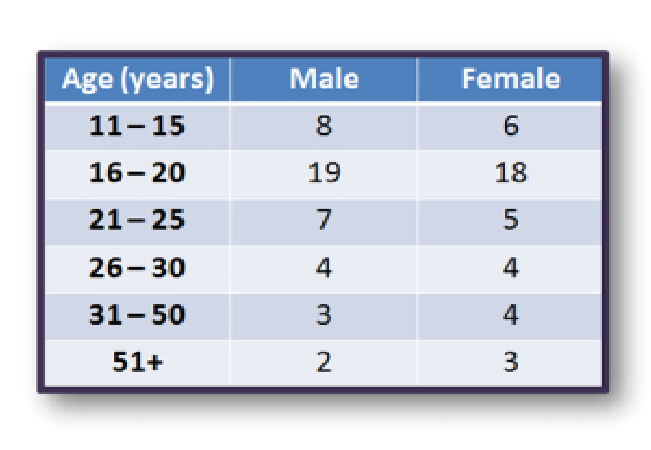
The table gives information about the average hours spent on the Internet by European people of different age groups.
Summarise the information by selecting and reporting the main features, and make comparisons where relevant.
Student answer (Band 6.0)
The given table demonstrates the information about the average hours spent on internet activities by Europeans of different age groups.
Overall, teenagers spent the most hours on internet , whereas middle aged Europeans only utilized less than 5 hours on internet.
Both male and female from the age group 16 to 20 years spent around 19 and 18 hours respectively which is almost double the hours utilized by pre-teens . On the other hand, working adults from the age group 21 to 25, they almost spent one third the hours utilized by teenagers around 7 hours by males and 5 hours by females which depicts females spent less time on internet.
However, the pattern changed completely in the age groups of 31 to 50 and middle aged people where females spent more time than the males on the internet. While, only age group in which both male and female utilized same amount of time on internet of around 4 hours is 26 to 30.
AI examiner evaluation
| Criterion | Band |
|---|---|
| Task Achievement / Task Response | 6.0 |
| Coherence and Cohesion | 6.0 |
| Lexical Resource | 6.0 |
| Grammatical Range and Accuracy | 5.5 |
| Overall | 6.0 |
Task Achievement / Task Response: Band 6.0
You identify the main peak accurately: people aged 16–20 record the highest figures, at 19 hours for males and 18 for females, and you note the equal four-hour figures for ages 26–30. The overview also recognises that female usage is higher in the older groups. However, some comparisons are imprecise: 19 and 18 hours are not almost double the pre-teen figures of 8 and 6, and the 21–25 figures are not one third of the teenage totals. The description of “middle aged” users is also broad, since the table separates ages 31–50 from those aged 51 and over. More precise comparisons across all age bands would make the summary more complete and clear.
Coherence and Cohesion: Band 6.0
The response has a recognisable progression: an introduction, an overall statement, and comparisons between age groups. Linking expressions such as “Overall,” “On the other hand,” and “However” help signal shifts in focus. The organisation is coherent, but the comparisons are packed into long sentences, and some transitions do not clearly show how the figures relate. For example, the sentence beginning “On the other hand, working adults…” combines the 21–25 group with a comparison to teenagers, while “However, the pattern changed completely” overstates the change. Grouping the younger ages together and then the older ages would create clearer progression, with each sentence focused on a specific comparison.
Lexical Resource: Band 6.0
You use an adequate range of vocabulary for describing the table, including “average hours,” “age group,” “spent,” and “pattern.” There are also attempts at more formal wording, such as “utilized” and “depicts,” although these choices are not always natural in this context. Repetition of “spent,” “hours,” and “on internet” limits flexibility, while phrases such as “internet activities” suggest a type of activity that the table does not specify. Choose precise, natural collocations for reporting data, and vary them selectively rather than replacing simple words with less suitable formal alternatives. This would make the description more accurate and fluent without changing its meaning.
Grammatical Range and Accuracy: Band 5.5
You attempt both simple and complex sentence forms, including a relative clause in “which depicts females spent less time” and a contrast introduced by “While.” The main comparisons are generally understandable, but some grammatical errors remain. For example, “Both male and female … spent” needs plural forms (“males and females”), and “working adults … they almost spent” repeats the subject and creates an awkward clause structure. The final sentence beginning “While” is also a fragment because it lacks a complete main clause. Review subject–verb and plural agreement, and ensure that contrast clauses are attached to complete sentences. More consistently accurate complex sentences would strengthen control.
See this exact question answered at other band scores. The same prompt compared across bands.
Browse more IELTS Writing model answers or get your own writing scored by the same AI examiner.