Band 6.0 IELTS Writing Task 1 Model Answer
Overall Band Score: 6.0 · IELTS Academic Practice Accelerator · 2026-11-26
IELTS Writing Task 1 question
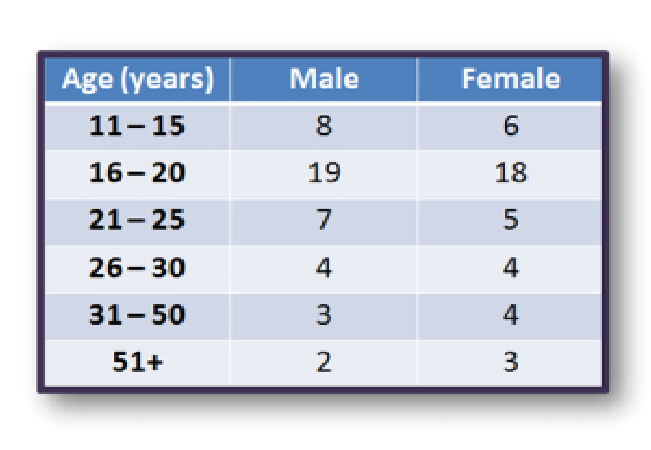
The table gives information about the average hours spent on the Internet by European people of different age groups.
Summarise the information by selecting and reporting the main features, and make comparisons where relevant.
Student answer (Band 6.0)
The given table illustrates the data of internet usage by different age groups of European males and females.
Overall, it is evident that 16-20 years old individuals utilise a substantial amount of time using the internet. Whereas elderly people spend comparatively marginal time on the internet.
As for the children between 11-15, the average of eight hours are utilised by males, and six hours by females. Almost eighteen-nineteen hours on average spend by both males and females of ages 16-20. Moreover, the males aging 21-25 spend approximately seven hours on the internet, whereas five hours by females.
Furthermore, four hours on average used by males and females between 26-30 years. However, typically three hours usage had been recorded for 31-50 years old males as well as four hours were observed for females. Subsequently, the elderly people of age more than 51, were recorded lowest for the internet usage, two hours on average for males and three hours for females.
AI examiner evaluation
| Criterion | Band |
|---|---|
| Task Achievement / Task Response | 6.5 |
| Coherence and Cohesion | 6.5 |
| Lexical Resource | 6.0 |
| Grammatical Range and Accuracy | 5.5 |
| Overall | 6.0 |
Task Achievement / Task Response: Band 6.5
The response selects the main pattern accurately: internet use peaks among 16–20-year-olds and is lowest among people aged 51+, and the figures reported for each age and sex group match the table. It also makes relevant comparisons, such as males spending more time than females in the younger groups and the figures being equal at ages 26–30. This gives the report a clear overview and covers the data. To make the account more fully developed, draw out the overall decline after the 16–20 peak and note the exceptions: females exceed males in the 31–50 and 51+ groups. The overview’s contrast between young and elderly users is useful, but could capture these patterns more precisely.
Coherence and Cohesion: Band 6.5
The response has a clear overall arrangement: an introduction, an overview, and two paragraphs reporting the age-group figures. The sequence from younger to older groups is logical, and linking expressions such as “Moreover,” “Furthermore,” and “Subsequently” help signal progression. This makes the information easy to follow overall. However, some transitions feel mechanical, and “Whereas” begins a sentence fragment after the overview’s first sentence. The final paragraph also groups several comparisons together without clearly highlighting the shift from male advantage in younger groups to female advantage among older adults. Use fewer formulaic connectors and make the relationships between comparisons more explicit to improve cohesion.
Lexical Resource: Band 6.0
There is adequate vocabulary for describing the table, including “average,” “comparatively,” “approximately,” and “recorded,” and the meaning remains clear. The writer also attempts more formal alternatives to “use,” showing some range. However, several choices are unnatural or imprecise for this task: “utilise a substantial amount of time using the internet,” “males aging 21-25,” and “were recorded lowest” do not sound idiomatic. Repetition of “hours” and “on the internet” also limits flexibility. Prefer concise, conventional data-reporting language, such as “spent,” “the 21–25 age group,” and “recorded the lowest usage.” More accurate collocations would make the vocabulary more natural and precise.
Grammatical Range and Accuracy: Band 5.5
The response attempts a mix of sentence forms, including comparisons with “whereas” and clauses introduced by “as” and “however.” Most figures and their relationships can be understood, but some grammatical errors remain. “Whereas elderly people spend…” is a fragment because it is separated from the preceding sentence, and “Almost eighteen-nineteen hours on average spend by both males and females” has faulty word order and lacks a correctly formed verb phrase. There are also agreement and article problems in “the average of eight hours are utilised” and “the elderly people of age more than 51, were recorded.” Build complete clauses with a clear subject and verb, and check agreement and punctuation when joining contrasting ideas.
See this exact question answered at other band scores. The same prompt compared across bands.
Browse more IELTS Writing model answers or get your own writing scored by the same AI examiner.