Band 5.5 IELTS Writing Task 1 Model Answer
Overall Band Score: 5.5 · IELTS Academic Practice Accelerator · 2026-11-27
IELTS Writing Task 1 question
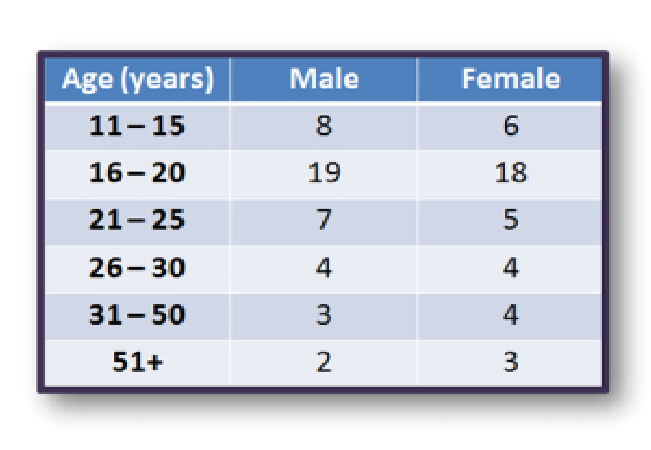
The table gives information about the average hours spent on the Internet by European people of different age groups.
Summarise the information by selecting and reporting the main features, and make comparisons where relevant.
Student answer (Band 5.5)
The table illustrates information above the average hours spent on the internet by the European residents of different age groups.
Overall, it is clear that the most dominant source is using near a quarter in both male and female, while the fewest people using internet approximately half. It is noticeable that after quarter the age groups is decline marginally in both male and women.
To commence, under 11-15 age groups of youngster male using more 8%, whereas the ratio of women drop 2% at 6%. Moreover, the highest proportion of using internet in between age near quarter 15 to 20 ages which male have 19% and female 18% in one day using. In addition, 21 to 25 years of individuals again male rise slightly and female fall respectively 7% and 5%.
On the other hand, at mid years both percentage of male and female remain unchanged at one point 4% in the age of 26 to 30. Furthermore, after that female ratio rising and male plummeted. On account of around one-third 31 to 51 age male have 3% and female growing the percentage for using more internet at 4%. Similarly, in half century male lower at 2% and female accounted for 3%.
AI examiner evaluation
| Criterion | Band |
|---|---|
| Task Achievement / Task Response | 5.0 |
| Coherence and Cohesion | 6.0 |
| Lexical Resource | 5.5 |
| Grammatical Range and Accuracy | 5.0 |
| Overall | 5.5 |
Task Achievement / Task Response: Band 5.0
You identify the main peak correctly: the 16–20 group records the highest figures, at 19 hours for males and 18 for females, and you include values across the age groups. However, the overview is unclear and contains major misinterpretations: “the most dominant source” and “fewest people” do not describe average hours, and “approximately half” is not supported by the table. The figures are hours, not percentages, and the peak is at ages 16–20 rather than “15 to 20.” Some comparisons are also inaccurate: at 21–25, both figures fall from the previous group, rather than males rising. A clearer overview of the peak and the general decline with age, supported by accurate comparisons, would address the task more fully.
Coherence and Cohesion: Band 6.0
The response has a recognisable structure: an introduction, an overview, and two paragraphs covering younger and older age groups. Sequencing the figures by age helps the reader follow the table, and transitions such as “Moreover,” “In addition,” and “Furthermore” show an effort to connect points. However, some links are mechanical or do not express the intended relationship clearly. For example, “On the other hand” does not introduce a genuine contrast, while “after quarter” and “Similarly” leave the progression unclear. The overview also does not provide a reliable organising summary. Use fewer, more precise linking phrases and group the data around clear patterns, such as the peak and the subsequent decline.
Lexical Resource: Band 5.5
You attempt a range of vocabulary, including “dominant,” “marginally,” “plummeted,” and “accounted for,” and the age-related comparisons are generally understandable. However, several word choices and collocations are inaccurate or confusing: “dominant source” does not fit a table of hours, “fewest people using internet” changes the measure, and “female ratio rising” is not a natural way to describe the figures. The repeated use of “percentage,” “ratio,” and “proportion” is also misleading because the data are hours, not percentages. Choose precise terms such as “average hours,” “figure,” and “time spent online,” and use trend verbs only when they match the direction and size of the change.
Grammatical Range and Accuracy: Band 5.0
You use both simple statements and attempts at longer structures, including clauses introduced by “whereas” and “which.” However, complex sentences are often faulty, and errors in agreement, articles, and sentence construction sometimes make the meaning difficult to follow. For example, “the age groups is decline” has incorrect agreement and verb form, while “male using more 8%” lacks a clear grammatical structure. In “both percentage of male and female remain unchanged,” the noun phrase and verb do not agree, and the sentence also obscures what remains unchanged. Practise building accurate comparisons with a clear subject and verb, such as “Male internet use fell to eight hours, compared with six for females.”
See this exact question answered at other band scores. The same prompt compared across bands.
Browse more IELTS Writing model answers or get your own writing scored by the same AI examiner.