Band 5.5 IELTS Writing Task 1 Model Answer
Overall Band Score: 5.5 · IELTS Academic Practice Accelerator · 2026-11-27
IELTS Writing Task 1 question
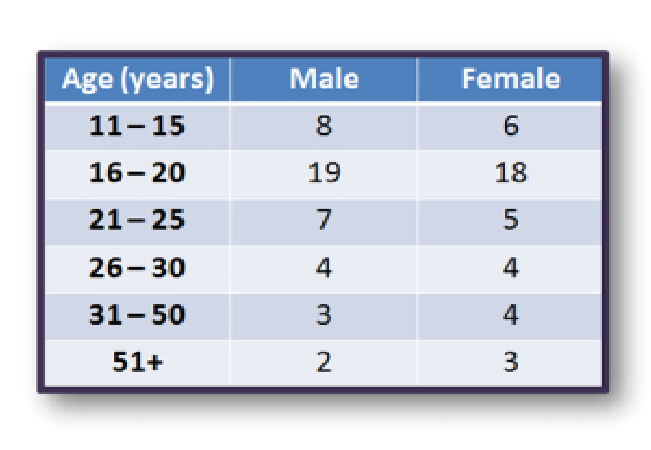
The table gives information about the average hours spent on the Internet by European people of different age groups.
Summarise the information by selecting and reporting the main features, and make comparisons where relevant.
Student answer (Band 5.5)
The table elaborates us about the usage time of european people from different age groups on internet. The explore both male and female of different age gaps. This infgormation go on upto 50+ age peoples.
The groups are divided into 5 years for example from 11 to 15 and than 16 to 20 or so on. Male section show european male with number of hour usage with different age group. Female column show european females daily hour usage of internet.
Age group from 11 to 15 both male and female spent very few hours on internet and from 16 to 20 age group spend most of their time on internet because both male and female group have higher number of hours spent. The age group of 21 to 25 spend normaly 5 to 7 hours daily that are not to less or too much.
people that fall in age group of 26 to 30 the also spend too much less hours on internet i their daily life and from 31 to 50 and 51+ age group people daily spend very few hours.
Conclusion is that people from age 16 to 20 spend most of his daily time on internet both male and female and age group from 26 to 50+ spend very few hours daily life. younger european peoples spend more hours on internet than elders.
AI examiner evaluation
| Criterion | Band |
|---|---|
| Task Achievement / Task Response | 5.5 |
| Coherence and Cohesion | 5.5 |
| Lexical Resource | 5.0 |
| Grammatical Range and Accuracy | 5.0 |
| Overall | 5.5 |
Task Achievement / Task Response: Band 5.5
You identify the main pattern correctly: the 16–20 group records the highest Internet use for both sexes, while use generally falls among older groups. You also make relevant male–female comparisons, such as noting that the 21–25 group spends around five to seven hours. However, the account is only partly developed and includes important inaccuracies: the table has six age groups, not five, and the figures represent average hours without stating that they are daily. The overview also overgeneralises that people aged 26 to 50+ spend very few hours, although the 26–30 figures are four hours for both sexes and the 31–50 figures are three and four. Report the key figures accurately and compare the sexes across the age groups to make the summary more complete.
Coherence and Cohesion: Band 5.5
The response has a basic paragraph structure, moving from an introduction to age-group descriptions and a concluding statement. This gives the reader some sense of organisation, and phrases such as “from 16 to 20” and “from 31 to 50” help signal comparisons. However, progression is not consistently clear: the second paragraph explains the table’s columns rather than summarising its main features, and the final paragraph repeats the peak and decline already mentioned. Connections between ideas are often simple or awkward, while “Conclusion is that” is an abrupt transition. Organise the response around an overview followed by grouped comparisons—for example, the peak and younger groups, then the lower figures among older groups—and use linking phrases to show contrasts more precisely.
Lexical Resource: Band 5.0
You use some relevant vocabulary for describing the table, including “age group,” “hours,” “higher number,” and “spend.” This makes the general topic understandable. However, the range is limited and several word choices or collocations are inaccurate or unnatural, such as “elaborates us about,” “usage time,” “spend normaly,” and “too much less hours.” Spelling errors, including “infgormation,” “european,” and “normaly,” also reduce accuracy. Aim for standard data-reporting expressions and vary the verbs used to describe figures, such as “record,” “reach,” and “decline.” More precise vocabulary would help distinguish a high figure from a low one without relying on vague phrases such as “very few” or “too much.”
Grammatical Range and Accuracy: Band 5.0
The response attempts both simple statements and longer sentences, including a comparison beginning “because both male and female group have higher number of hours spent.” However, the range is limited, and errors occur frequently enough to make some sentences difficult to follow. Examples include “The explore both male and female,” “This infgormation go on,” and “people from age 16 to 20 spend most of his daily time,” where sentence structure, verb agreement, or pronoun agreement is faulty. Articles and plurals are also inconsistent, as in “the age group” and “number of hour.” Use complete subject–verb structures and check agreement and articles; for example, “Both men and women in the 16–20 group record the highest figures.” Short, accurate comparisons would improve clarity before adding more complex forms.
See this exact question answered at other band scores. The same prompt compared across bands.
Browse more IELTS Writing model answers or get your own writing scored by the same AI examiner.