Band 6.0 IELTS Writing Task 1 Model Answer
Overall Band Score: 6.0 · IELTS Academic Practice Accelerator · 2026-11-27
IELTS Writing Task 1 question
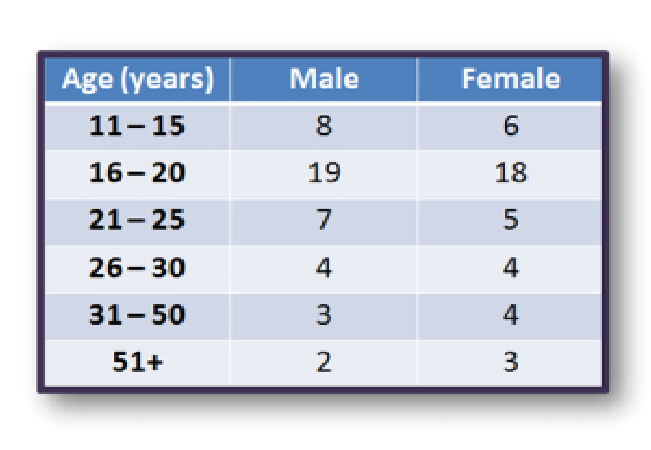
The table gives information about the average hours spent on the Internet by European people of different age groups.
Summarise the information by selecting and reporting the main features, and make comparisons where relevant.
Student answer (Band 6.0)
The given table represents the proportions of the European people of different age groups who spent average hours on the Internet. Overall, there are small variations between the age group 21-51+ but there is a substantial rise in the age group of 16 to 20.
Firstly, for male there is a dramatic increase in the number of hours from the age group of 11-15 to the age group of 16-20. It is reported that in the middle age group of 16-20 the male spent 19 hours on the internet while in the age of 51+ there is a dramatic decrease to 2 hours on internet. However, the age group of 21-25 guys spent 7 hours, meanwhile from the age of 26-30 the male spent 4 hours each day on the Internet.
Secondly, for the female there is significant rise of the number of hours by 18 hours spent on the internet by the age group of 16-20 which is almost common in both male and female. Moreover, female had spent same 4 hours on internet in the age groups of 26-30 and 31-50. While, only 3 hours are spent by the female on internet from the age group of 51+.
AI examiner evaluation
| Criterion | Band |
|---|---|
| Task Achievement / Task Response | 6.0 |
| Coherence and Cohesion | 6.0 |
| Lexical Resource | 6.0 |
| Grammatical Range and Accuracy | 5.5 |
| Overall | 6.0 |
Task Achievement / Task Response: Band 6.0
You identify the main peak clearly: both sexes spend the most time online in the 16–20 group, at 19 hours for males and 18 for females. You also report several later-age figures accurately. However, the overview is not fully representative: saying there are “small variations” from 21 to 51+ overlooks the decline from 7 to 2 hours for males and 5 to 3 for females. Some key comparisons are also missing, especially the 11–15 figures and the fact that females exceed males in the 31–50 and 51+ groups. The description of the female rise is unclear because it does not state the starting value. A more complete overview and clearer coverage of the age pattern would strengthen the response.
Coherence and Cohesion: Band 6.0
The response has a clear overall arrangement, with an introductory overview followed by separate paragraphs for males and females. This makes the information easy to locate, and signposts such as “Firstly” and “Secondly” help indicate the shift in focus. However, the progression is somewhat mechanical, and the male paragraph moves between the peak, oldest group, and intermediate ages without consistently showing the overall downward pattern. Some links are awkward or unclear, particularly “However” before the 21–25 figure and the sentence beginning “While” at the end. Grouping the figures by shared trends or comparing males and females within each age band would create smoother progression and more effective cohesion.
Lexical Resource: Band 6.0
You use an adequate range of vocabulary for describing data, including “dramatic increase,” “significant rise,” “decrease,” and “age group.” These choices communicate the broad pattern, and spelling is generally clear. Some wording is imprecise or repetitive, however: “proportions” does not accurately describe hours, and “middle age group” is unsuitable for people aged 16–20. Phrases such as “spent average hours” and “spent same 4 hours” are also unnatural collocations. Repeating “dramatic” and “hours on the internet” limits flexibility. More precise reporting language, such as “recorded,” “fell,” and “the figure for,” would help you describe the data more naturally and accurately.
Grammatical Range and Accuracy: Band 5.5
You attempt a mix of simple and more complex sentences, including clauses introduced by “while” and “which,” and the main comparisons are usually understandable. Some grammatical errors remain, though. For example, “for male there is” needs a plural or article, and “the male spent” does not agree naturally with the plural group being described. In “female had spent same 4 hours,” the tense and article are problematic; “female” also needs a plural form in this context. The final “While” clause is a fragment rather than a complete sentence. Work on articles, subject–verb agreement, tense consistency, and complete sentence structure while retaining your attempts at complex sentences.
See this exact question answered at other band scores. The same prompt compared across bands.
Browse more IELTS Writing model answers or get your own writing scored by the same AI examiner.