Band 5.5 IELTS Writing Task 1 Model Answer
Overall Band Score: 5.5 · IELTS Academic Practice Accelerator · 2026-11-27
IELTS Writing Task 1 question
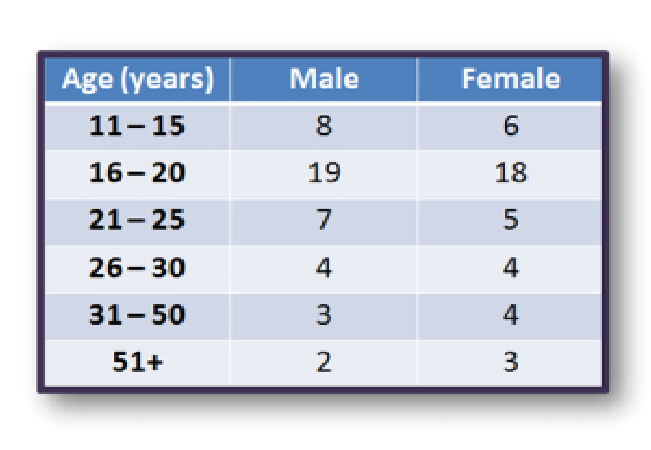
The table gives information about the average hours spent on the Internet by European people of different age groups.
Summarise the information by selecting and reporting the main features, and make comparisons where relevant.
Student answer (Band 5.5)
The table depicts the avergae hours spent on the internet by the people of Europe given in different age categories.
Overall the number of Women using internet is higher in all age groups compared to men and especially people aged between 16 and 20 is using the internet on an average of 18 hours by female and 19 hours by male respectively .
Moslty as people age they tend to use less hours of internet this is given by ,people aged above 51 used only 2 to 3 hours only .the young men use internet higher than the young female population.
At first male people of Europe of different age group who use internet increased from age 11 to 20 as 8 hours to 19 hours and then declined.In the same way female population of europe who use internet was high in the age group of 11 and 20 such as 6 hours to 18 hours then decreased at the end.
This trend prevails throughtout the table among the various age group of people using internet in Europe.
AI examiner evaluation
| Criterion | Band |
|---|---|
| Task Achievement / Task Response | 5.5 |
| Coherence and Cohesion | 5.5 |
| Lexical Resource | 5.0 |
| Grammatical Range and Accuracy | 5.0 |
| Overall | 5.5 |
Task Achievement / Task Response: Band 5.5
You identify the main peak correctly: the 16–20 group records the highest figures for both sexes, at 19 hours for males and 18 for females, and you note that usage is low among people aged 51 and over. However, the overview contains a significant contradiction: it says women use the internet more in every age group, although males are higher in the first three groups and the sexes are equal at 26–30. The claim that usage generally falls with age is relevant, but the account does not clearly report the intermediate figures or the small female advantage in the 31–50 and 51+ groups. Select the key comparisons accurately and summarise the overall pattern without overgeneralising.
Coherence and Cohesion: Band 5.5
The response has a basic paragraph structure, moving from an introduction and overview to details about males and females. This gives the reader some sense of organisation. However, progression is limited because the same broad pattern is repeated in several places: the final sentence says the trend “prevails throughout the table” without adding information, and the overview and detail paragraphs overlap. Linking is sometimes awkward or unclear, as in “At first” and “In the same way,” while the comma placement in “this is given by ,people” interrupts the flow. Group the figures into a clear comparison—peak, subsequent decline, and any differences between sexes—and use concise links to show how each point relates.
Lexical Resource: Band 5.0
You use relevant topic vocabulary, including “average hours,” “age categories,” “increased,” and “declined,” so the general subject is understandable. However, the range is limited and several expressions are inaccurate or repetitive, such as “people … who use internet” and “young men use internet higher than the young female population.” “Higher” does not naturally describe hours of use here; “spent more time online” would be clearer. There are also noticeable spelling errors, including “avergae,” “Moslty,” and “throughtout,” which reduce accuracy. Aim for precise chart language and vary repeated references to “people” and “use internet,” while checking spelling and natural collocations.
Grammatical Range and Accuracy: Band 5.0
The response attempts longer sentences and comparisons, but control is inconsistent, and errors sometimes make relationships between ideas difficult to follow. For example, “especially people aged between 16 and 20 is using” has faulty agreement, while “as people age they tend to use less hours” has an incorrect comparative structure. The sentence beginning “Overall” also combines several ideas without clear punctuation, and “At first male people of Europe of different age group … increased” is difficult to parse. Use straightforward sentence patterns to report each comparison, checking subject–verb agreement, articles, plurals, and punctuation. A wider range of accurate sentence structures would make the data easier to understand.
See this exact question answered at other band scores. The same prompt compared across bands.
Browse more IELTS Writing model answers or get your own writing scored by the same AI examiner.