Band 5.5 IELTS Writing Task 1 Model Answer
Overall Band Score: 5.5 · IELTS Academic Practice Accelerator · 2026-11-28
IELTS Writing Task 1 question
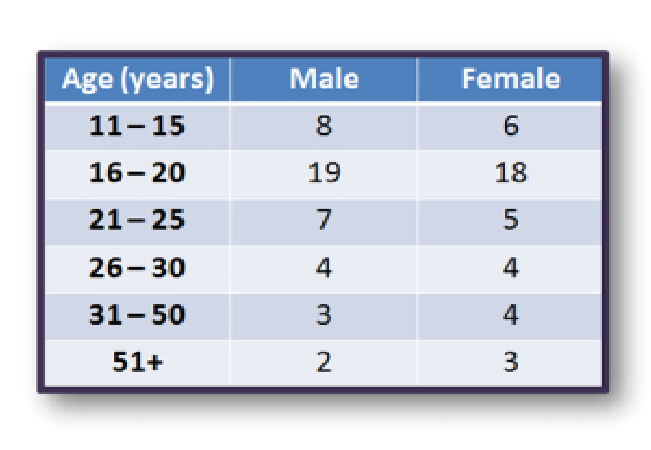
The table gives information about the average hours spent on the Internet by European people of different age groups.
Summarise the information by selecting and reporting the main features, and make comparisons where relevant.
Student answer (Band 5.5)
This chart illustrates the average time expenditure on internet by different ages group in european people.
Overall, the most time spend on the internet by adults people in which male can use 19 hours and female waste their 18 hours per day on internet.
On the one hand, the aged people aroung 51+ uses less internet then all others ages. While, adults nearly 16-20 age of people send most of our time on internet both male and female with the difference of only 1 hour per day. However, the people who's nearly 26 to 30 age they both mens and womens uses same hours of inernet per day
On the other hand, the very youngest people 11-15 age use 8 hours by males and 6 hour by females spend on internet. But after the people grown up with the age of 30 they use less internet then all youngsters they spend only 3-5 hours by both people
AI examiner evaluation
| Criterion | Band |
|---|---|
| Task Achievement / Task Response | 5.5 |
| Coherence and Cohesion | 5.5 |
| Lexical Resource | 5.0 |
| Grammatical Range and Accuracy | 5.0 |
| Overall | 5.5 |
Task Achievement / Task Response: Band 5.5
You identify the main pattern: the 16–20 group records the highest figures for both sexes, while the 51+ group records the lowest. You also report several relevant comparisons, including the one-hour gap at ages 16–20 and equal figures for ages 26–30. However, coverage is partial and some details are unclear or inaccurate. The overview says adults spend the most time, but does not clearly summarise the overall decline after the peak. The final claim that people over 30 spend “only 3–5 hours” is imprecise: the table gives 3 and 4 hours for ages 31–50, and 2 and 3 for those aged 51+. A clearer overview and more precise reporting of the age groups would strengthen the response.
Coherence and Cohesion: Band 5.5
The response has a basic overall structure, beginning with an introduction and overview before moving to comparisons. Some linking expressions, such as “Overall,” “On the one hand,” and “On the other hand,” show an attempt to organise the information. However, the progression is not consistently clear: the two body sections do not establish a clear grouping of the age bands, and the contrast markers do not always express a meaningful contrast. Several ideas are joined in long, confusing sentences, particularly the sentence beginning “While, adults nearly 16-20 age…”. References such as “they” and “both people” are also unclear. Grouping the peak and younger figures together, then describing the older groups, would make the comparisons easier to follow.
Lexical Resource: Band 5.0
You use some task-relevant vocabulary, including “average,” “difference,” “youngest,” and “grown up,” and the reader can generally identify the topic and comparisons. However, the range is limited and several word choices or collocations are inaccurate, sometimes making the meaning difficult to interpret. For example, “waste their 18 hours” suggests an unwanted use of time, while “time expenditure on internet” is unnatural in this context. There are also repeated spelling and form errors, such as “aroung,” “inernet,” and “ages group.” Aim for precise, neutral language for describing data, and use consistent terms such as “hours spent online” and “age group.”
Grammatical Range and Accuracy: Band 5.0
There are attempts to use more than simple sentences, including clauses introduced by “while” and “however,” but these structures are often faulty, and many sentences contain errors that make the relationships between ideas hard to follow. For example, “the most time spend on the internet by adults people” lacks a clear grammatical structure, while “the aged people … uses less” has subject–verb disagreement. The sentence beginning “However, the people who's nearly 26 to 30 age” also has problems with clause construction and agreement. Articles, plurals, and verb forms are inconsistent throughout. Build accurate short sentences first, then combine them with controlled clauses; check that each sentence has a clear subject and correctly formed verb.
See this exact question answered at other band scores. The same prompt compared across bands.
Browse more IELTS Writing model answers or get your own writing scored by the same AI examiner.