Band 5.0 IELTS Writing Task 1 Model Answer
Overall Band Score: 5.0 · IELTS Momentum Workout · 2026-11-06
IELTS Writing Task 1 question
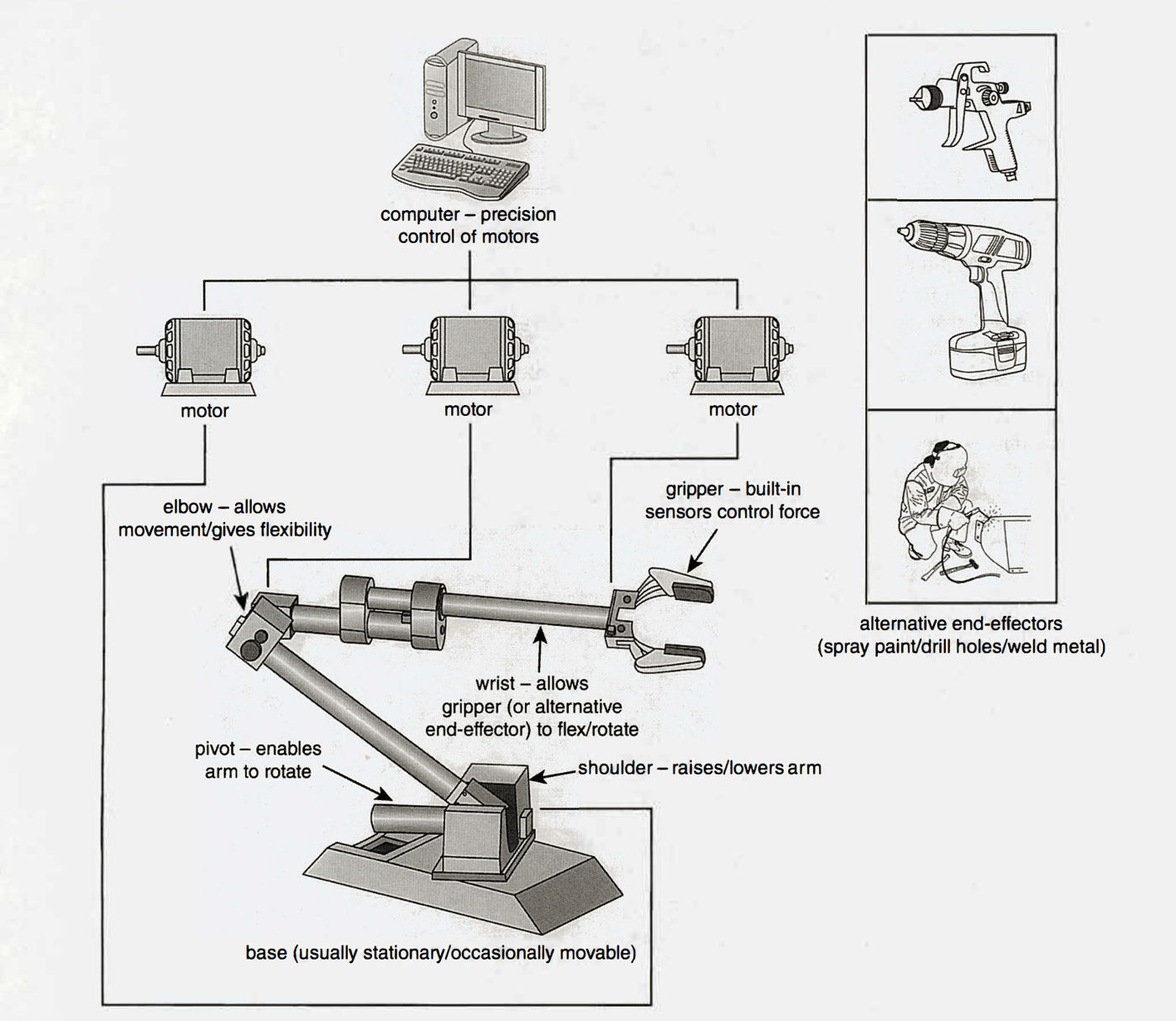
The diagram below shows how a mechanical arm works, and how the joints that make up the arm function in the same way as those in a human arm. Summarise the information by selecting and reporting the main features, and make comparisons where relevant.
Student answer (Band 5.0)
The diagram below shows how a mechanical arm works, and how the joints that make up the arm function in the same way as those in a human arm.
As we can see frist thing that they have placed in the starting of the picture is a computer that controls the precision of motors that are attached to the mechanical arm.
There are about 3 motors that are add to the mechanical arm at three different locations
The first motor is attached on the wrist side of the mechanical arm that can help the for grip and rotational movements
The second motor is attached near the elbow side so that the arm can make any flexible movements while working
The last and the third motor is attached at the end of the arm where it is mentioned as shouder and can help the arm to raise up and down, Also there is a pivot attached near the shoulder that can help the mechanical arm to easily rotate
This Mechanical arm is just any alternative arm that can help to do works that a normal hand can do which is a good thing for People who do not have a natural arm or who have lost there arm due to any other reason.
AI examiner evaluation
| Criterion | Band |
|---|---|
| Task Achievement / Task Response | 4.0 |
| Coherence and Cohesion | 5.0 |
| Lexical Resource | 5.0 |
| Grammatical Range and Accuracy | 5.0 |
| Overall | 5.0 |
Task Achievement / Task Response: Band 4.0
The response identifies the computer, three motors, and several joints, but it only minimally summarises the diagram and includes an unsupported claim that the arm is intended for people who have lost a natural arm. Some key functions are misreported: the first motor is not described as being on the wrist side, and the third motor is not attached at the shoulder; the diagram places motors at different points to control the arm and gripper. The base and the alternative end-effectors—spray painting, drilling and welding—are omitted, and there is no clear overview of how the components work together. Focus on accurately describing the labelled parts and their functions, and avoid adding purposes not shown in the visual. The opening sentence is copied from the task prompt; 29 copied words were not counted.
Coherence and Cohesion: Band 5.0
The response has a basic sequence, moving from the computer to the motors and then to the arm’s joints, so the reader can follow some of the description. However, the ideas are presented as a series of separate statements rather than grouped into a clear overview and organised details. The repeated openings, such as “The first motor,” “The second motor,” and “The last and the third motor,” make the progression mechanical, while the final point about people without a natural arm shifts away from describing the diagram. Use paragraphs to separate the control system from the arm’s structure, and connect related functions with clear referencing and transitions.
Lexical Resource: Band 5.0
The vocabulary is sufficient to identify several components, including “computer,” “motors,” “wrist,” “elbow,” “shoulder,” and “pivot.” However, the range is limited and some word choices are inaccurate or awkward, which makes parts of the description unclear. For example, “for grip” appears to mean “gripper,” while “flexible movements” is less precise than describing the elbow as allowing movement or flexibility. There are also spelling errors such as “frist,” “shouder,” and “there,” and informal phrases such as “do works.” Use the diagram’s technical labels accurately and choose concise, precise verbs for each function.
Grammatical Range and Accuracy: Band 5.0
The response attempts both simple and longer sentences, including a relative clause in “a pivot attached near the shoulder that can help the mechanical arm to easily rotate.” However, longer constructions are often poorly controlled, and frequent errors affect clarity. For example, “There are about 3 motors that are add” has incorrect verb form, and “The first motor is attached on the wrist side … that can help” has an unclear relative clause. The final sentence also runs together several ideas, with inconsistent capitalisation and punctuation. Practise accurate passive forms (“are attached”), clear clause links, and sentence boundaries; these changes would make the component descriptions easier to understand.
See this exact question answered at other band scores. The same prompt compared across bands.
Browse more IELTS Writing model answers or get your own writing scored by the same AI examiner.