Band 5.5 IELTS Writing Task 1 Model Answer
Overall Band Score: 5.5 · IELTS Momentum Workout · 2026-11-08
IELTS Writing Task 1 question
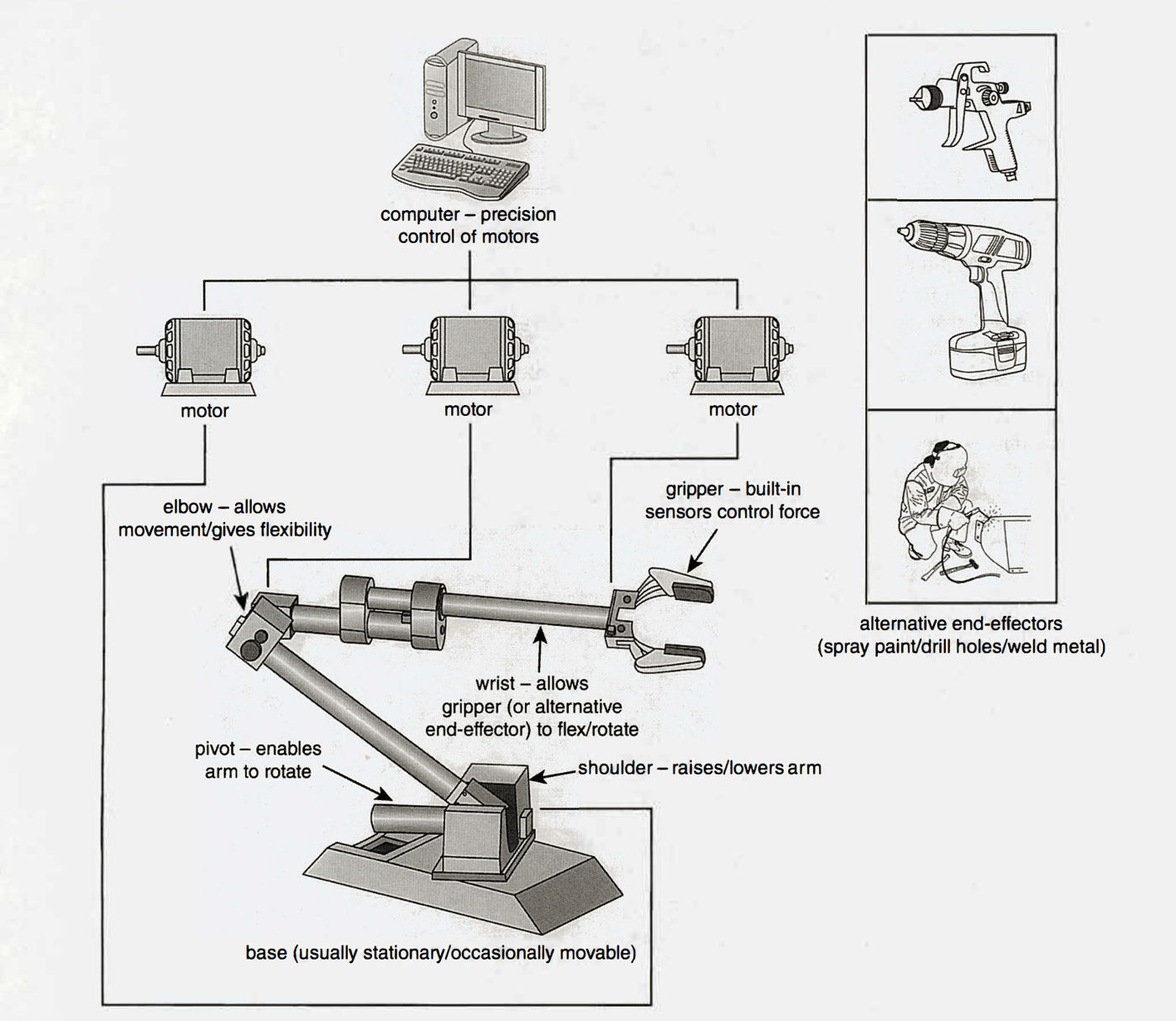
The diagram below shows how a mechanical arm works, and how the joints that make up the arm function in the same way as those in a human arm. Summarise the information by selecting and reporting the main features, and make comparisons where relevant.
Student answer (Band 5.5)
The diagram describes the working process of a mechanical arm work and how a mechanical arm works similar as human arm.
Overall, motors are the main part of the mechanical arm machine, helps in functioning each part.
A digital computer handels precision of motors working in moving the parts. Three motors works separately to make the machine function properly. One of the motor helps in moving shoulder to raise or lower an arm, a pivot is attached to it which enables arm to rotate. A base at which shoulder is placed is usually stationary and occasionally movable.
the second motor works to allow movement and give flexibility to elbow of the machine, which make the armrotate in direction. A wrist is attached with elbow that allows gripper to flex and rotate. Meanwhile third motor handels grip, it has built-in sensor control force which allow it to grab things. the alternative end-effectors are spray paint, drill holes and weld metal.
AI examiner evaluation
| Criterion | Band |
|---|---|
| Task Achievement / Task Response | 5.5 |
| Coherence and Cohesion | 6.0 |
| Lexical Resource | 5.5 |
| Grammatical Range and Accuracy | 5.0 |
| Overall | 5.5 |
Task Achievement / Task Response: Band 5.5
You identify the diagram’s main components and give a brief overview that motors control the arm’s functions. You also report several relevant details, including the computer’s precision control, the base, pivot, elbow, wrist, gripper, and alternative end-effectors. However, some key relationships are misreported: the left motor is linked to the elbow, the centre motor to the wrist area, and the right motor to the gripper, whereas you assign the first motor to the shoulder and pivot. The comparison with a human arm is mentioned in the introduction but not explained. Develop the overview around how the computer-controlled motors operate the joints and end-effector, and describe the diagram’s connections accurately.
Coherence and Cohesion: Band 6.0
The response has a recognisable structure: an introduction, an overview, and a sequence of details about the arm’s components. This gives the reader a general route through the information. However, the progression is weakened by the order in which parts are described: the shoulder and base are covered before the elbow, while the motor connections are not consistently followed. The paragraph break before “the second motor” is also undermined by a lowercase opening, and “Meanwhile” does not clearly signal the relationship between the wrist and gripper. Organise the body from the computer and motors through the arm’s joints to the end-effector, using clear links such as “next” and “at the end of the arm.”
Lexical Resource: Band 5.5
You use relevant task vocabulary, including “precision,” “pivot,” “flexibility,” “built-in sensor,” and “alternative end-effectors,” which helps convey the diagram’s subject. The range is sufficient to identify most components, but several word choices and collocations are inaccurate or awkward, such as “mechanical arm work,” “motors working in moving the parts,” and “motor handles grip.” There are also spelling errors in “handels” and “armrotate,” which reduce accuracy. Choose more natural technical phrasing—for example, “the computer controls the motors,” “the motor operates the gripper,” and “the arm rotates”—and check spelling carefully. This would make the description clearer and more precise.
Grammatical Range and Accuracy: Band 5.0
You attempt both simple and more extended sentences, including clauses explaining what the pivot and wrist allow. However, grammatical errors are frequent and sometimes make relationships difficult to follow. Examples include “motors … helps,” “Three motors works,” and “which make the armrotate,” where subject–verb agreement is incorrect. Articles and sentence construction also need attention in phrases such as “raise or lower an arm” and “A base at which shoulder is placed.” Capitalisation after the paragraph break is inconsistent, and some clauses run together without clear punctuation. Practise checking each sentence for a clear subject and verb, agreement, and complete clause structure; shorter, accurate sentences would help before adding more complex forms.
See this exact question answered at other band scores. The same prompt compared across bands.
Browse more IELTS Writing model answers or get your own writing scored by the same AI examiner.