Band 5.5 IELTS Writing Task 1 Model Answer
Overall Band Score: 5.5 · IELTS Momentum Workout · 2026-11-08
IELTS Writing Task 1 question
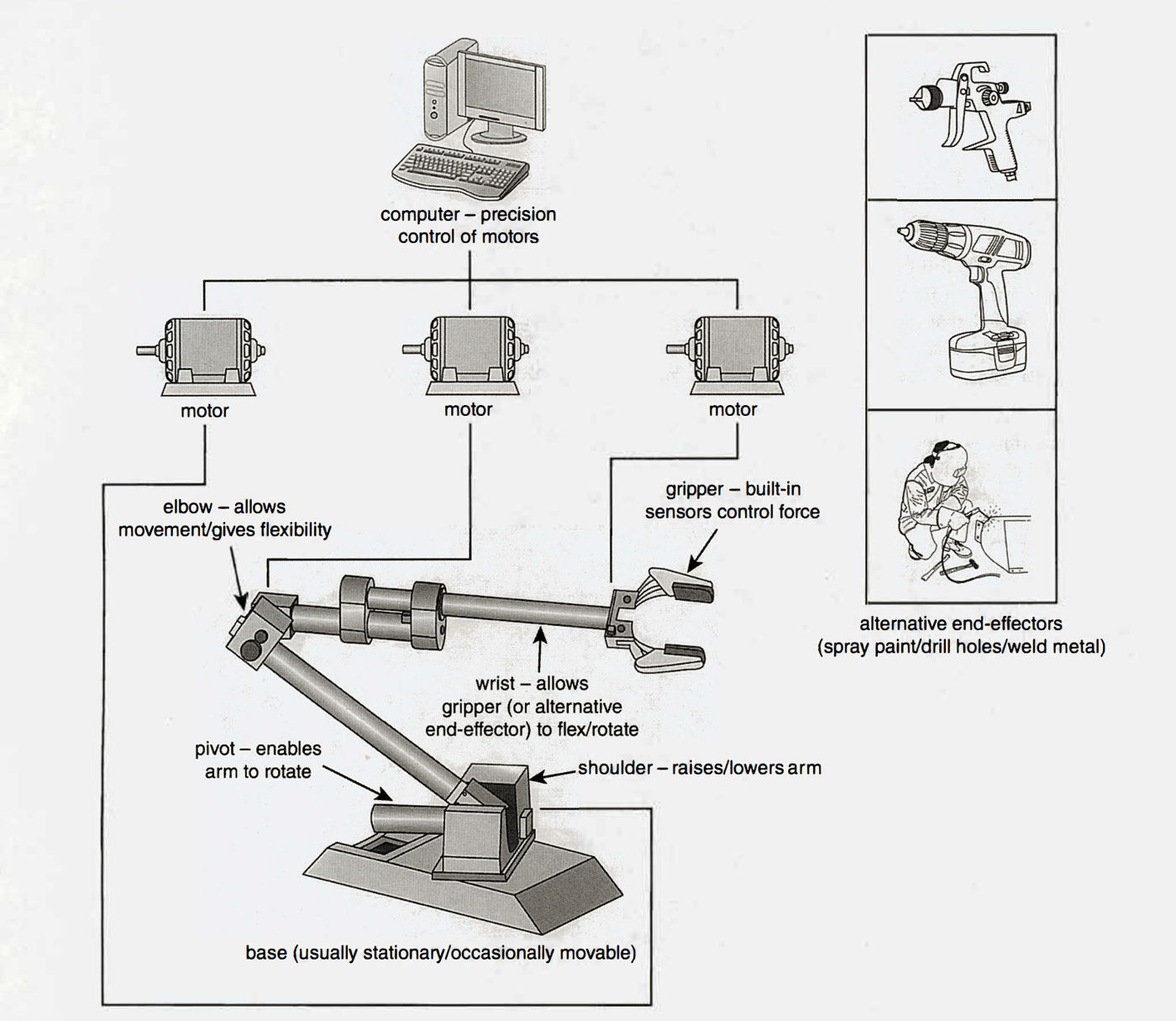
The diagram below shows how a mechanical arm works, and how the joints that make up the arm function in the same way as those in a human arm. Summarise the information by selecting and reporting the main features, and make comparisons where relevant.
Student answer (Band 5.5)
The diagram illustrates the process of macking a mechanical arm to work the same way as those in human arm.
Overall, making of this machenical arm include a computer to control all the motors, 3 motors to power the whole arm in different areas, drill machine to fix all the arm and a look a-like arm model to make sure it works just like a real arm.
Firstly, first step is to have a computer for all the control to arm, then we need 3 motors one on the elbow of the arm which alows arm to function movement and gives flexibility, while next motor will be attached to shoulder of the mechanical arm which will surge or lower the arm from it's position, at last final motor will give power of gripper used as hand of real arm which will have a built-in sensors to control force of the hand of the mechanical arm.
Moreover, there will be wrist installed which will alows gripper to flex and rotate the arm or it will do the same thing to alternative end-effector like (spray paint/drill holes-weld metal). At last there will be a base of the whole arm at the bottom which will be mostly stiff or utilised to occasionally movable and a pivot which enables arm to rotate from its position.
AI examiner evaluation
| Criterion | Band |
|---|---|
| Task Achievement / Task Response | 6.0 |
| Coherence and Cohesion | 6.0 |
| Lexical Resource | 5.0 |
| Grammatical Range and Accuracy | 5.0 |
| Overall | 5.5 |
Task Achievement / Task Response: Band 6.0
You identify the main components and explain several functions, including the computer’s control of the motors, the elbow’s flexibility, the gripper’s force sensors, and the wrist’s movement. You also mention the alternative end-effectors and the base and pivot, so the response covers the diagram’s key areas. However, some relationships are misreported: the shoulder motor is not described as attached to the shoulder in the diagram, and the base is usually stationary rather than “mostly stiff.” The overview also introduces a “drill machine to fix all the arm,” which is not shown; the drill is an alternative tool. To strengthen the summary, distinguish the arm’s control system from its physical supports and describe the components’ positions and functions more precisely.
Coherence and Cohesion: Band 6.0
The response has a recognisable structure: an introduction, an overview, and two paragraphs describing components. Sequencing words such as “Firstly” and “Moreover” help signal progression, and the reader can generally follow the description from the computer and motors to the wrist and base. However, “Firstly, first step” and “at last final motor” repeat the same transition, making the linking mechanical. The order also shifts between the arm’s physical layout and its control system, while the overview’s drill reference interrupts the main description. Organise the details in a consistent path—from the base and shoulder up to the gripper—and use clearer references to show which motor or component is being discussed.
Lexical Resource: Band 5.0
You use relevant technical vocabulary, including “motors,” “elbow,” “gripper,” “built-in sensors,” “pivot,” and “alternative end-effector.” This gives the response enough topic-specific language to communicate the diagram’s main features. However, several word choices and collocations are inaccurate or unclear, such as “macking,” “a look a-like arm model,” “surge or lower,” and “mostly stiff.” Spelling errors in “machenical” and “alows” also reduce precision. Aim for standard technical phrasing and check spelling carefully; for example, describe the base as “usually stationary” and say that the shoulder “raises or lowers” the arm. Avoid adding an unsupported “drill machine to fix” the arm.
Grammatical Range and Accuracy: Band 5.0
You attempt both simple and more extended sentence forms, including a sentence that contrasts the elbow motor with the next motor and another that explains the wrist’s role. These attempts show some range, but errors in sentence construction and grammatical forms are noticeable. For example, “Overall, making of this… include” lacks an article and has subject–verb disagreement, while “one on the elbow… which alows” has an unclear relative reference. The sentence beginning “Firstly, first step is…” is also overloaded, with several clauses joined without clear punctuation. Use shorter, complete sentences and check articles, agreement, and clause boundaries. This will make the component descriptions easier to follow while retaining some complex structures.
See this exact question answered at other band scores. The same prompt compared across bands.
Browse more IELTS Writing model answers or get your own writing scored by the same AI examiner.