Band 5.5 IELTS Writing Task 1 Model Answer
Overall Band Score: 5.5 · IELTS Momentum Workout · 2026-11-11
IELTS Writing Task 1 question
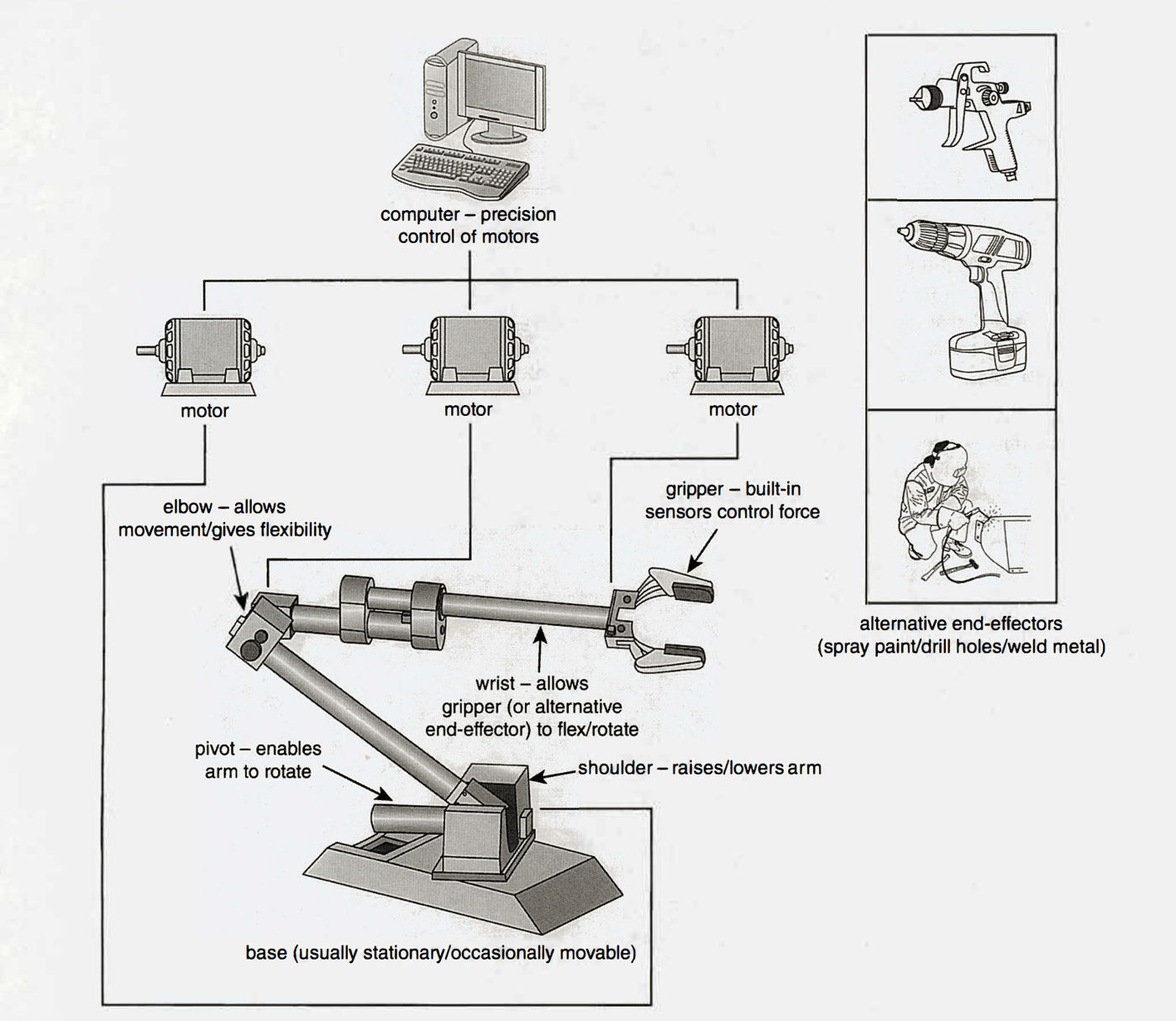
The diagram below shows how a mechanical arm works, and how the joints that make up the arm function in the same way as those in a human arm. Summarise the information by selecting and reporting the main features, and make comparisons where relevant.
Student answer (Band 5.5)
The process flow chart illustrates working of a mechanical arm, and the arm operation as human arm.
Overall, humanoid arms are controlled by a computer and they can spay paint, drill holes and weld metal like human.
Firstly, the arm accuratly controlled by a computer unit. Totall three motor basically work for operate an arm. A motor engaged with the base whice is occasionally movable. This motor work as a sholder which helps to raise and lower arm. Second motor attached in the elbow in the arm whice helps to move the elbow and gives flexibility.
Finally the last last motor attached with the gripper which is work like a human finger. It helps the arm to grip things. There are many various type of sensors attached in the gripper for controlling the gripper force. In the gripper spray paint, drill, welding attachments are attached to do humanoid works by the arm
AI examiner evaluation
| Criterion | Band |
|---|---|
| Task Achievement / Task Response | 5.5 |
| Coherence and Cohesion | 5.5 |
| Lexical Resource | 5.5 |
| Grammatical Range and Accuracy | 5.0 |
| Overall | 5.5 |
Task Achievement / Task Response: Band 5.5
You identify the diagram as a mechanical arm and give a brief overview of computer control and its possible uses, including painting, drilling and welding. You also describe the elbow and gripper, so several relevant features are included. However, some key relationships are misreported: the base is not a motor, and the shoulder and pivot are separate joints with distinct functions. The wrist, which allows the gripper to flex or rotate, is omitted, and the comparison with a human arm is asserted rather than explained. The description therefore covers the task only partially, with important details unclear or inaccurate. To improve, report the arm’s components in order and explain each joint’s function accurately.
Coherence and Cohesion: Band 5.5
The response has a basic paragraph structure: an introduction and overview are followed by descriptions beginning with “Firstly” and “Finally.” This gives the reader some sense of sequence. However, the progression is not consistently clear: the second paragraph moves from the computer to the base and shoulder, then to the elbow, while the final paragraph jumps to the gripper and its attachments. “Second motor” and “last last motor” do not clearly connect the motors to the correct parts, and the repeated use of “arm” and “gripper” makes the account feel repetitive. Organise the description from the base and shoulder up through the elbow, wrist and gripper, using clear links between each component.
Lexical Resource: Band 5.5
You use some relevant technical vocabulary, including “motor,” “elbow,” “gripper,” “sensors,” and “flexibility,” which helps identify parts of the diagram. The range is nevertheless limited, and several word choices or collocations are inaccurate or unclear, such as “motor engaged with the base,” “humanoid works,” and “attachments are attached.” There are also noticeable spelling errors, including “accuratly,” “whice,” and “sholder,” which reduce the clarity and precision expected in a diagram description. Aim for accurate terms such as “connected to,” “joint,” and “end-effector,” and avoid repeating the same verb. Proofreading spelling and choosing natural technical collocations would make the description easier to follow.
Grammatical Range and Accuracy: Band 5.0
You attempt both simple sentences and longer clauses, for example, “It helps the arm to grip things” and “A motor engaged with the base whice is occasionally movable.” However, the longer constructions are often faulty, and errors occur frequently in verb forms, articles, agreement and sentence structure. Examples include “the arm accuratly controlled,” which needs a finite verb, “Totall three motor basically work,” and “which is work like a human finger.” Some sentences also omit necessary articles, as in “raise and lower arm.” These errors sometimes make the relationships between parts difficult to understand. Practise forming accurate subject–verb sentences first, then add subordinate clauses while checking verb forms and articles.
See this exact question answered at other band scores. The same prompt compared across bands.
Browse more IELTS Writing model answers or get your own writing scored by the same AI examiner.