Band 6.0 IELTS Writing Task 1 Model Answer
Overall Band Score: 6.0 · IELTS Momentum Workout · 2026-11-12
IELTS Writing Task 1 question
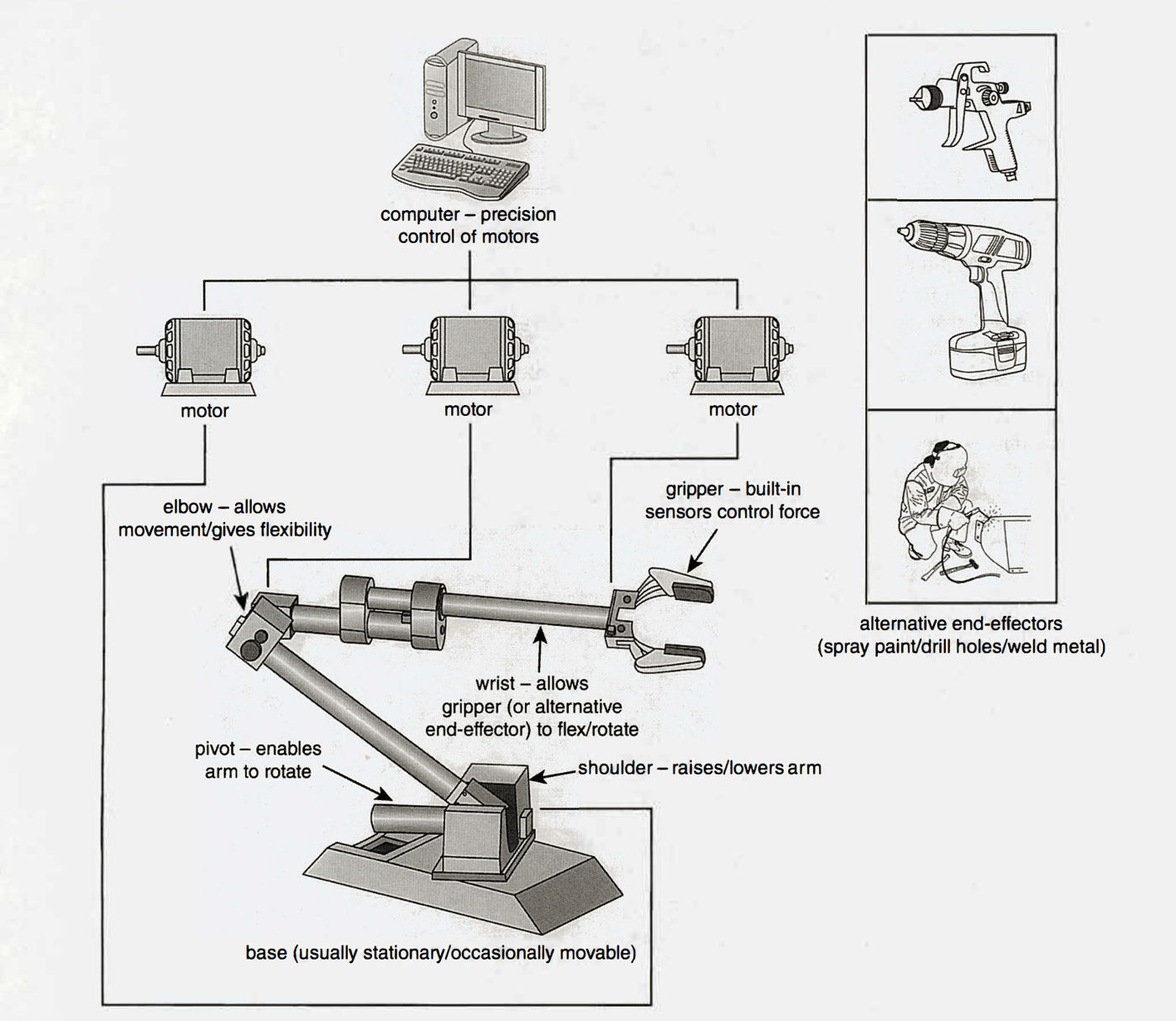
The diagram below shows how a mechanical arm works, and how the joints that make up the arm function in the same way as those in a human arm. Summarise the information by selecting and reporting the main features, and make comparisons where relevant.
Student answer (Band 6.0)
The diagram illustrates how different components are combined to function a mechanical arm. The joints of these mechanical arm along with the precised computer operated motors, functions similarly as those in a human arm.
The component includes three different motors whose precison is calculated by the computer. First motor is connected with shoulder, which allows the arm to be raised or lowered. Beside the shoulder, a pivot is attached which enables arm to rotate. Both of these components are placed on the occasionally movable base, which usually stays still. On the edge of the shoulder funtions elbow, which give the flexibility to the arm along side the second motor, whose function is to control the wrist. The wrist operates in order to provide a better grip and to rotate flexibly. Then comes the last motor, attached right behind the gripper, which has a built-in sensor to operate properly.
The three pictures at the right side of a mechanical arm are the examples of end-effectors like Spray paint, Drill machine, and Welding machine. All of these examples have some of the components of the mechanical arm, like the spray paint has a gripper, drill machine has a pericise motor, and welding machine has flexible wrist and elbow.
AI examiner evaluation
| Criterion | Band |
|---|---|
| Task Achievement / Task Response | 5.5 |
| Coherence and Cohesion | 6.0 |
| Lexical Resource | 6.0 |
| Grammatical Range and Accuracy | 5.5 |
| Overall | 6.0 |
Task Achievement / Task Response: Band 5.5
You identify the main components and explain several functions, including the pivot’s rotation, the shoulder’s raising and lowering, and the elbow’s flexibility. You also mention the alternative end-effectors shown in the diagram. However, some relationships are inaccurately reported: the first motor is linked to the elbow, not the shoulder, and the wrist allows the gripper or another end-effector to flex or rotate rather than providing a “better grip.” The final comparison that each pictured tool has particular arm components is not supported by the diagram. The response also lacks a clear overview of how the computer, motors, joints and end-effector work together. Prioritise accurate connections and summarise the system before describing individual parts.
Coherence and Cohesion: Band 6.0
The response has a generally understandable sequence: it introduces the system, describes components around the base and arm, and then discusses the examples on the right. Paragraphing helps distinguish the main arm from the alternative end-effectors, while transitions such as “First,” “Beside,” and “Then” guide the reader. However, the progression is sometimes difficult to follow because the description jumps between components and motor connections, and some references are unclear—for example, “Both of these components” requires the reader to infer which two parts are meant. The final paragraph shifts from identifying the tools to making unsupported claims about their components. Grouping the description into control/base, arm joints, and end-effectors would make the relationships clearer.
Lexical Resource: Band 6.0
You use a reasonable range of task-related vocabulary, including “components,” “pivot,” “flexibility,” “built-in sensor,” and “end-effectors.” These terms help convey the diagram’s technical subject, and the meaning is generally recoverable. However, several word choices or collocations are inaccurate or imprecise: “precision is calculated by the computer” does not clearly express that the computer controls the motors precisely, and “provide a better grip” misstates the wrist’s function. There are also spelling errors such as “precison,” “funtions,” and “pericise,” alongside inconsistent capitalisation of tool names. Use the diagram’s labels where possible and check spelling and natural combinations of words.
Grammatical Range and Accuracy: Band 5.5
You attempt both simple and more extended sentence forms, including relative clauses such as “which allows the arm to be raised or lowered” and “which has a built-in sensor.” Most of the description remains understandable, but some grammatical errors recur. In the opening, “these mechanical arm” needs a plural or singular form, and “functions similarly” does not agree with the plural subject. “The component includes three different motors” also has a number mismatch, while “First motor” and “enables arm to rotate” omit articles. The sentence beginning “On the edge of the shoulder funtions elbow” has an unclear structure, making the relationship harder to understand. Review subject–verb agreement, articles, and sentence construction, especially when combining several components in one sentence.
See this exact question answered at other band scores. The same prompt compared across bands.
Browse more IELTS Writing model answers or get your own writing scored by the same AI examiner.