Band 5.5 IELTS Writing Task 1 Model Answer
Overall Band Score: 5.5 · IELTS Momentum Workout · 2026-11-14
IELTS Writing Task 1 question
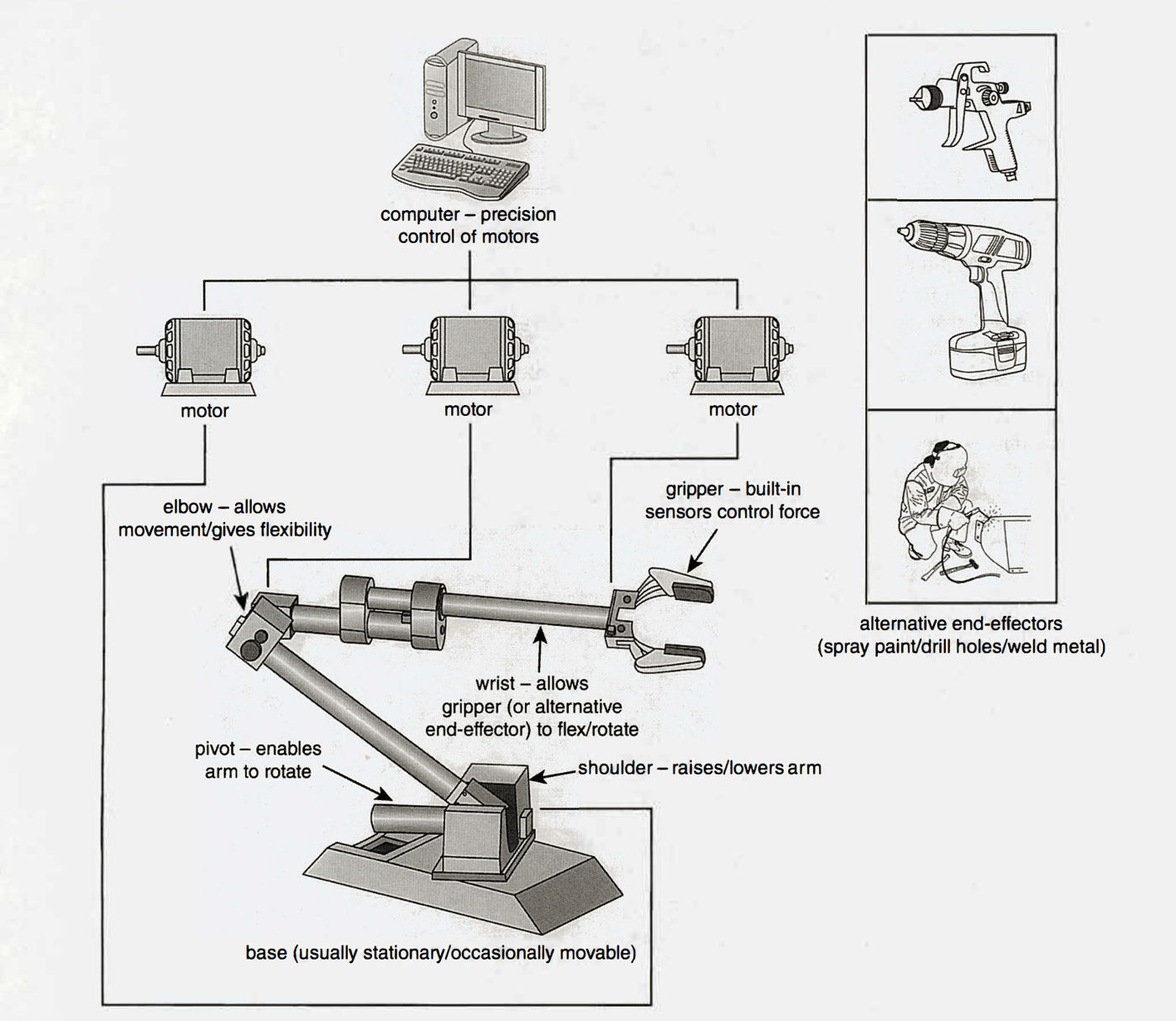
The diagram below shows how a mechanical arm works, and how the joints that make up the arm function in the same way as those in a human arm. Summarise the information by selecting and reporting the main features, and make comparisons where relevant.
Student answer (Band 5.5)
The digram illustrates the working of a mechanical arm, and the way by which its joints that make up the arm performs its work similar to a human arm.
Overall, the arm consists of three motors that are placed in different parts including the shoulder, elbow and gripper. These are controlled by a computer and serve different function to make the mechanical arm work.
There is a base at the lower end which is often stationary but sometimes moveable. The pivot allows the arm to rotate while the shoulder which consists of a motor provide an upward or downward motion to the arm. The elbow provides movement and a motor is attached next to it.
A rod like wrist make the gripper to rotate. At the end of the wrist a motor is attached and the grippers have built-in sensors that control force. These parts all together make the mechanical arm work just like a human arm.
AI examiner evaluation
| Criterion | Band |
|---|---|
| Task Achievement / Task Response | 5.5 |
| Coherence and Cohesion | 6.0 |
| Lexical Resource | 5.5 |
| Grammatical Range and Accuracy | 5.5 |
| Overall | 5.5 |
Task Achievement / Task Response: Band 5.5
You identify several key components and explain their functions, including the base, pivot, shoulder, elbow, wrist and gripper. The overview also notes computer control and the presence of three motors. However, some details are inaccurate or incomplete: the diagram shows motors connected to different parts, not that all three are located in the shoulder, elbow and gripper, and the wrist is described as allowing the gripper to flex or rotate rather than simply making it rotate. The response also omits the alternative end-effectors and their uses, an important feature of the diagram. To strengthen coverage, describe the control system and the arm’s sequence of joints more precisely, then include the interchangeable tools.
Coherence and Cohesion: Band 6.0
The response has a clear overall arrangement: an introduction, a brief overview, and paragraphs describing the base and the arm’s components. This makes the information easy to follow, and the sequence from the base towards the gripper is generally logical. Some connections between ideas are less clear, however. For example, the overview says the motors are “placed in different parts including the shoulder, elbow and gripper,” while the later description says a motor is attached next to the elbow and another at the wrist. This creates an unclear reference to where the motors are located. The final sentence repeats the general idea that the parts make the arm work. Use clearer linking and references, and organise the description around the arm’s movement from base to end-effector.
Lexical Resource: Band 5.5
You use relevant vocabulary for the diagram, including “pivot,” “stationary,” “built-in sensors,” and “control force,” so the main subject is communicated. However, the range is somewhat limited, and several phrases are imprecise or awkward: “rod like wrist,” “make the gripper to rotate,” and “different function” do not describe the components naturally. There is also a spelling error in “digram.” More precise terms such as “forearm section,” “flex or rotate,” and “interchangeable end-effectors” would help convey the diagram’s details accurately. Aim for natural collocations and check spelling and word forms; this would make the description clearer and more suitable for an academic report.
Grammatical Range and Accuracy: Band 5.5
You use both simple sentences and some longer structures, such as “There is a base at the lower end which is often stationary but sometimes moveable.” Most sentences remain understandable, but some grammatical errors affect accuracy. In the opening, “its joints … performs” has a subject–verb agreement problem, and “the shoulder which consists of a motor provide” also needs agreement and clearer clause structure. The phrase “make the gripper to rotate” uses an incorrect verb pattern; write “allow the gripper to rotate.” There are also article and plural issues, as in “serve different function.” Practise agreement with singular subjects, verb patterns after “make” and “allow,” and punctuation around relative clauses. These corrections would improve control while retaining your sentence variety.
See this exact question answered at other band scores. The same prompt compared across bands.
Browse more IELTS Writing model answers or get your own writing scored by the same AI examiner.