Band 4.5 IELTS Writing Task 1 Model Answer
Overall Band Score: 4.5 · IELTS Momentum Workout · 2026-11-23
IELTS Writing Task 1 question
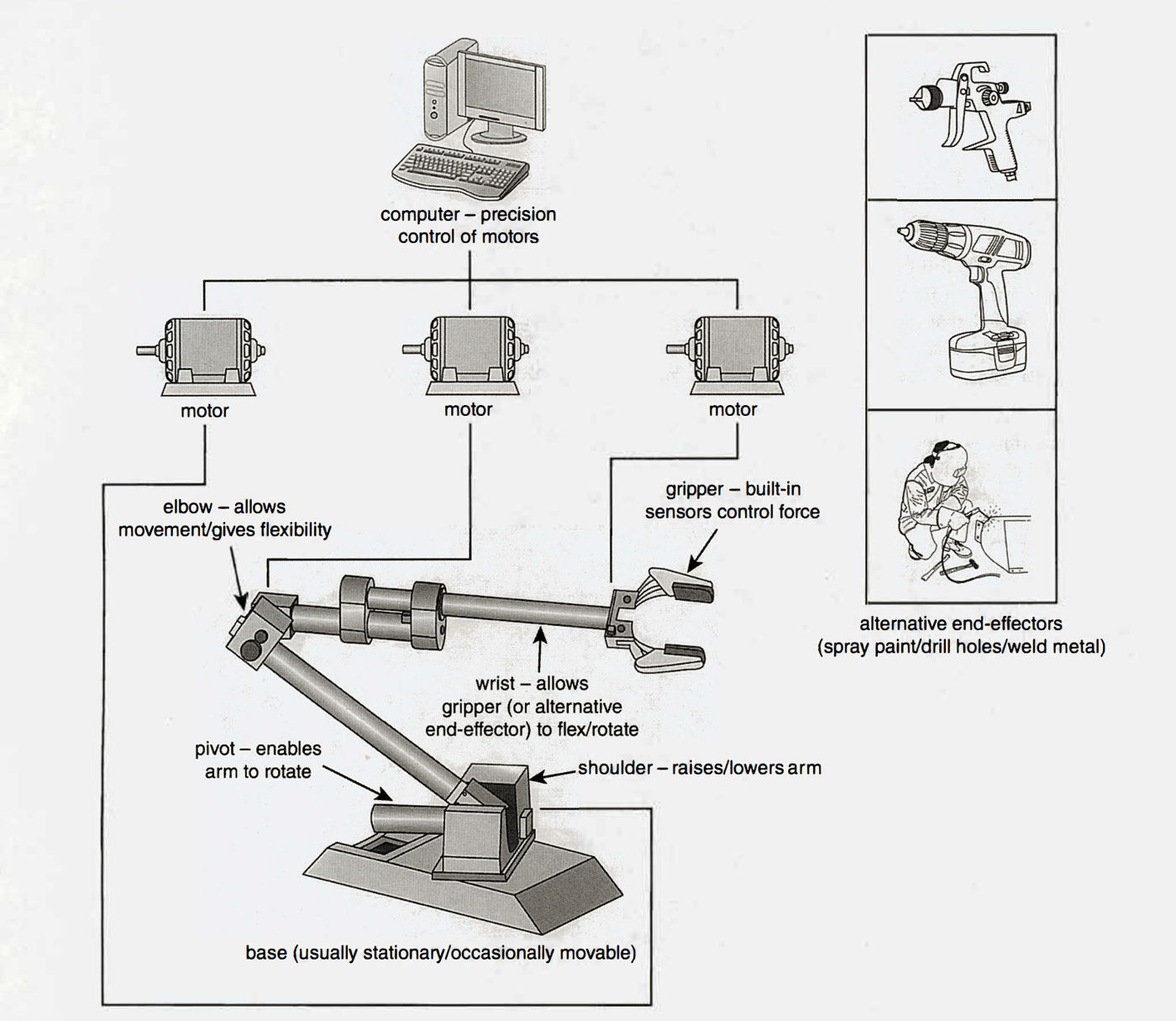
The diagram below shows how a mechanical arm works, and how the joints that make up the arm function in the same way as those in a human arm. Summarise the information by selecting and reporting the main features, and make comparisons where relevant.
Student answer (Band 4.5)
In this diagram illustrate the mechanical.
overall, it is clear that ,the joints that make up the arm function in the same way as those in ahuman arm.
On the digram show the mechanical arm works, firstly base (usually station /occasionally movable ) base is very important ,because in this mechine stand and started make parts .
the secound is shoulder-raises/flower arms, because it is secound base of structrue of machine,and involend with pivot-enables arm to roate the body . in which including a long steel road to attach with first motor.
the thired elbow-allows movementflexibillity , it give flexibillity to road and attach with secound motor in which involved wrist-allows griper (or alternative end -effector) to flex/rotate to give movement and take easly the fourth is gripper-bulit-in sensore control foce in this, including thired motor and it take a nut easly , and computer-precision control of motors , including alternative end- effector (spray paint/drill holes/weld metal .
AI examiner evaluation
| Criterion | Band |
|---|---|
| Task Achievement / Task Response | 4.0 |
| Coherence and Cohesion | 4.5 |
| Lexical Resource | 5.0 |
| Grammatical Range and Accuracy | 4.5 |
| Overall | 4.5 |
Task Achievement / Task Response: Band 4.0
The response identifies the diagram as a mechanical arm and mentions several relevant parts, including the base, shoulder, elbow, wrist, gripper and motors. It also notes the alternative end-effectors. However, the description is incomplete and sometimes inaccurate: the computer’s role in controlling the motors is not clearly explained, and the claim that the gripper “take a nut” is not shown in the diagram. The overview merely says the joints function like those in a human arm, rather than summarising how the components work together. The response is also 144 words, below the required 150 words, with 15 words copied from the prompt excluded from the count. Add a concise overview and accurately describe the arm’s main connections and functions.
Coherence and Cohesion: Band 4.5
There is a basic attempt to organise the description, moving from the base and shoulder towards the elbow, wrist and gripper. This gives the reader some sense of the arm’s physical sequence. However, the response has no clear paragraph structure beyond short breaks, and the progression is difficult to follow because several components and their functions are combined in long, loosely connected sentences. Sequencing words such as “firstly,” “the secound,” and “the thired” are used, but they do not consistently clarify the relationships between parts. For example, the final sentence joins the gripper, computer and alternative tools without explaining their separate roles. Use a clear overview followed by logically grouped details, with accurate linking and reference.
Lexical Resource: Band 5.0
The response includes relevant technical vocabulary from the diagram, such as “pivot,” “shoulder,” “gripper,” “motors,” and “alternative end-effector.” This shows some task-specific vocabulary, but the overall range is limited and many words are repeated or used inaccurately, which sometimes makes the meaning difficult to understand. Examples include “steel road” for the arm section and “take a nut easly,” neither of which accurately describes the labelled functions. Spelling errors such as “digram,” “mechine,” and “sensore” are also frequent and reduce clarity. Aim to use precise terms consistently, such as “arm segment,” “rotate,” and “control the force applied by the gripper,” and check spelling before submitting.
Grammatical Range and Accuracy: Band 4.5
The response attempts to describe functions using clauses such as “because in this mechine stand and started make parts” and “in which involved wrist,” but these structures are often incomplete or incorrectly formed. The opening, “In this diagram illustrate the mechanical,” lacks a clear subject and complete verb phrase, while “the joints that make up the arm function” is a more successful clause. Sentence boundaries and punctuation are also unreliable: several ideas are joined with commas, making it hard to see where one explanation ends and another begins. Articles, verb forms and agreement are frequently missing or inaccurate. Build shorter, complete sentences first—for example, “The base supports the arm, while the pivot allows it to rotate”—then add more complex structures once these are controlled.
See this exact question answered at other band scores. The same prompt compared across bands.
Browse more IELTS Writing model answers or get your own writing scored by the same AI examiner.